What is Apache Cassandra?
Apache Cassandra is a distributed NoSQL database for handling large volumes of data across many servers without a single point of failure. It was originally developed at Facebook to manage inbox search and later became an open -source project under the Apache Software Foundation.
Cassandra uses a peer-to-peer architecture, enabling each node in the cluster to play an identical role. This design allows linear scalability and high availability, even when nodes are added or removed, making it suitable for mission-critical applications with large data needs. Cassandra’s data model is based on a wide-column store, supporting flexible schemas and horizontal scaling.
Cassandra provides support for replication and partitioning, allowing data to be distributed across multiple datacenters to ensure reliability and fault tolerance. However, while its architecture handles write-heavy workloads and low-latency operations well, it comes with trade-offs in consistency, querying, and data modeling complexity that users must consider when evaluating whether Cassandra fits their requirements.
Apache Cassandra Limitations
While Cassandra is widely used, it also has several limitations that may push organizations to seek alternatives.
1. Weak Consistency (Eventual Consistency Model)
Cassandra prioritizes availability and partition tolerance over immediate consistency, adhering to the principles of the CAP theorem. It employs an eventual consistency model, meaning updates to data will propagate to all nodes over time, but there is no guarantee that all reads will return the most recent write immediately. This can result in scenarios where different nodes provide different versions of the same data until synchronization completes.
Solution:
Organizations can increase consistency by using higher consistency levels, such as QUORUM for reads and writes, or by configuring replication strategies that improve data synchronization across nodes. Cassandra also supports tunable consistency settings on a per-query basis. However, stronger consistency settings increase latency and reduce availability during network partitions. They also do not provide the same guarantees as ACID-compliant databases.
2. Limited Query Capabilities
Cassandra’s query language, CQL, is limited to maintain performance and scalability. It does not support complex joins, subqueries, or aggregations like traditional relational databases. All queries are based on the primary key or indexed columns, and secondary indexes should be used sparingly due to performance costs. This restricts flexibility in querying and reporting, especially for ad hoc analysis.
Solution:
Teams can design tables around specific query patterns, create additional denormalized tables for different access paths, and use external analytics platforms such as Apache Spark or Elasticsearch for complex searches and reporting. However, maintaining multiple tables and external systems increases operational complexity, storage requirements, and data synchronization overhead. Query flexibility remains more limited than in relational databases.
3. No Relational Features
Cassandra does not support relational concepts such as foreign keys, joins, or ACID-compliant multi-row transactions. Its design is optimized for speed and scalability at the cost of these relational features. As a result, developers cannot enforce referential integrity within the database and must handle relationships between entities at the application level.
Solution:
Developers can model relationships through denormalization, duplicate data across tables, and enforce business rules within application logic rather than relying on database constraints. However, this shifts responsibility for data integrity to the application layer, increasing development effort and the risk of inconsistencies. Managing complex relationships becomes more difficult as applications grow.
4. Complex Data Modeling
Data modeling in Cassandra is driven by query patterns rather than normalization principles. The schema must be designed around the queries the application will perform, often requiring denormalization and careful selection of partition and clustering keys. This approach differs from relational databases, where normalized schemas are common and queries are more flexible.
Solution:
Organizations can invest time in understanding access patterns before implementation and use proven Cassandra modeling techniques, such as query-driven schema design, appropriate partition keys, and denormalized data structures. However, schema changes can be difficult after deployment, especially at scale. New query requirements often require additional tables or significant redesign, reducing flexibility compared to relational databases.
5. Limited Transaction Support
Cassandra provides limited transactional capabilities, offering atomicity only at the single-partition level. While lightweight transactions (LWT) are available for conditional updates, they are not as performant as full ACID transactions found in traditional databases. This constraint can complicate scenarios that require coordinated updates across multiple rows or tables.
Solution:
Cassandra’s lightweight transactions (LWT) can be used for conditional updates and operations that require stronger consistency guarantees. Application-level workflows and event-driven architectures can also help coordinate multi-step operations. However, LWTs introduce additional latency and reduce throughput. They are not designed for high-volume transactional workloads and cannot fully replace the multi-row, ACID-compliant transactions.
Related content: Read our guide to Cassandra architecture
Why Managed Databases Replace Cassandra
Managed databases have increasingly replaced self-hosted Cassandra deployments due to the need for operational simplicity, improved developer productivity, and built-in support for modern workloads. While Cassandra offers high scalability and availability, managing and tuning it at scale requires expertise in distributed systems, which many teams prefer to avoid.
Major factors include:
- Operational overhead: Cassandra clusters require continuous monitoring, tuning, and maintenance to ensure performance and resilience. Tasks such as capacity planning, repairing nodes, handling compactions, and tuning JVM settings are complex and time-consuming. Managed database services automate infrastructure provisioning, patching, backups, scaling, and failure recovery.
- Need for stronger consistency and richer query capabilities: Many managed databases offer globally distributed architectures with configurable consistency levels, native support for multi-document transactions, and more flexible querying through SQL-like interfaces or integrated analytics. These features provide a better balance between performance, consistency, and ease of use compared to Cassandra’s constrained model.
- Integration overhead: Cloud-native managed databases integrate with identity, security, observability, and serverless architectures. For teams prioritizing fast iteration, reduced operational burden, and alignment with cloud strategies, managed databases often provide a better return on investment than maintaining a Cassandra cluster in-house.
Learn more in our detailed Apache Cassandra tutorial
Notable Managed Cassandra Alternatives
1. NetApp Instaclustr

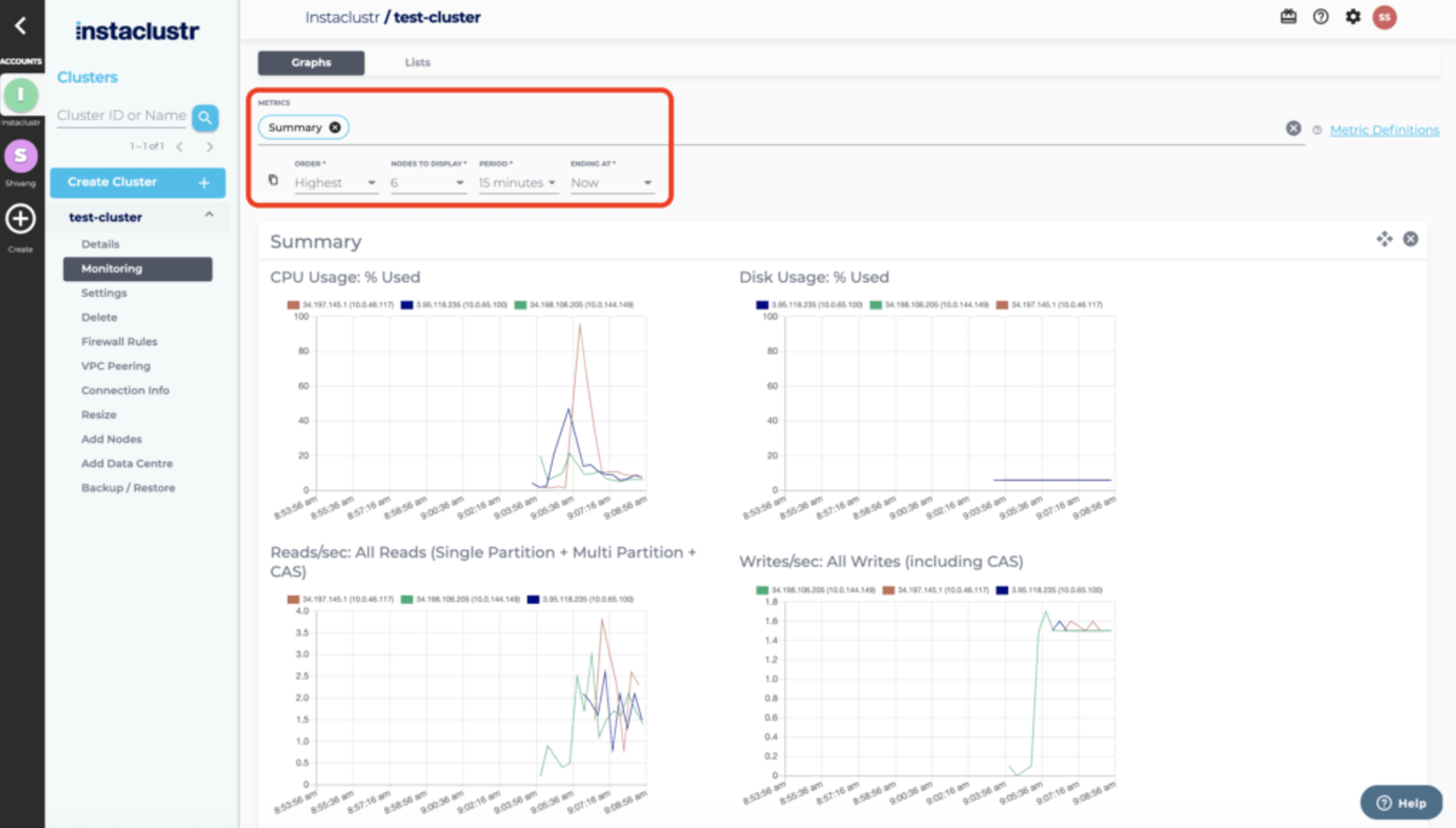
NetApp Instaclustr for Apache Cassandra is a fully managed, open source Cassandra service that runs on AWS, Microsoft Azure, Google Cloud or on-prem. It handles the operational heavy lifting, from provisioning to ongoing maintenance, so teams stay focused on building applications instead of managing infrastructure. Built for reliability and scalability, the service supports the high-throughput, low-latency workloads that modern, data-intensive applications demand.
Key capabilities
- Automated provisioning and scaling: Spin up clusters in minutes and scale capacity up or down to match demand, without manual configuration or downtime.
- Multi-cloud deployment: Deploy on AWS, Azure, or Google Cloud, and run across providers to avoid lock-in and meet data residency needs.
- High availability and fault tolerance: Keep applications online with built-in replication and self-healing clusters designed to withstand node and zone failures.
- Enterprise security and compliance: Data is protected with encryption, access controls, and certifications that meet evolving regulatory requirements.
- Expert 24/7 support: Tap into round-the-clock support from Cassandra experts who monitor, troubleshoot, and optimize clusters.
- Monitoring and observability: Track cluster health, performance, and capacity through detailed metrics and dashboards.
- Support for AI workloads: Power AI search pipelines, handle vector data, and integrate with tools like OpenSearch and Kafka to feed real-time data into AI and machine learning applications.
2. MongoDB Atlas

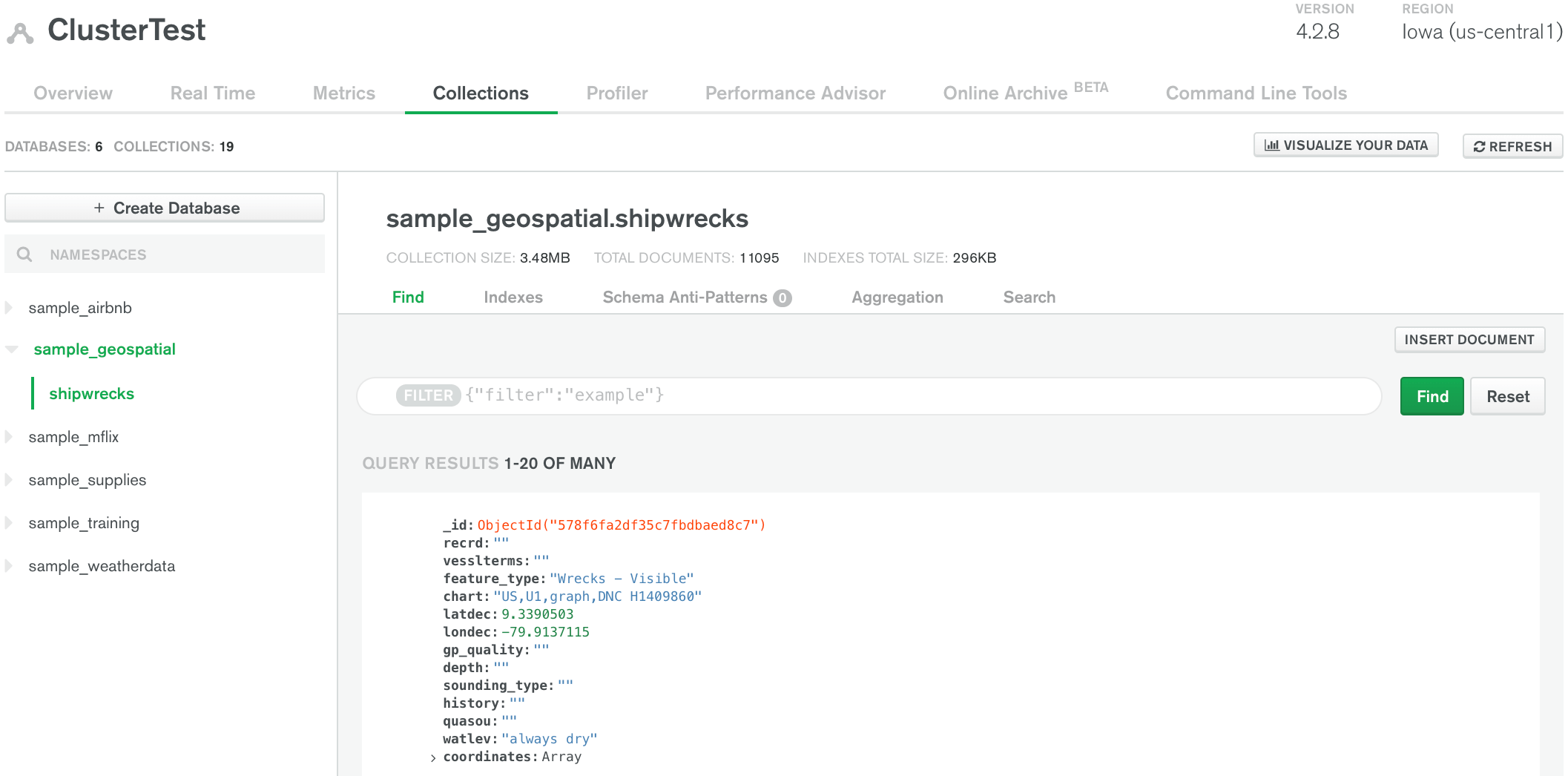
MongoDB Atlas is a managed cloud database service that removes the operational burden of running databases while providing built-in scalability, resilience, and security. It uses a document-based data model that maps application objects to stored data, making it easier to evolve schemas and build applications. Atlas supports global deployment across multiple cloud providers and regions.
Key features include:
- Fully managed infrastructure: Automates cluster provisioning, patching, backups, and failure recovery.
- Flexible document data model: Stores data as JSON-like documents, allowing schemas to evolve without migrations.
- Integrated search and data processing: Includes built-in full-text search, vector search, and stream processing.
- Global multi-cloud deployment: Supports deployment across AWS, Azure, and Google Cloud in 125 regions.
- Horizontal scalability: Distributes data across nodes with automatic resource adjustments based on workload demands.
3. Amazon DynamoDB
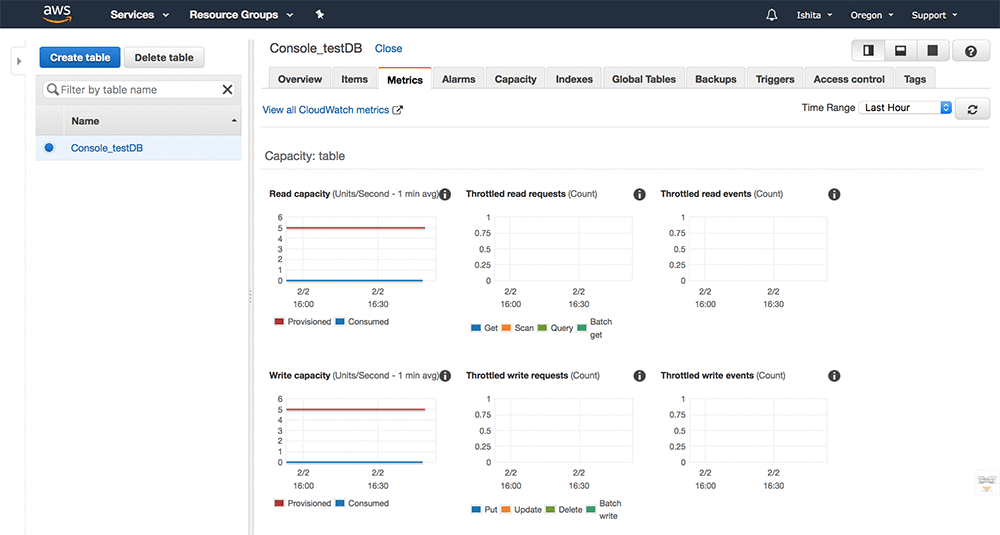
Amazon DynamoDB is a managed, serverless NoSQL database aiming to deliver consistent single-digit millisecond performance at scale. It removes infrastructure management, handling scaling, maintenance, backups, and updates automatically. DynamoDB supports scaling based on demand and offers a pay-per-request pricing model, making it suitable for workloads with unpredictable traffic.
Key features include:
- Serverless architecture: No servers to provision or maintain.
- Automatic scaling: Adjusts capacity based on application demand.
- Consistent low latency: Delivers single-digit millisecond performance.
- Global tables: Supports multi-region, active-active replication.
- Strong consistency options: Provides configurable consistency settings.
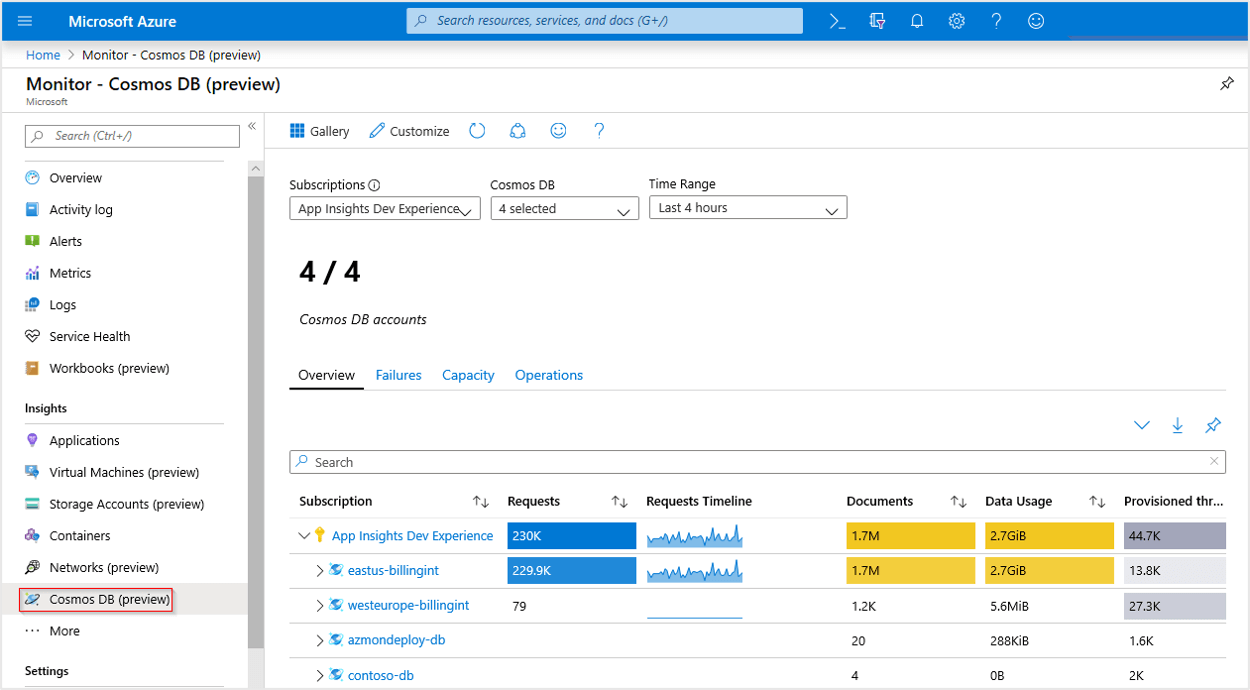
4. Azure Cosmos DB

Azure Cosmos DB is a managed, serverless NoSQL database for building globally distributed applications. It provides support for document data models along with integrated vector search. Cosmos DB includes autoscaling, global distribution, and multiple APIs for data access. It supports data management across distributed environments without requiring infrastructure management.
Key features include:
- Fully managed and serverless: Handles infrastructure, scaling, and maintenance.
- AI-ready capabilities: Supports vector search.
- Native document API: Provides a document-oriented data model.
- Dynamic autoscaling: Scales workloads based on demand.
- Global scalability: Supports scaling across regions.
5. Google Cloud Bigtable

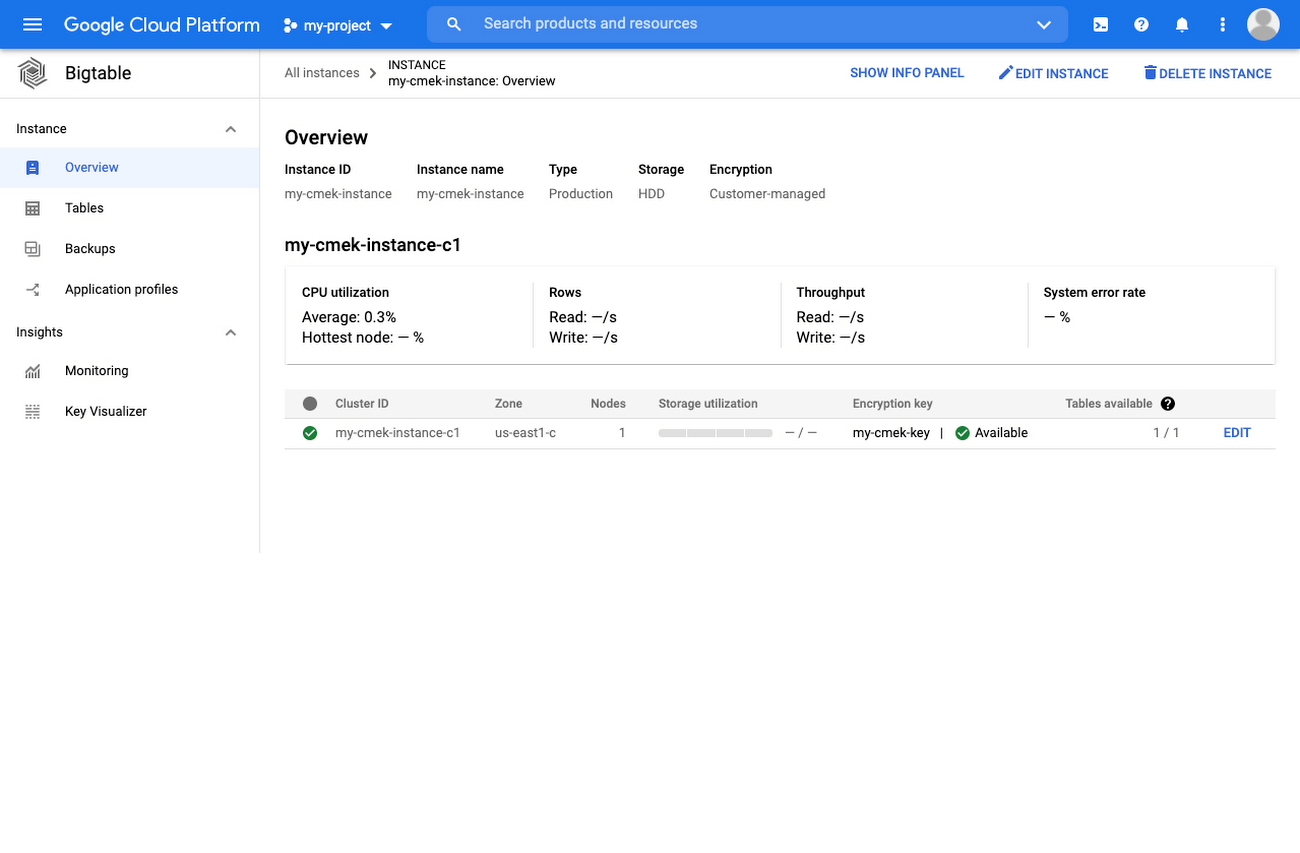
Google Cloud Bigtable is a fully managed NoSQL database for low-latency, high-throughput workloads at scale. It uses a wide-column and key-value data model, suitable for structured, semi-structured, and unstructured data. Bigtable supports both operational and analytical workloads. It handles scaling, replication, and performance management.
Key features include:
- Low-latency, high-throughput performance: Optimized for fast reads and writes.
- Wide-column and key-value data model: Supports flexible storage of structured and unstructured data.
- Horizontal scalability: Scales by adding nodes.
- Automatic sharding and replication: Distributes and replicates data across clusters.
- SQL support with real-time capabilities: Provides a SQL interface and materialized views.
6. ScyllaDB Cloud

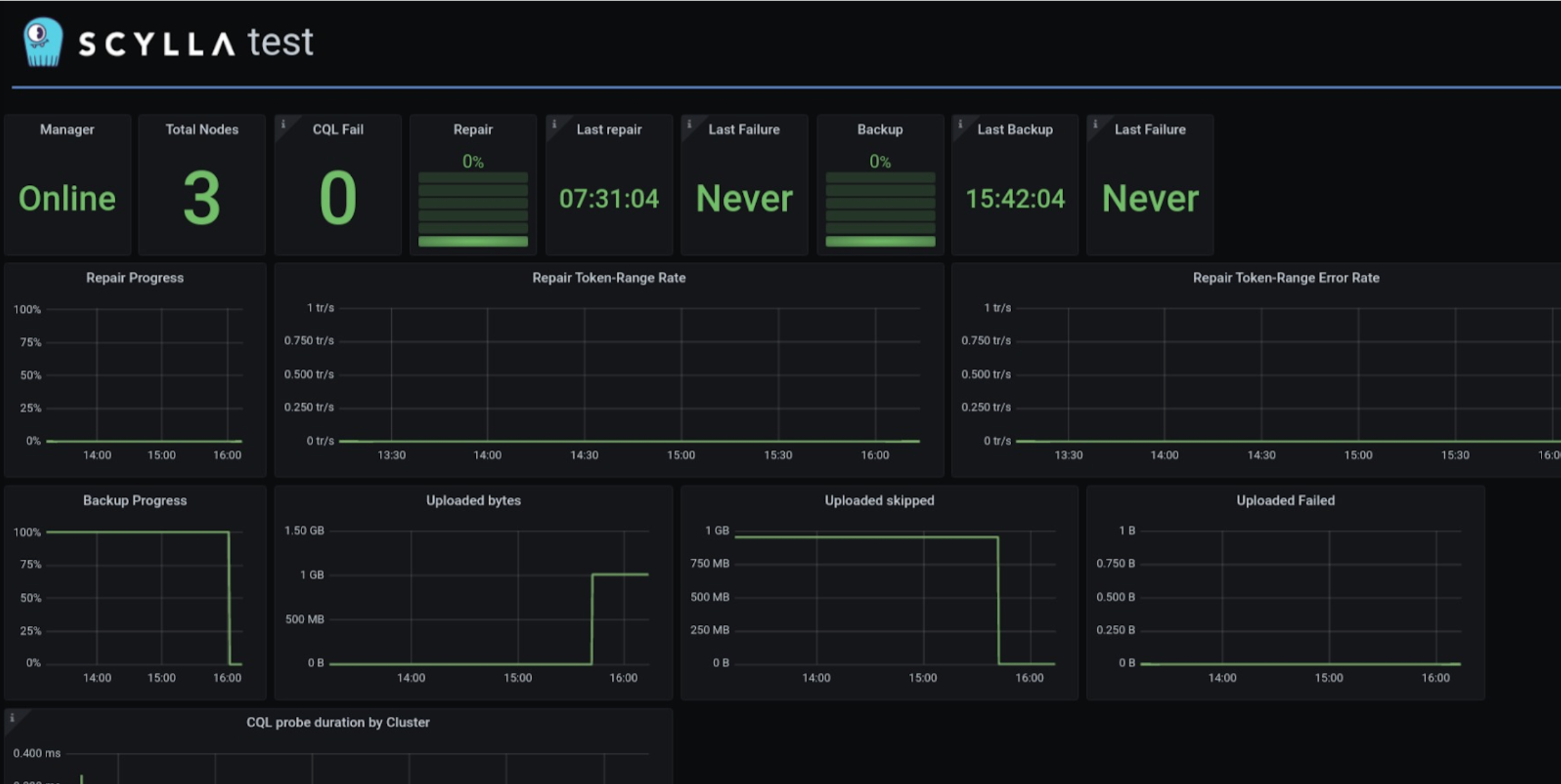
ScyllaDB Cloud is a managed database-as-a-service built on ScyllaDB for low-latency NoSQL workloads without managing clusters. It automates infrastructure provisioning, maintenance, and scaling while maintaining compatibility with Cassandra workloads. The service emphasizes predictable performance and high availability.
Key features include:
- Fully managed operations: Automates cluster provisioning, maintenance, and upgrades.
- Zero-downtime upgrades: Performs rolling updates without interrupting availability.
- High availability architecture: Uses a fault-tolerant cluster design.
- Proactive monitoring and remediation: Monitors system health and workloads.
- Flexible scalability: Supports vertical and horizontal scaling.
Open Source Cassandra Alternatives
7. Apache HBase

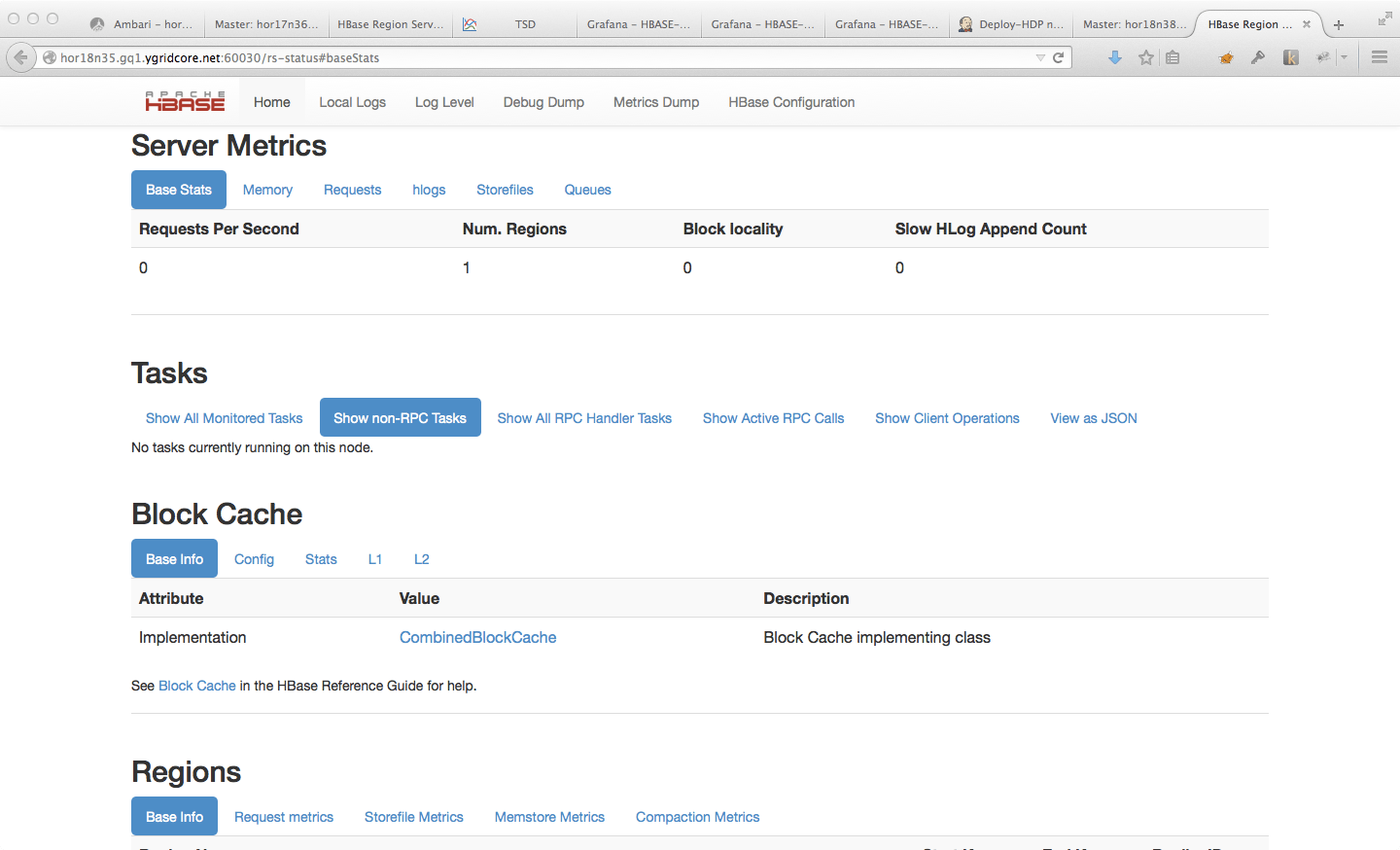
Apache HBase is an open -source, distributed wide-column NoSQL database built on Hadoop and HDFS for handling large datasets with real-time read and write access. Modeled after Google Bigtable, it provides consistency and linear scalability across commodity hardware. HBase is optimized for sparse data and high-throughput workloads. It integrates with the Hadoop ecosystem, enabling batch processing through MapReduce.
Key features include:
- Wide-column data model: Stores data in column families for sparse datasets.
- Linear scalability: Scales horizontally across commodity clusters.
- Strong consistency: Ensures consistent reads and writes.
- Real-time read/write access: Supports low-latency access to large datasets.
- Built on Hadoop and HDFS: Uses Hadoop infrastructure for distributed storage and fault tolerance.
8. Apache Accumulo

Apache Accumulo is an open -source, distributed key-value and wide-column NoSQL database built on Hadoop, ZooKeeper, and Thrift. Inspired by Google Bigtable, it adds cell-level security and server-side processing capabilities. Its architecture supports large-scale datasets with distributed data access.
Key features include:
- Wide-column and key-value model: Stores data in a sorted, distributed structure based on user-defined keys.
- Cell-level security: Implements access control using column visibility labels.
- Strong consistency: Ensures consistent reads and writes.
- Built on Hadoop ecosystem: Uses Hadoop, HDFS, ZooKeeper, and Thrift.
- Server-side processing with iterators: Allows logic to run on tablet servers during queries.
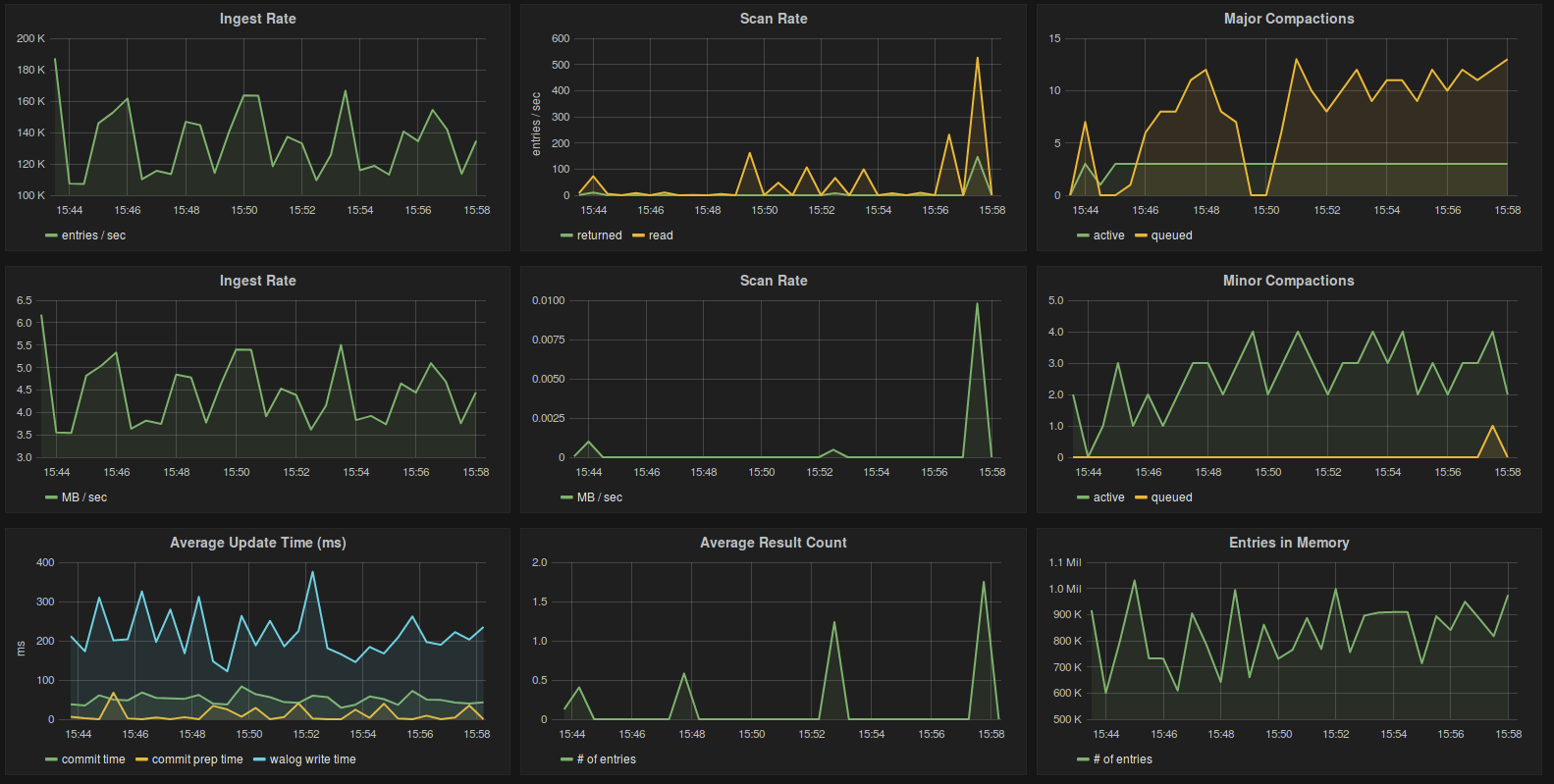
9. Apache CouchDB

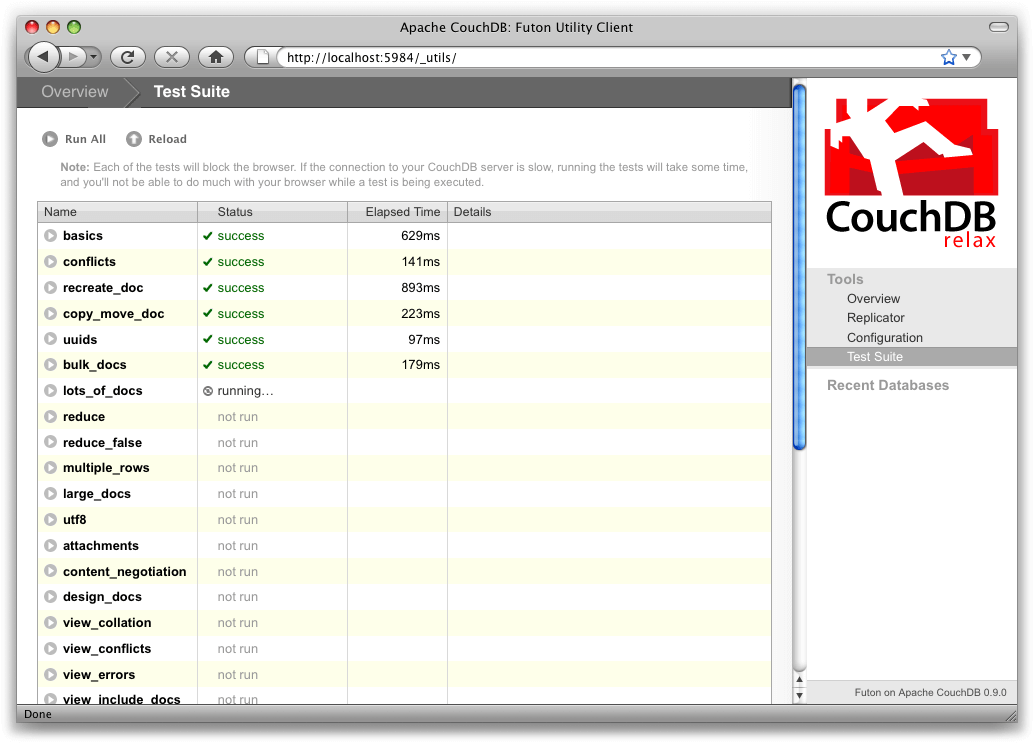
Apache CouchDB is an open source NoSQL document database focusing on reliability and data synchronization through an HTTP/JSON interface. It uses a document-based model and provides a multi-primary replication system that allows data to sync across servers, mobile devices, and browsers. CouchDB supports offline-first applications by allowing systems to operate without constant connectivity and synchronize when connections are restored.
Key features include:
- Document-oriented data model: Stores data as JSON documents.
- HTTP/JSON API: Uses standard HTTP protocols and JSON format.
- Multi-primary replication: Enables data to be written in multiple locations and synchronized across nodes and devices.
- Offline-first synchronization: Syncs data automatically when connectivity returns.
- Flexible deployment options: Runs as a single node or clustered system.
10. Redis
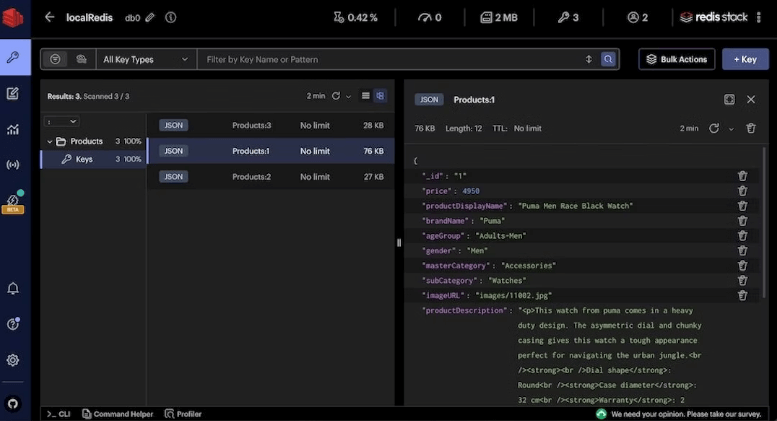
Redis is an open -source, in-memory data store for real-time applications that require fast data access and processing. It supports multiple data structures and use cases, including caching, session management, messaging, and vector search. Redis operates primarily in memory to deliver sub-millisecond latency and high throughput. It can be deployed across local, cloud, or hybrid environments.
Key features include:
- In-memory data store: Stores data in memory for fast access.
- Rich data structures: Supports strings, lists, sets, hashes, JSON, time series, probabilistic structures, and vector sets.
- High throughput performance: Uses multi-threaded I/O to handle large volumes of requests.
- Real-time caching: Acts as a cache to reduce load on primary databases.
- Vector search support: Enables similarity search across large vector datasets.
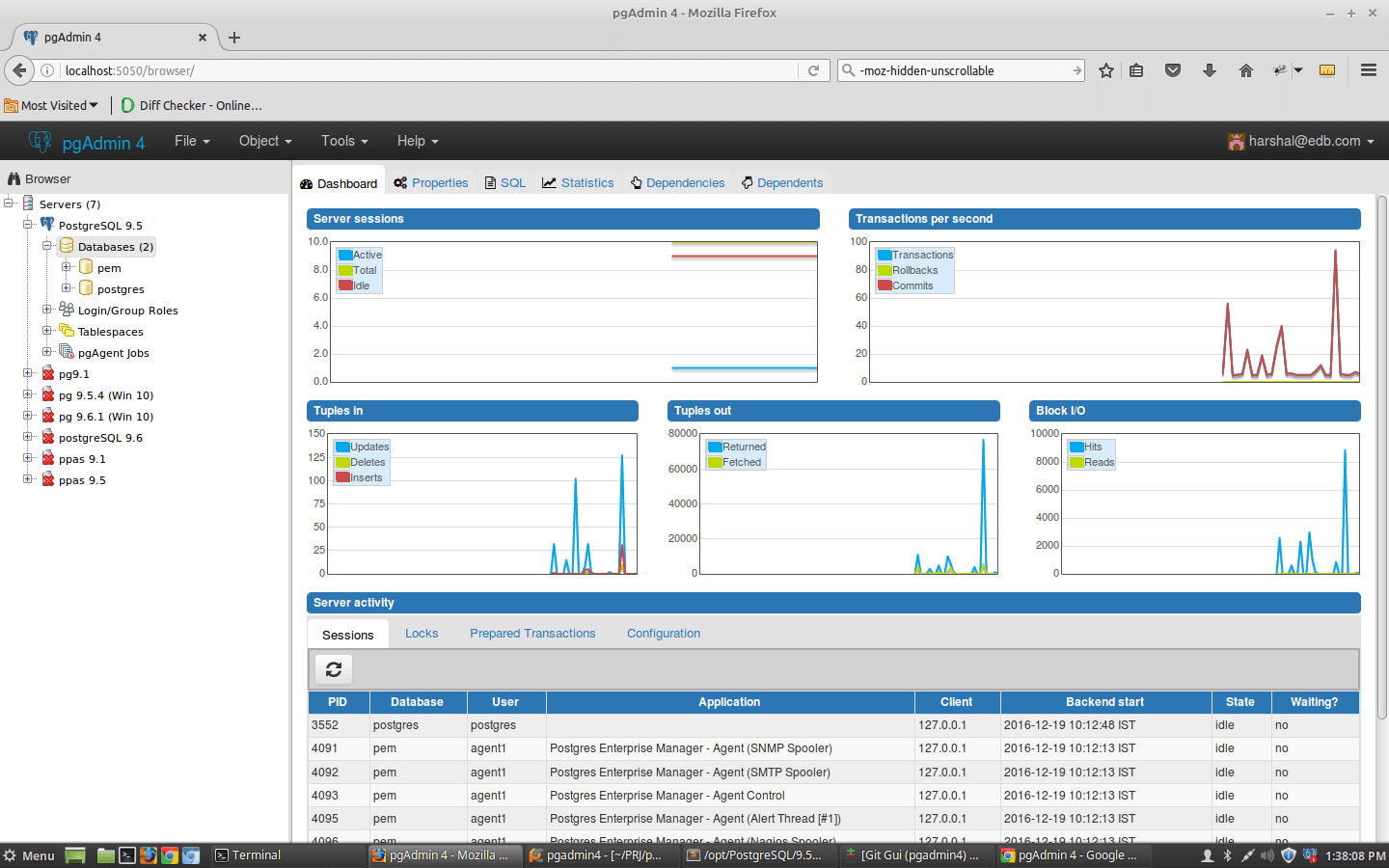
11. PostgreSQL

PostgreSQL is an open -source object-relational database system that combines traditional relational capabilities with support for complex data and workloads. It extends standard SQL with support for custom data types, functions, and extensibility. PostgreSQL is known for data integrity, ACID compliance, and concurrency control. It supports applications ranging from small systems to large-scale deployments.
Key features include:
- Relational and object-relational model: Combines relational tables with support for complex data types.
- Strong SQL compliance: Supports a wide range of SQL:2023 features.
- ACID compliance: Supports atomicity, consistency, isolation, and durability.
- Rich data type support: Includes primitives, arrays, JSON/JSONB, XML, geometric types, UUIDs, and custom types.
- Advanced indexing options: Provides B-tree, GIN, GiST, BRIN, and other index types.
How to Choose the Right Cassandra Alternative
Selecting a Cassandra alternative requires understanding your workload, consistency needs, and operational constraints. Different databases make different trade-offs in scalability, consistency, and developer experience. The goal is to match the database design to how your application reads, writes, and evolves over time.
Key considerations include:
- Consistency requirements: Determine whether your application needs strong consistency or can tolerate eventual consistency.
- Query flexibility: Evaluate how complex your queries are and whether you need joins or aggregations.
- Data model alignment: Choose a database whose data model matches your application.
- Scalability patterns: Consider how your workload scales and whether you need automatic scaling.
- Operational complexity: Assess whether you can manage cluster operations or prefer a managed service.
- Latency and performance needs: Identify acceptable latency thresholds.
- Multi-region and availability requirements: Look for built-in replication and failover support if operating globally.
- Ecosystem and integrations: Evaluate integration with your existing stack.
- Cost model: Compare pricing structures for storage, compute, and data transfer.
- Migration complexity: Assess the effort required to redesign schemas and application logic.
Conclusion
Choosing a Cassandra alternative involves balancing scalability, consistency, and ease of use against the complexity of managing distributed systems. While Cassandra remains a strong option for specific workloads, many alternatives simplify development and operations by offering managed infrastructure, richer querying, and stronger consistency models. The right choice depends on how your application accesses data, how critical consistency is, and how much operational overhead your team can support.