What is DataStax
TL;DR: DataStax offers managed Cassandra-based NoSQL databases, now part of IBM. Best for a fully managed open source alternative: NetApp Instaclustr; also strong are Amazon Keyspaces, Azure Cosmos DB, and MongoDB Atlas.
DataStax is a provider of cloud-native services, specialized in managing distributed databases built on Apache Cassandra. DataStax solutions are built for scalability, reliability, and performance, making them suitable for big data applications.
DataStax, founded in 2010, provides tools that help organizations manage large data volumes, optimize resources, and manage real-time applications. The company’s offerings include Astra DB, a database-as-a-service (DBaaS) for Cassandra, providing a platform to build modern data-driven applications.
Editor’s note: Updated information about Datastax competitors to reflect features and capabilities in 2026, and added one new competitor.
Managed NoSQL Databases at a Glance
The table below summarizes the key differences between these managed database services. We explore each of them in more detail below.
| Category | Solution | Best For | Key Strengths | Things to Consider |
|---|---|---|---|---|
| Managed Cassandra services | NetApp Instaclustr for Apache Cassandra | Fully managed, 100% open source Cassandra on any cloud or on-prem | Expert 24×7 operations, strong SLAs, no proprietary lock-in | Operational control runs through the managed platform |
| Managed Cassandra services | Amazon Keyspaces (for Apache Cassandra) | Serverless, Cassandra-compatible workloads inside the AWS ecosystem | No infrastructure to manage, automatic scaling, multi-Region replication | Some Cassandra behaviors and consistency options differ |
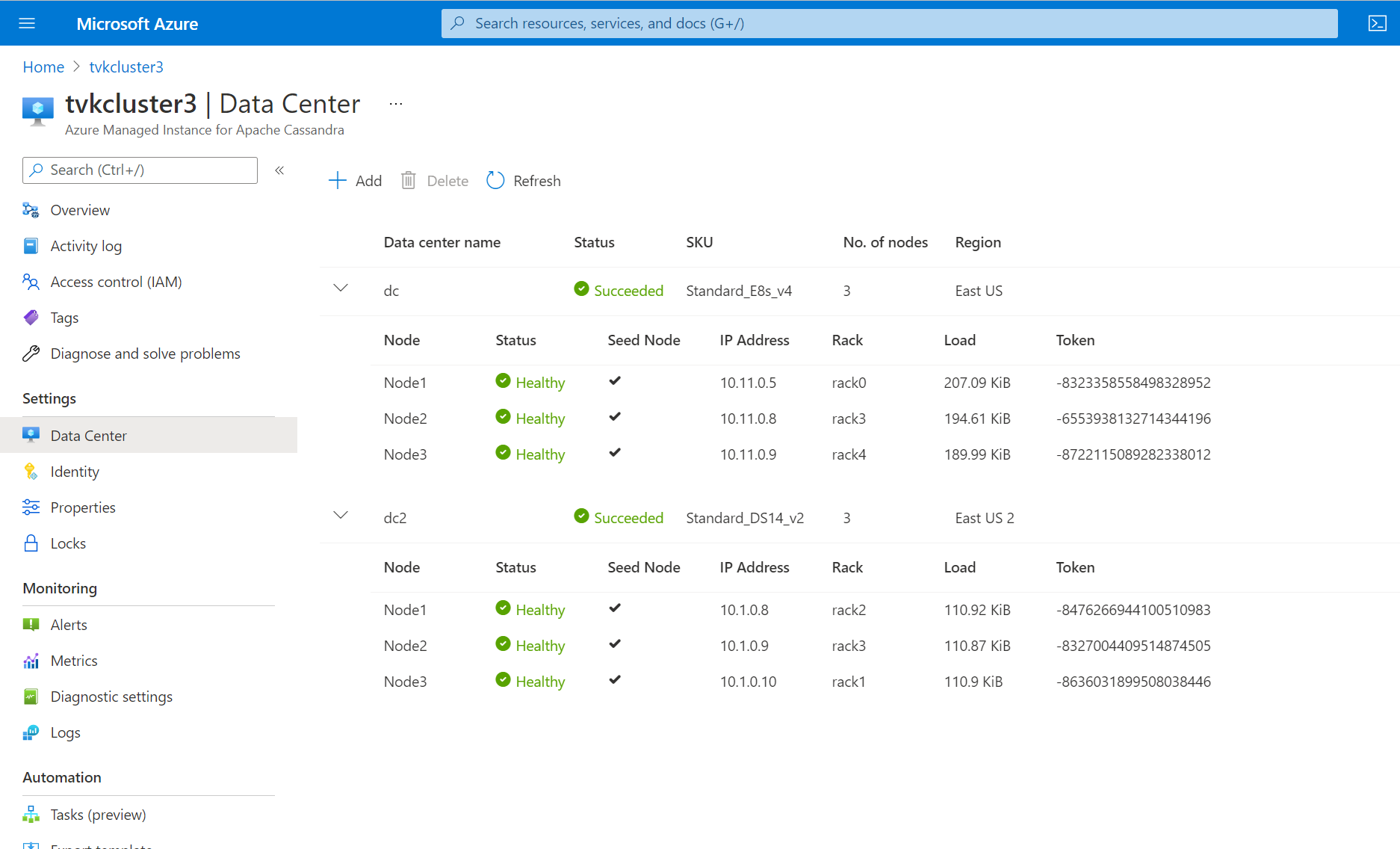
| Managed Cassandra services | Azure Managed Instance for Apache Cassandra | Hybrid and cloud Cassandra clusters on Azure with retained config control | Open source Cassandra, hybrid connectivity, instance-based pricing | Limited regions and shared configuration responsibility |
| Managed Cassandra services | ScyllaDB Cloud | Latency-sensitive workloads needing Cassandra-compatible high throughput | Elastic tablet-based scaling, single-digit-ms P99, CQL compatibility | Steep learning curve and strict data modeling |
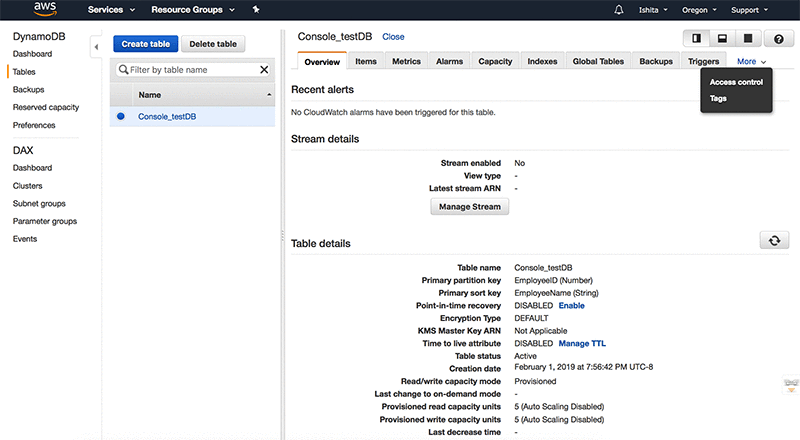
| Non-Cassandra managed NoSQL | Amazon DynamoDB | Serverless key-value and document workloads at consistent low latency | Zero infrastructure management, global tables, ACID transactions | Query model is limited and tied to AWS |
| Non-Cassandra managed NoSQL | Azure Cosmos DB | Globally distributed NoSQL and vector apps with low-latency SLAs | Multi-region distribution, built-in vector search, serverless option | Request Unit pricing can be hard to predict |
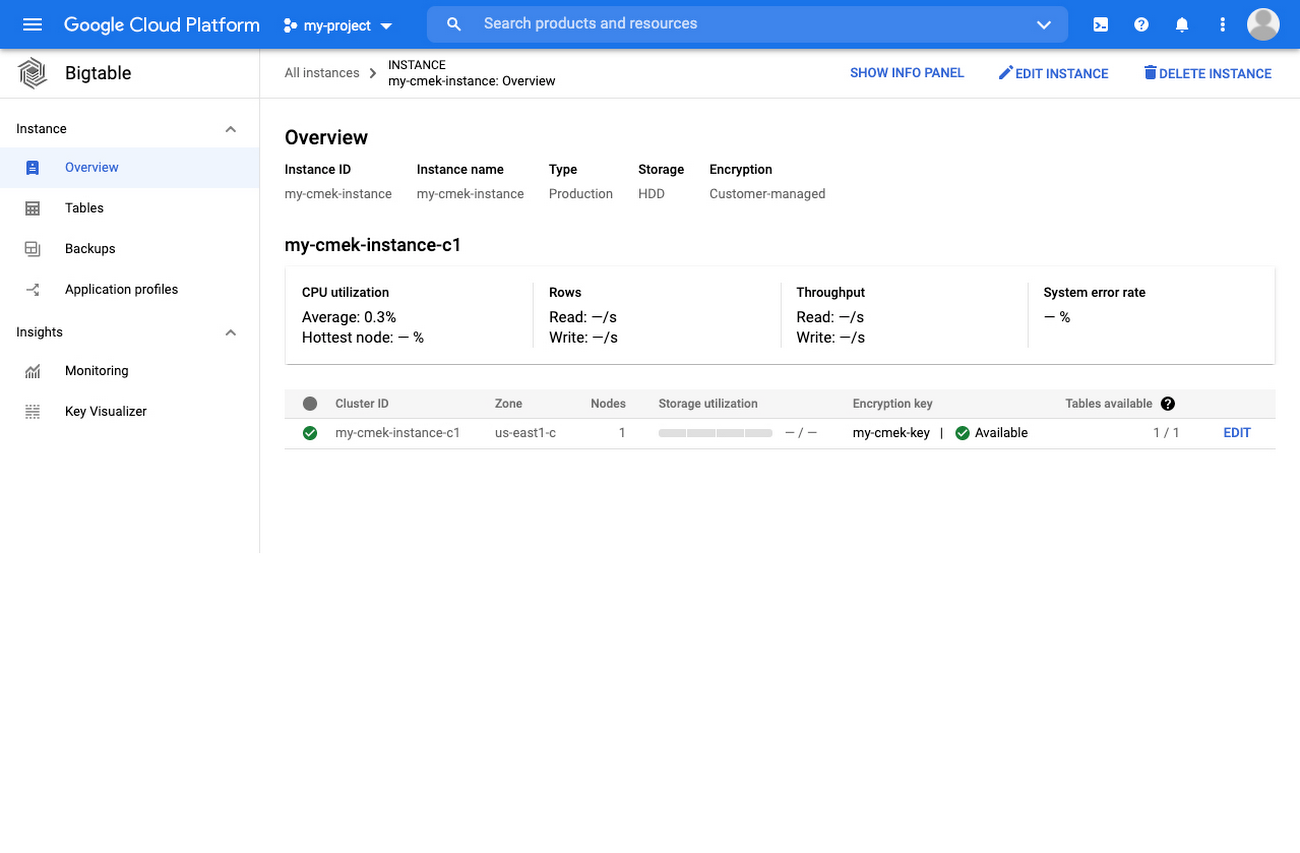
| Non-Cassandra managed NoSQL | Google Cloud Bigtable | Large-scale, latency-sensitive wide-column and analytical workloads | High throughput, hybrid storage tiering, Cassandra and HBase APIs | Node-based pricing and setup complexity |
| Non-Cassandra managed NoSQL | MongoDB Atlas | Multi-cloud document database workloads with flexible schema | Multi-cloud clusters, self-healing failover, queryable encryption | Cost growth and cold starts on paused clusters |
The acquisition of DataStax by IBM
IBM’s acquisition of DataStax marks a significant shift in the database management industry. With IBM’s focus on cloud services and enterprise data solutions, this move highlights its commitment to expanding its capabilities in handling distributed databases, particularly those built on Apache Cassandra.
For existing DataStax customers, the acquisition raises questions about the future of the platform, including potential changes to product offerings, pricing models, and support structures.
Historically, IBM has integrated acquired technologies into its broader ecosystem, which could influence DataStax’s roadmap to align more closely with IBM’s cloud and data services. While this may improve the platform with IBM’s resources and reach, it could also lead to adjustments that impact customers who require flexibility outside of IBM’s infrastructure.
This acquisition could present both opportunities and challenges. While some enterprises might benefit from IBM’s extended support and integration capabilities, others may seek alternative database management solutions to maintain greater independence and control over their data environments.
Related content: Read our guide to DataStax Cassandra
Notable DataStax competitors
How we selected these tools: We shortlisted managed NoSQL database services based on their ability to run Cassandra or Cassandra-compatible and wide-column workloads at scale, with managed provisioning, replication, scaling, backup, security, and support.
Managed Cassandra services (Cassandra-native or Cassandra-compatible)
1. NetApp Instaclustr

Best for: Fully managed, 100% open source Cassandra on any cloud or on-prem
Strengths: Expert 24×7 operations, strong SLAs, no proprietary lock-in
Things to consider: Operational control runs through the managed platform
Instaclustr for Apache Cassandra is a fully managed version of the Apache 2.0-licensed open source Kafka. It provisions a production-ready cluster in minutes and runs in the customer’s own cloud provider account or in accounts operated by NetApp. The service covers AWS, Azure, Google Cloud, and private data centers.
The platform handles provisioning, configuration, continuous maintenance, and version upgrades, and it supports Apache Cassandra 5.0 and 4.0. A team of Cassandra operators monitors each cluster around the clock, and the service publishes availability and latency SLAs, including up to 100% availability for LOCAL_QUORUM consistency operations and a 99% latency SLA on read and write transactions.
Key features include:
- Fully managed open source deployment: The service runs unmodified Apache Cassandra with no proprietary forks, so applications keep full compatibility with the open source project. Clusters can run in the customer’s cloud account or in accounts operated by NetApp, across AWS, Azure, Google Cloud, or a private data center.
- Automated provisioning and health checks: A management console handles automated provisioning and configuration with built-in monitoring. The system continuously watches each cluster and alerts a dedicated operations team when action or investigation is needed, with monitoring and health data available through the console and monitoring APIs including Prometheus support.
- DevOps-friendly API access: Clusters can be provisioned through the console, a REST API, or a Terraform provider. Monitoring is available via a Prometheus API or REST-based integrations to common monitoring platforms, which lets teams fit the service into existing automation workflows.
- Backups and change data capture: Continuous backups can be enabled to reduce disaster recovery RPO. A Debezium change data capture source connector streams Cassandra data through Apache Kafka to a central data warehouse or other downstream consumers, supporting event-driven and analytics pipelines.
- Zero downtime migrations: The team guides and assists customers in migrating existing Apache Cassandra clusters onto the platform without downtime, drawing on experience moving many customer clusters. Configurations are tuned for reliability, performance, and security, with optimal instance types offered on each cloud.
- Security and compliance certifications: The service meets GDPR, SOC 2, ISO 27001, and ISO 27018 requirements and offers PCI-DSS-compliant and HIPAA-compliant deployments. It provides 24x7x365 monitoring and expert support with response SLAs intended for critical applications.
Limitations (based on publicly available sources):
- Managed operational model: Because the platform operates the cluster, configuration changes are made through the managed service rather than by editing configuration files directly on the nodes, which suits teams that prefer to hand off day-to-day operations.
- Coordinated upgrade scheduling: Version upgrades and scaling operations follow the provider’s managed process and timing rather than being triggered entirely on the customer’s own schedule.
- Console-based data access: Some users have noted that database interaction is oriented around standard Cassandra tooling and APIs rather than a built-in graphical interface for creating tables or inserting data directly.

2. Amazon Keyspaces
Best for: Serverless, Cassandra-compatible workloads inside the AWS ecosystem
Strengths: No infrastructure to manage, automatic scaling, multi-Region replication
Things to consider: Some Cassandra behaviors and consistency options differ
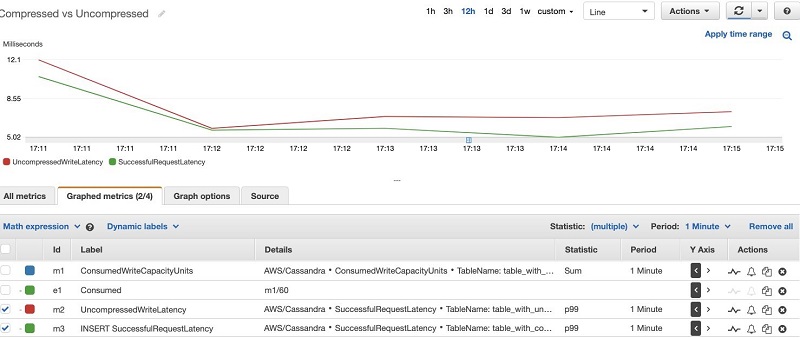
Amazon Keyspaces is a serverless, Cassandra-compatible database service on AWS. It is compatible with the open source Cassandra CQL API, so existing tables can be migrated while keeping application code, and it supports existing Apache Cassandra 2.0-licensed drivers and developer tools for Java, Python, Ruby, .NET, Node.js, PHP, C++, and Perl.
The service removes server management, patching, and software operations. Capacity can run in on-demand mode, where throughput scales automatically and billing is per request, or in provisioned mode with auto scaling for predictable traffic. Tables scale with virtually unlimited throughput and storage.
Key features include:
- Apache Cassandra CQL compatibility: Keyspaces works with the open source Cassandra CQL API and existing Cassandra 2.0-licensed drivers and developer tools. Applications can migrate by pointing to the service endpoint while continuing to use existing query code across a range of programming languages.
- Serverless capacity modes: On-demand capacity mode manages throughput automatically and bills only for resources used, while provisioned capacity mode lets teams set expected reads and writes per second with auto scaling. This covers both unpredictable and steady traffic patterns without overprovisioning.
- Fully managed Time to Live: TTL sets expiration times on rows and attributes and deletes expired records automatically. The service handles the underlying work, so teams do not manage tombstones, compaction, or extra read and write capacity for expiration.
- Multi-Region replication: Multi-Region replication provides fully managed active-active replication across chosen AWS Regions, using storage-based asynchronous replication that typically propagates writes in under a second. Conflicts are resolved with cell-level timestamps and a last-writer-wins approach, and any Region can serve reads and writes.
- Point-in-time recovery and change capture: Point-in-time recovery provides continuous backups and restores a table to any second in the preceding 35 days. Keyspaces Streams captures real-time data changes and can send them to Amazon OpenSearch Service or data warehouses, consumed through a Streams API or the Kinesis Client Library.
- Security and network controls: Data is encrypted at rest by default using AWS Key Management Service keys, with a choice of AWS owned or customer managed keys, and encrypted in transit using TLS. Access is managed through AWS IAM, and AWS PrivateLink provides secure connectivity between Keyspaces and an Amazon VPC.
Limitations (as reported by users on G2):
- Configuration complexity: Some reviewers found the service not especially user friendly to configure and reported that it can take time to work through the setup process.
- Consistency options: Reviewers noted that read consistency is limited to certain levels, which can constrain applications that expect the full range of Cassandra consistency settings.
- Cost predictability: Users reported that cost optimization is not always met when workloads change and that the service can feel expensive for some usage patterns.
Source: Amazon
3. Azure Managed Instance for Apache Cassandra

Best for: Hybrid and cloud Cassandra clusters on Azure with retained config control
Strengths: Open source Cassandra, hybrid connectivity, instance-based pricing
Things to consider: Limited regions and shared configuration responsibility
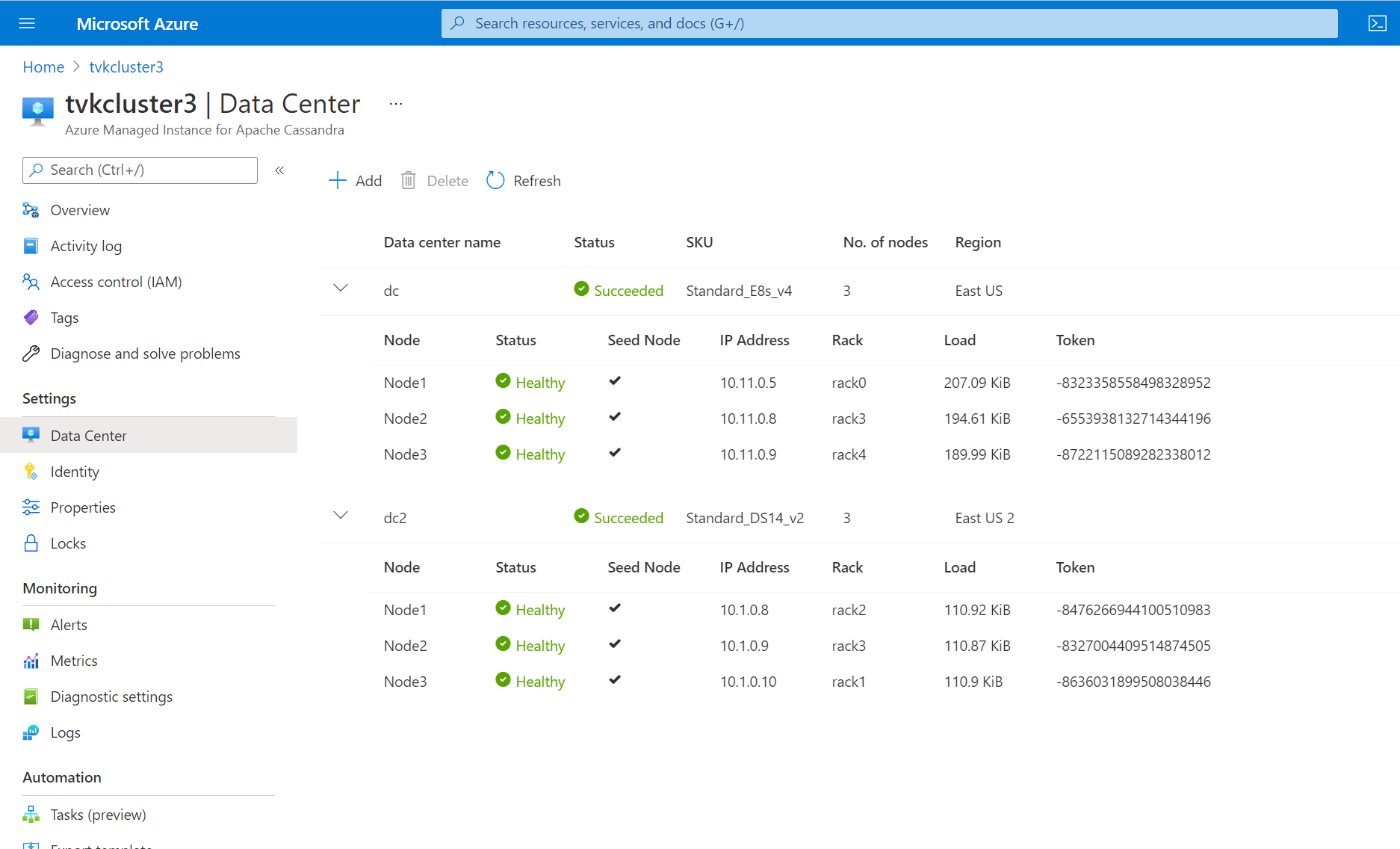
Azure Managed Instance for Apache Cassandra is a managed service for pure open source Apache Cassandra clusters on Azure. It deploys managed instances as virtual machine scale sets into a new or existing Azure Virtual Network, and it allows configuration overrides where a workload needs them. The service supports Cassandra versions up to 5.0.
The service automates repairs, patching, updates, and maintenance, and it provides automatic backups and disaster recovery. Data centers deployed in Azure can be added to an existing Cassandra ring running on-premises or in another cloud through hybrid configuration, using Azure ExpressRoute.
Key features include:
- Managed open source Cassandra: The service runs pure open source Apache Cassandra and keeps compatibility with familiar Cassandra tools, drivers, and SDKs. It supports configuration overrides depending on workload needs, so teams retain a degree of control over cluster settings.
- Automated infrastructure operations: Provisioning a cluster, running repairs on a keyspace, setting up backups, and maintaining audit logs are handled by the service. Automated repairs, patches, and updates reduce the manual work of running Cassandra while automatic backups support disaster recovery.
- Hybrid deployment and connectivity: Data centers in Azure can be attached to an existing Cassandra ring running on-premises or in another cloud through hybrid configuration over Azure ExpressRoute. This allows organizations to extend existing clusters into Azure with zero downtime scalability.
- Managed scaling: Scaling nodes up and down within a data center is fully managed. Teams select the number of nodes and a scaling orchestrator establishes their operation within the Cassandra ring, deploying instances as virtual machine scale sets.
- Monitoring integration: Each data center node emits metrics through a Metric Collector for Apache Cassandra that can be visualized in Prometheus or Grafana, and the service integrates with Azure Monitor for metrics and diagnostic logging.
- Instance-based pricing: An instance-based pricing model lets teams define the number of CPU cores, the virtual machine SKU, and memory and disk needs. Charges are based on the underlying virtual machine cost with no separate Cassandra licensing fee.
Limitations (based on publicly available sources):
- Limited regional availability: The service is available in a limited number of Azure regions, and the create option does not appear when an unsupported region is selected.
- Portal deployment limits: Deployment through the Azure Portal is capped at 100 nodes per data center and has disk attachment limits per SKU, so larger deployments require the Azure CLI.
- Restricted administrative tooling: Only a limited set of Nodetool utility commands is allowed, and some management commands are offered in preview without SLA guarantees.
- Shared configuration responsibility: The customer remains responsible for Cassandra configuration-level usage that causes CPU, disk, or network problems.
Source: Microsoft
4. ScyllaDB Cloud

Best for: Latency-sensitive workloads needing Cassandra-compatible high throughput
Strengths: Elastic tablet-based scaling, single-digit-ms P99, CQL compatibility
Things to consider: Steep learning curve and strict data modeling
ScyllaDB Cloud is the fully managed database-as-a-service version of ScyllaDB, a Cassandra-compatible distributed database. It provides 24×7 management and monitoring for production workloads. ScyllaDB X Cloud is the next-generation offering, built on ScyllaDB tablets and designed for elasticity, allowing clusters to scale rapidly while maintaining predictable low latency.
The service targets real-time, data-intensive applications such as media streaming, AI and machine learning feature stores, fraud detection, social media, payment processing, and IoT. It runs on AWS and GCP, including bring-your-own-account options, and offers CQL compatibility along with a DynamoDB-compatible API called Alternator.
Key features include:
- Elastic tablet-based scaling: ScyllaDB X Cloud can scale from 100,000 to 2 million operations per second in minutes. When nodes are added or removed, tablets rebalance in parallel and shift data in seconds while maintaining single-digit-millisecond P99 latency, so capacity follows real traffic without over-provisioning.
- High storage utilization: The service supports up to 90% storage utilization and mixed-instance-type clusters, so teams can add small nodes to fill gaps or larger ones for sustained growth. Decommissioning is fast and flexible, which allows predictable performance with less infrastructure.
- Fully managed operations: ScyllaDB Cloud manages infrastructure including VPC and instance deployment, and it handles hardware failures automatically with no impact on availability. It also manages TLS certificates, VPC peering, IP-based ACLs, cluster scaling, upgrades, backups, restores, and repairs.
- Cassandra and DynamoDB compatibility: The database is compatible with the Cassandra Query Language, so existing drivers and applications can connect. A DynamoDB-compatible API called Alternator lets teams move DynamoDB workloads onto the service as well.
- Isolated security architecture: Clusters run within dedicated, isolated environments with dedicated resources for the database and for monitoring and management servers. The data plane is isolated from the control plane, and the control plane does not store, query, or access customer data.
- Flexible pricing and integrations: A Flex Credit option provides on-demand pricing at a lower cost through an annual commitment, letting teams reserve steady-state load and add capacity for spikes. The service supports REST API, Terraform, VPC peering, and gateway integrations, and deploys across most AWS and GCP regions.
Limitations (as reported by users on G2):
- Operational learning curve: Reviewers reported a steep learning curve when tuning and operating the database at scale, including compaction strategies, consistency levels, and various limits.
- Strict data modeling: Users noted that partition key design and row or partition size matter significantly, and that it is easy to make costly mistakes without careful upfront planning.
- Data type constraints: Some reviewers found that list and map data types are only suitable for small amounts of data, with a performance impact beyond that.
- Smaller community: Reviewers pointed to a comparatively smaller community and fewer tutorials, which can make it harder to find guidance.
Non-Cassandra managed NoSQL databases
5. Amazon DynamoDB
Best for: Serverless key-value and document workloads at consistent low latency
Strengths: Zero infrastructure management, global tables, ACID transactions
Things to consider: Query model is limited and tied to AWS
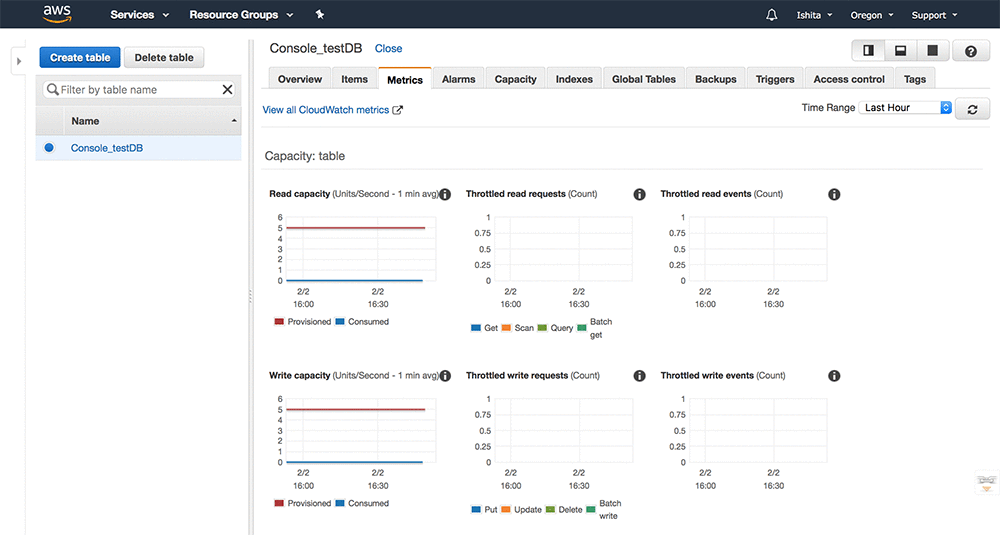
Amazon DynamoDB is a serverless, fully managed, distributed NoSQL database with single-digit-millisecond performance at any scale. It supports key-value and document data models and has a flexible schema. There are no servers to provision or patch, no maintenance windows, and availability, durability, and fault tolerance are built in.
DynamoDB is intended for high-performance, internet-scale applications. It provides on-demand pricing that scales to zero, along with provisioned capacity and auto scaling for predictable workloads, and offers up to 99.999% availability with global tables.
Key features include:
- Serverless scaling: There are no servers to provision, patch, or manage and no software to maintain. On-demand pricing scales to zero when resources are not used and adjusts automatically to capacity needs, while warm throughput keeps resources allocated and ready for quick data access.
- Secondary indexes: DynamoDB supports global and local secondary indexes so queries can use attributes other than the table’s primary key without a full table scan. Global secondary indexes act as sparse indexes and can be provisioned with lower write throughput for cost control.
- Active-active global tables: Global tables provide active-active replication across chosen AWS Regions with up to 99.999% availability. Applications can read and write from any replica and access data locally in each Region for single-digit-millisecond performance, supporting multi-Region resilience.
- ACID transactions: The database provides native, server-side support for atomicity, consistency, isolation, and durability transactions, with up to 100 actions per transaction. This lets developers make coordinated, all-or-nothing changes across multiple items and tables.
- Backup and recovery: Point-in-time recovery provides continuous backups with per-second granularity and restores to any second within a window of 1 to 35 days. On-demand backup and restore creates full backups of any size, and AWS Backup integration supports cross-account and cross-Region copies.
- Data integration and streams: Bulk import and export move data between Amazon S3 and DynamoDB in CSV, DynamoDB JSON, or Amazon Ion formats without custom code. DynamoDB Streams captures item-level changes for event-driven architectures, and Kinesis Data Streams and CloudWatch support advanced streaming and monitoring.
Limitations (as reported by users on G2):
- Limited query capabilities: Reviewers noted the absence of joins and complex filtering, which requires reworking access patterns compared with relational databases.
- Cost management at scale: Users reported that pricing can become complex and costly at scale if read and write capacity is not carefully optimized.
- Upfront data modeling: Reviewers pointed out that data modeling requires careful upfront planning, and that changing access patterns later can be difficult.
- AWS ecosystem dependency: Some users described a steep learning curve and difficulty integrating the service outside of the AWS ecosystem.
Source: Amazon
6. Azure Cosmos DB

Best for: Globally distributed NoSQL and vector apps with low-latency SLAs
Strengths: Multi-region distribution, built-in vector search, serverless option
Things to consider: Request Unit pricing can be hard to predict
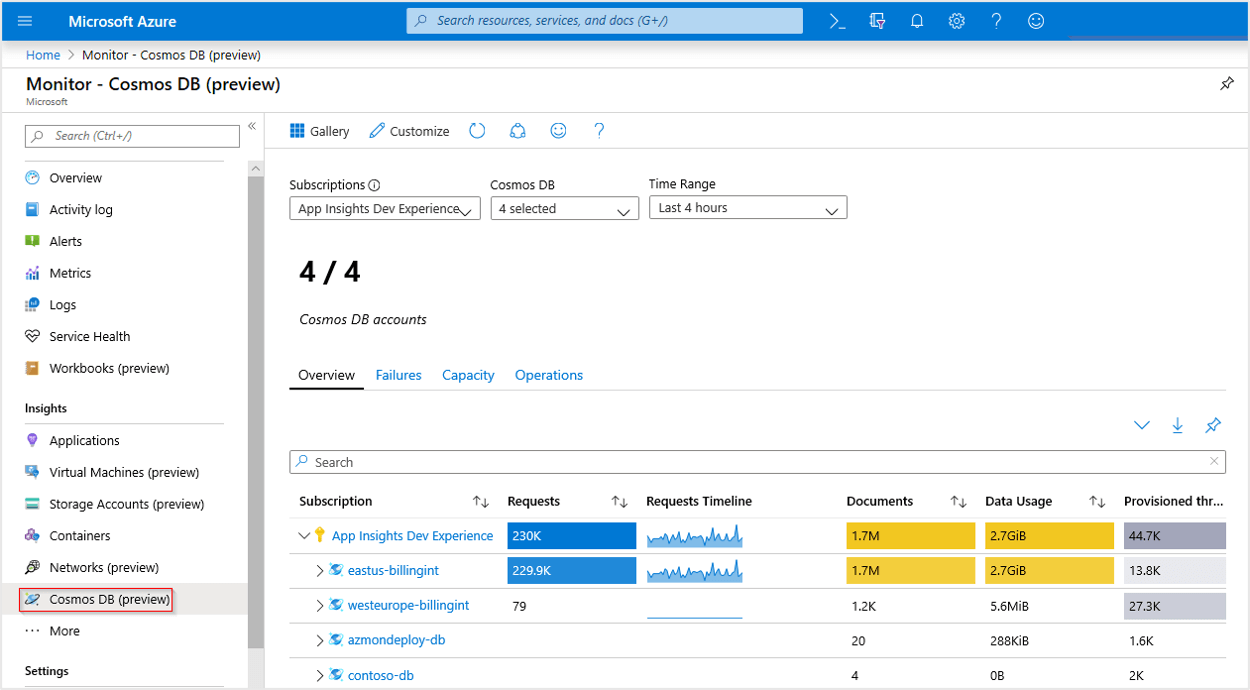
Azure Cosmos DB is a fully managed, serverless NoSQL database that uses a schema-less JSON document model with SQL-like querying. It is built for low-latency applications and includes built-in vector search powered by DiskANN and hybrid search that combines vector search, full-text search, and semantic ranking within the same JSON document model.
The service offers automatic partitioning to scale data and throughput as demand grows, a latency SLA of under 10 milliseconds, and up to 99.999% availability across multiple regions. It provides SDKs for Python, Node.js, Java, .NET, and Go.
Key features include:
- Built-in vector and hybrid search: Cosmos DB stores and queries vectors alongside NoSQL data using vector search powered by DiskANN. Hybrid search combines vector search, full-text search, and semantic ranking within the same JSON document model, supporting AI-driven applications such as retrieval-augmented generation and agents.
- Automatic partitioning and scaling: The service scales out data and throughput with automatic partitioning as demand grows, without impacting availability or requiring manual intervention. This suits applications with unpredictable growth, high throughput, and globally distributed workloads.
- Global distribution and failover: The database delivers a latency SLA of under 10 milliseconds and up to 99.999% availability across multiple regions. Per-partition automatic failover maintains availability for single-write region accounts by failing over at the partition level without manual intervention.
- Flexible JSON model: A schema-less JSON document model with automatic indexing lets teams evolve their data model without schema migrations. SDKs are available for Python, Node.js, Java, .NET, and Go for building real-time and cloud-native applications.
- Serverless and autoscale options: A serverless option requires no capacity planning and bills only for use, and workloads can transition to provisioned throughput with dynamic autoscale as they grow. A free tier is available for testing and development.
- Analytics and event integration: Mirroring into Microsoft Fabric enables near-real-time analytics without extract, transform, and load processes. A change feed supports event-driven applications through Azure Functions, AKS, and Container Apps, and the service integrates with Microsoft Foundry for storing agent conversations.
Limitations (as reported by users on G2):
- Cost accumulation: Reviewers warned that costs can climb quickly without proper optimization and partitioning, and that the service can become expensive at scale.
- Pricing model complexity: Users cited the Request Unit pricing model as a common pain point that makes cost hard to predict and manage.
- Changing interface: Some reviewers found that frequent platform changes make settings difficult to locate and manage.
- Occasional bugs: A few users reported occasional bugs and a limited set of extensions.
Source: Microsoft
7. Google Cloud Bigtable

Best for: Large-scale, latency-sensitive wide-column and analytical workloads
Strengths: High throughput, hybrid storage tiering, Cassandra and HBase APIs
Things to consider: Node-based pricing and setup complexity
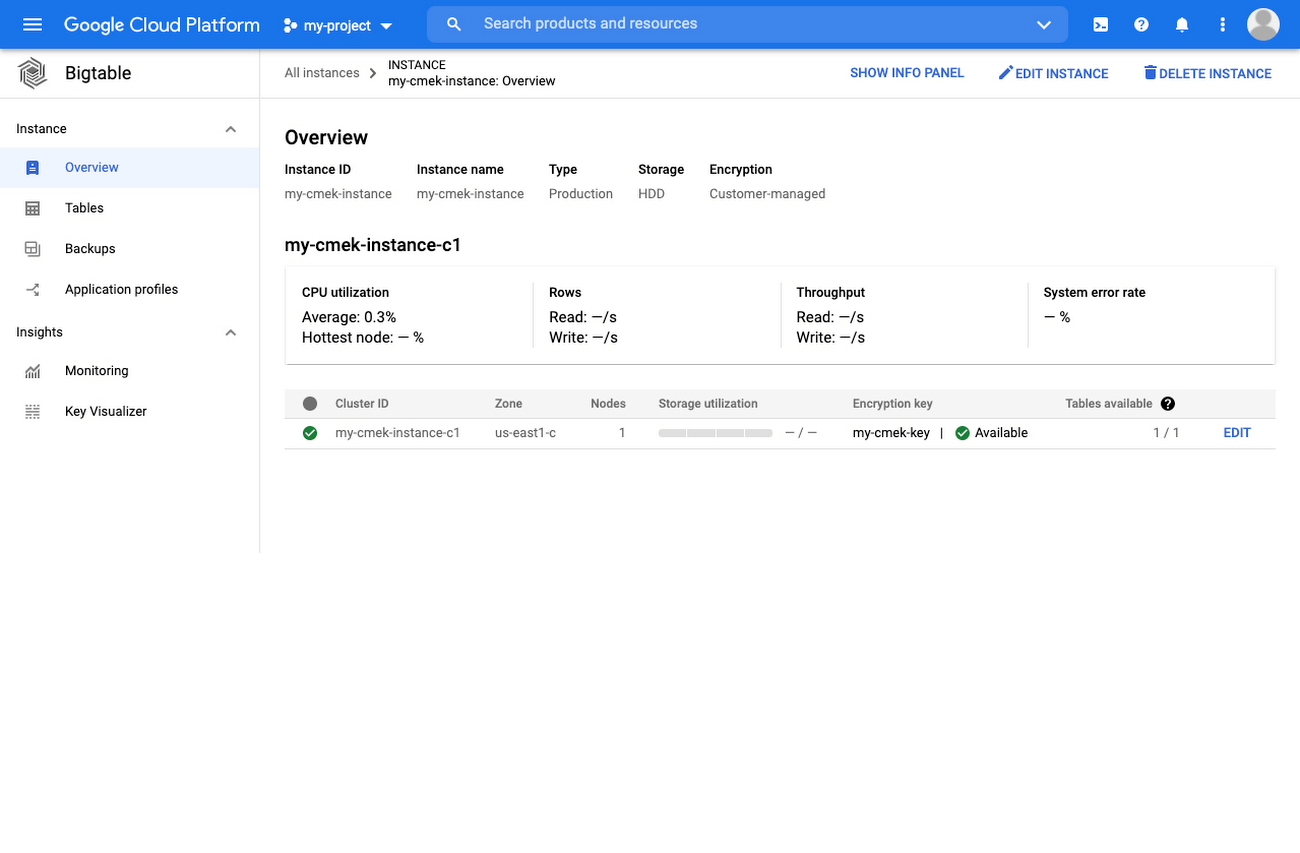
Google Cloud Bigtable is a fully managed, wide-column NoSQL database service that is compatible with the Apache Cassandra and HBase APIs. It is a key-value and wide-column store for structured, semi-structured, and unstructured data, and it targets latency-sensitive workloads such as personalization, clickstream, IoT, and machine learning.
Bigtable decouples compute from storage for horizontal scalability and automatic scaling. It can run from a single zone up to eight regions at once with globally distributed multi-primary configurations, offering up to 99.999% availability in multi-region deployments.
Key features include:
- Low latency and high throughput: Bigtable is a key-value and wide-column store built for fast access to large volumes of data. Distributed counters and high read and write throughput make it a fit for clickstream, IoT, batch analytics for high-performance computing, and machine learning model training.
- Hybrid storage architecture: The service tiers data automatically between RAM, SSD, and HDD. An in-memory tier delivers ultra-low-latency reads and reduces hotspots without a separate caching layer, while infrequently accessed data can move to HDD for cost savings without managing data pipelines.
- SQL and materialized views: Bigtable SQL lets teams build real-time applications using SQL syntax while preserving the flexible schema. The SQL interface can build incremental materialized views that keep data up to date by processing changes as they arrive and scale automatically with traffic.
- Migration from other NoSQL databases: The service offers Apache Cassandra and HBase APIs plus migration tooling. An HBase replication library and a Cassandra Proxy support no-downtime live migrations, and separate tools simplify migrations from Amazon DynamoDB and Aerospike.
- Workload-isolated data processing: Bigtable Data Boost uses serverless compute to run analytical queries, batch ETL, model training, or exports without affecting transactional workloads. It requires no capacity planning and queries data directly from Google’s distributed storage.
- Enterprise security and observability: Customer-managed encryption keys, IAM integration, VPC Service Controls, Access Transparency, Access Approval, and audit logging protect data, with fine-grained access control at the table, column, or row level. Server-side metrics, Key Visualizer, and other tools support monitoring and troubleshooting.
Limitations (as reported by users on G2):
- Setup complexity: Reviewers reported that the service can be complex to set up and manage.
- Cost at scale: Users noted that costs can be relatively high for large-scale workloads.
- Node-based capacity: Reviewers observed that low-latency compute is not serverless and is billed per node, which makes it less suited to small applications.
- Integration and access patterns: Some users found it challenging to integrate with non-Google products and noted that it is not designed for multi-row transactional patterns.
Source: Google Cloud
8. MongoDB Atlas
Best for: Multi-cloud document database workloads with flexible schema
Strengths: Multi-cloud clusters, self-healing failover, queryable encryption
Things to consider: Cost growth and cold starts on paused clusters
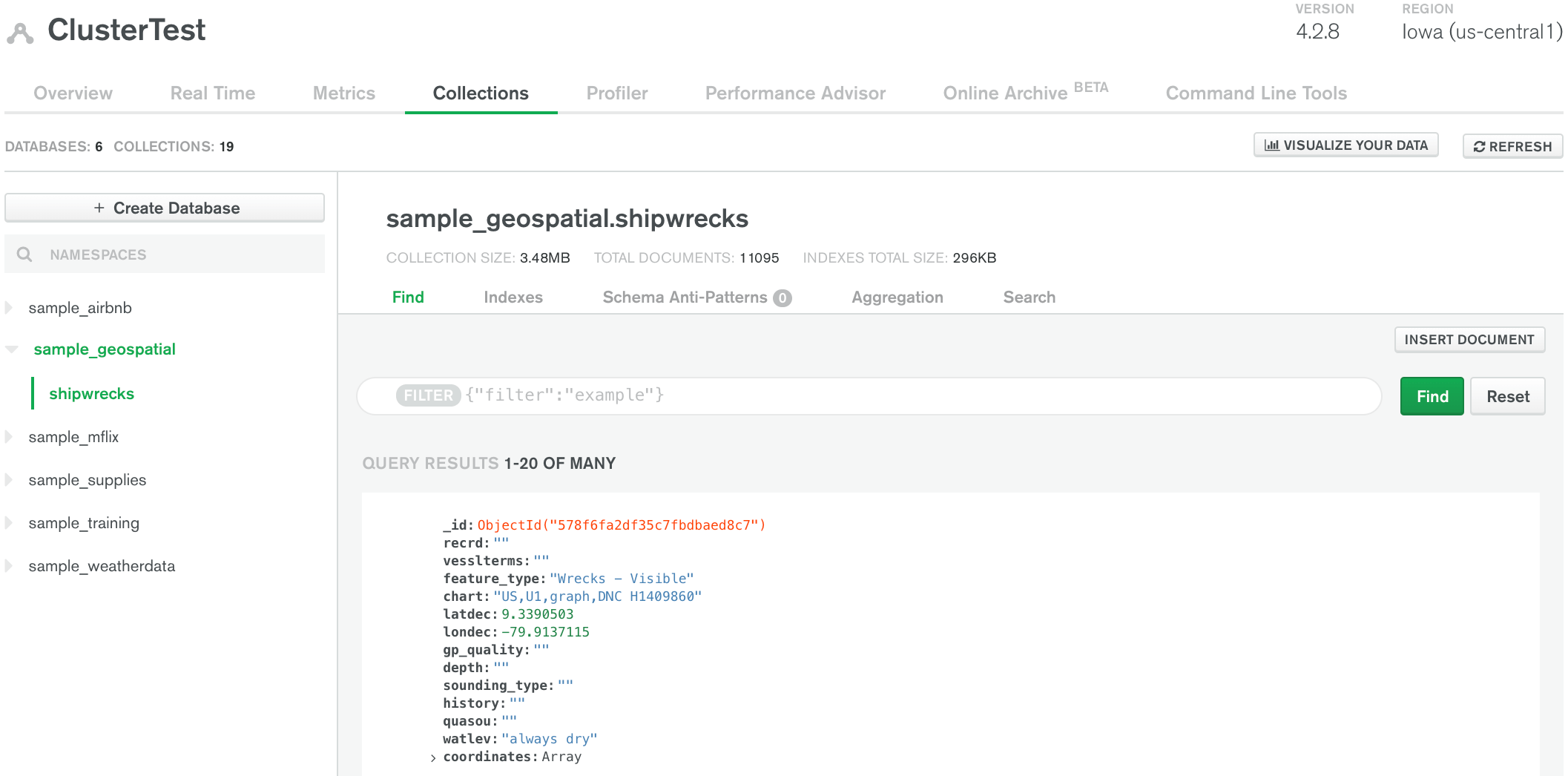
MongoDB Atlas is a fully managed, multi-cloud database service built on the document model, available on AWS, Azure, and Google Cloud across more than 125 regions. It handles database deployment, management, and scaling, and it stores data of any structure using a flexible JSON-like schema that can be modified as applications evolve.
The service provides deployments that can span multiple cloud regions and providers, automatic monitoring with failovers in seconds, and consumption-based pricing. It also includes vector search and full-text search alongside the core database.
Key features include:
- Multi-cloud and multi-region clusters: Atlas deployments can span multiple cloud regions and multiple cloud providers, giving applications broad reach and resilience. Global clusters deliver read and write latencies of milliseconds across regions and support data residency requirements through horizontally scaled deployments.
- Self-healing clusters: The service automatically monitors deployments and performs failovers in seconds, including cross-region and cross-cloud failovers, without manual intervention. Real-time monitoring tools provide actionable insights and customizable alerts for query efficiency.
- Queryable encryption: Atlas provides cryptographic protection for sensitive data and can run equality and range queries directly on encrypted data. It also encrypts data in transit, at rest, and in use, with automatic encryption of fields such as personally identifiable and health information.
- Workload isolation: Dedicated read-only, analytical, and search nodes can run in a single deployment to reduce resource contention and optimize for workload type. This lets analytical and search traffic run without competing with the primary operational workload.
- Intelligent auto-scaling: With opt-in auto-scaling, Atlas scales compute and storage separately for each node type and shard based on real-time resource usage. Consumption-based pricing means teams pay only for the resources used as an application moves from idea to production.
- Authentication and access controls: The service supports single sign-on with GitHub or Google and multi-factor authentication using OTP authenticators, push notifications, FIDO2 security keys, SMS, and email. Zoned sharding supports location-aware storage for globally distributed applications.
Limitations (as reported by users on G2):
- Setup difficulty: Reviewers found initial setup frustrating in places, with VPC connectivity noted as difficult for newcomers.
- Cost growth: Users reported that pricing can become expensive as data volume and cluster size grow.
- Cold starts on paused clusters: Some reviewers noted a cold start issue when resuming paused clusters.
- Limited transactional features: Reviewers observed that the service lacks stored procedures, functions, and triggers and can be less suited to complex transactions.
Source: MongoDB
Related content: Read our guide to DataStax Studio
Conclusion
The database management landscape is evolving rapidly, with numerous solutions catering to different scalability, performance, and flexibility needs. Organizations must assess their requirements, including workload demands, data consistency needs, and cloud integration preferences, to select the right platform. As competition intensifies, innovation in distributed databases and NoSQL technologies will continue to shape how businesses handle large-scale data processing and real-time applications.