What is an open source data platform?
TL;DR: Open source data platforms combine open tools for storing, processing, and analyzing data without license fees. Best for a managed, unified stack: Instaclustr; distributed storage: Apache Cassandra; streaming: Apache Kafka; interactive SQL: Trino.
An open source data platform is a flexible, vendor-neutral infrastructure that unifies data storage, integration, cataloging, and transformation without licensing fees. Because these systems are modular, organizations can assemble tools like Apache Kafka, Trino, and Apache Spark into a custom data platform and scale it without buying licenses for each node or server. Open source also gives teams the freedom to customize and extend the platform to fit different needs.
Another attraction of open source data platforms is the broad community of developers and users who contribute to the continuous improvement of the software. Regular updates, security patches, and a range of plugins and integrations are often driven by community needs and technological advancements.
The components of an open source data platform are typically divided into distinct functional layers:
- Data management systems: Relational and NoSQL databases such as PostgreSQL, Apache Cassandra, and MongoDB that store and serve the platform’s data.
- Data integration and engineering tooling: Lightweight extraction and transformation tools like Airbyte, dbt, and DuckDB that move and reshape data across the pipeline.
- Modular orchestration: Kubernetes-based deployment of processing engines such as Apache Spark, Trino, and OpenSearch through unified operators.
- Context and governance: Catalog and lineage tools that track data origins and build a semantic context layer across the platform.
- AI-ready cloud operations: Managed services that provision scalable open source stacks to stream and process data across cloud environments.
The way these platforms are assembled has shifted in recent years. Open table formats such as Apache Iceberg, Delta Lake, and Apache Hudi now bring database-style reliability to low-cost object storage, and catalog-driven governance and streaming-first ingestion have become standard expectations. Growing AI and analytics workloads are also pushing vector search and real-time processing directly into the core data stack.
Editor’s note: Updated the article to cover open table formats and the lakehouse layer, add fresh detail on AI and vector-search capabilities, expand and re-categorize the tools list with product limitations, and reflect the state of the field as of 2026.
This is part of a series of articles about open source AI
Open source data platform tools at a glance
The table below summarizes the key differences between the tools covered in this article. We explore each of them in more detail in the sections that follow.
| Category | Solution | Best For | Key Strengths | Things to Consider |
|---|---|---|---|---|
| Managed and distributed data platforms | Instaclustr | A managed, unified open source data stack | Fully managed multi-technology platform, 24×7 support, multi-cloud | Focused on a defined set of supported technologies |
| Managed and distributed data platforms | Apache Hadoop | Batch storage and processing of very large datasets | Distributed HDFS storage, YARN, large ecosystem | Complex to run, batch-oriented, weak on small files |
| Managed and distributed data platforms | Apache Cassandra | Write-heavy, always-on distributed workloads | Masterless architecture, linear scale, multi-datacenter | Limited ad-hoc queries and aggregations, steep learning curve |
| Databases | PostgreSQL | Reliable relational and JSON workloads | ACID compliance, rich indexing, extensibility | Tuning needs expertise, limited built-in tooling |
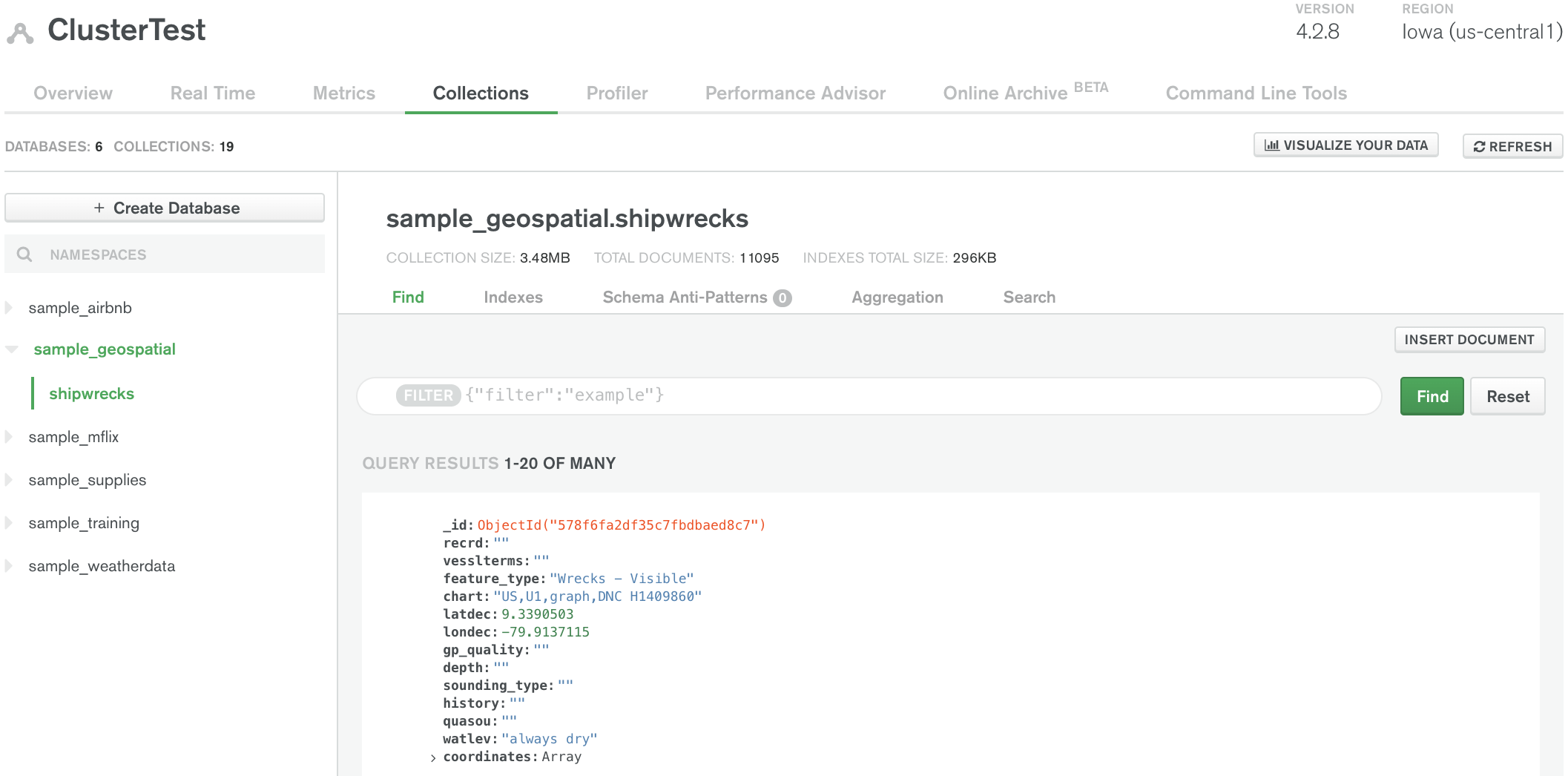
| Databases | MongoDB | Flexible document data for fast development | Document model, horizontal scaling, native vector search | 16MB document limit, memory-heavy at scale |
| Databases | Apache CouchDB | Offline-first sync across distributed clients | HTTP/JSON API, multi-primary replication, MVCC | No ACID transactions, storage overhead, no built-in full-text search |
| Data processing, streaming, and query engines | Apache Spark | Large-scale batch and ML processing | In-memory engine, unified batch/stream, MLlib | High memory use, micro-batch streaming only |
| Data processing, streaming, and query engines | Apache Kafka | High-throughput event streaming | Durable log, high throughput, Connect and Streams | Operationally complex, needs dedicated expertise |
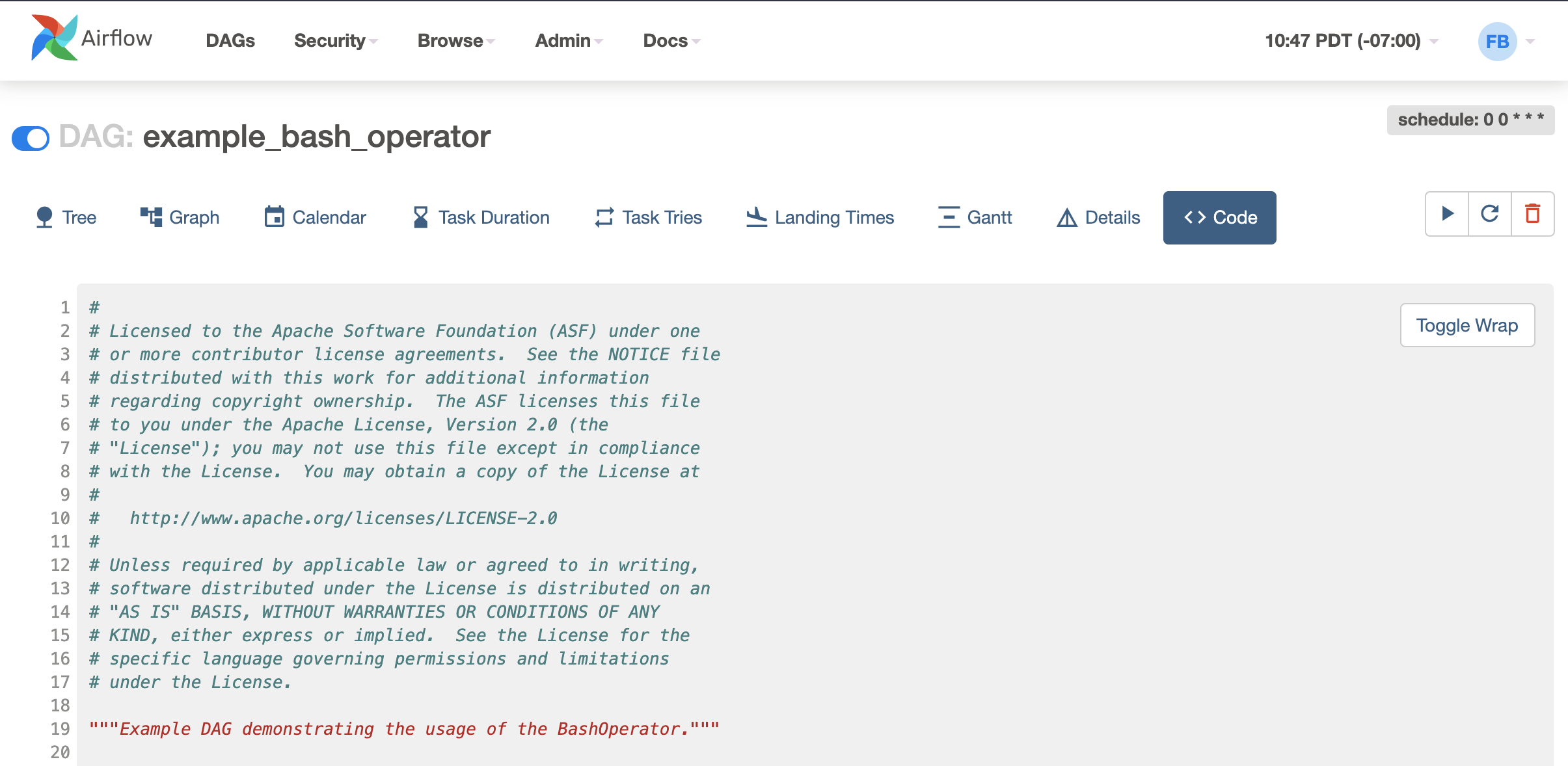
| Data processing, streaming, and query engines | Apache Airflow | Orchestrating complex data pipelines | Python-defined DAGs, rich UI, many integrations | Requires programming skills, setup complexity |
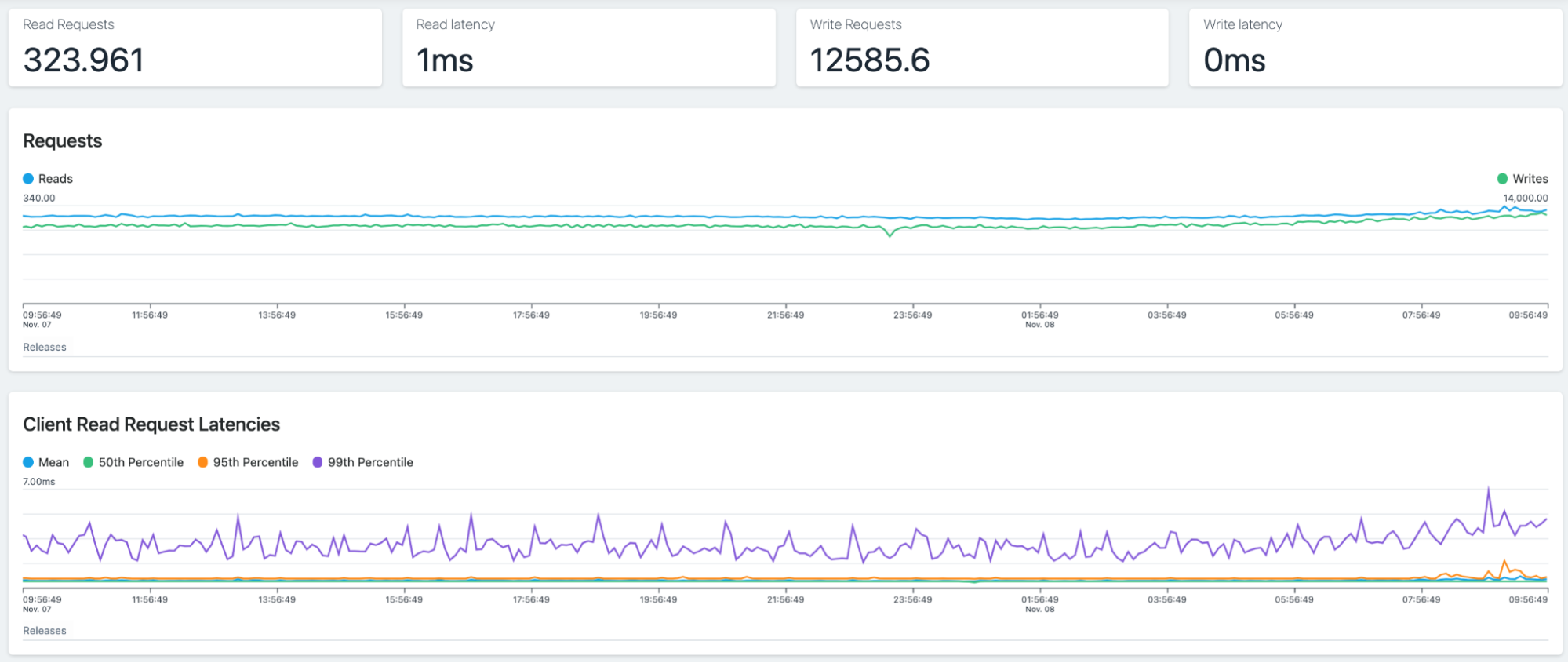
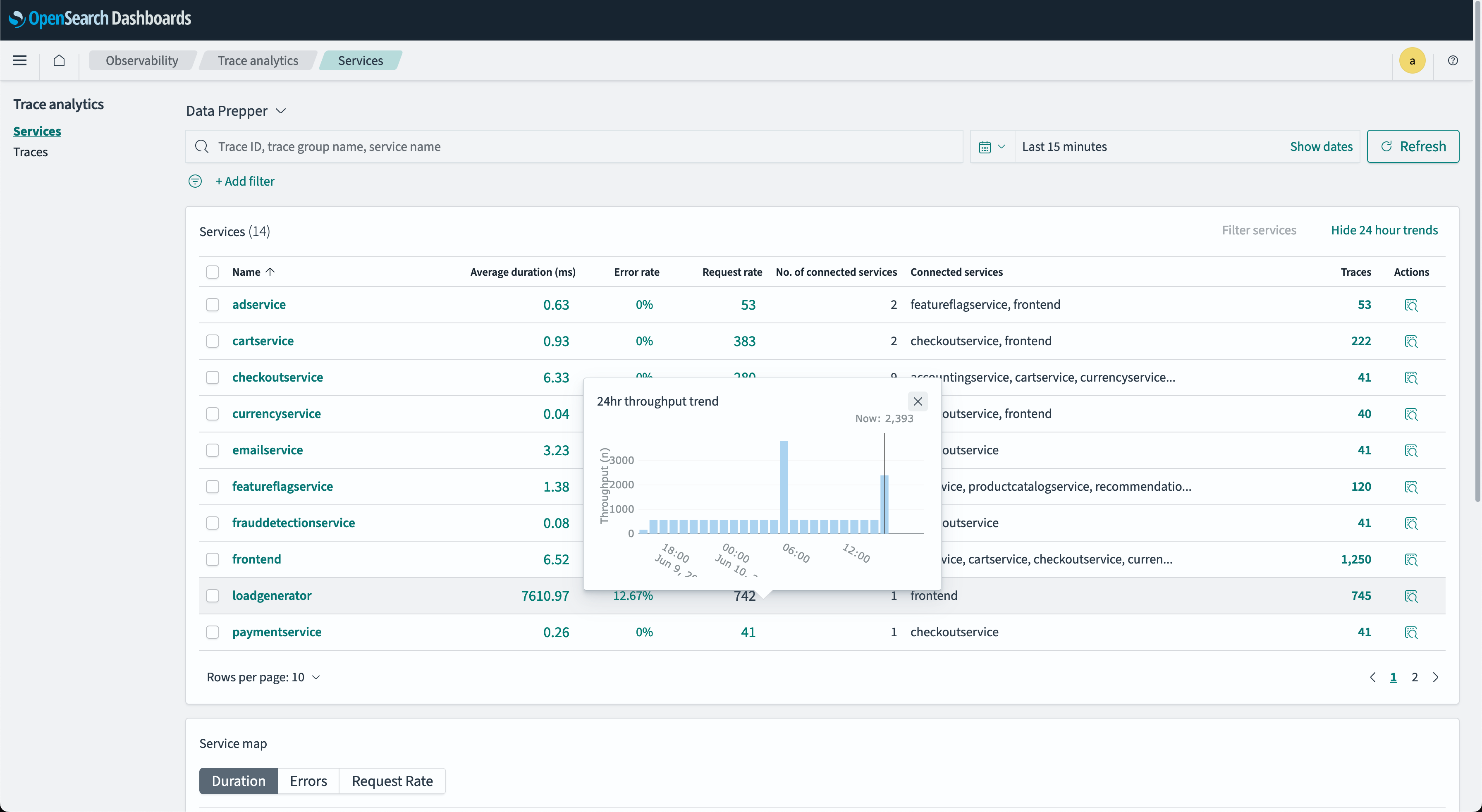
| Data processing, streaming, and query engines | OpenSearch | Search, observability, and security analytics | Lucene-based search, dashboards, vector engine | Setup complexity, occasional latency on heavy queries |
| Data processing, streaming, and query engines | Presto | Federated interactive SQL on the lakehouse | Query data in place, ANSI SQL, many connectors | No update/delete, resource-hungry, Java engine limits |
| Data processing, streaming, and query engines | Trino | High-concurrency federated analytics | Fast distributed SQL, query federation, BI tool support | Batch-focused, concurrency scaling and security need tuning |
Open source data platform architecture: Key components
These data platforms typically include the following components.
Data management system (DMS)
A Data Management System (DMS) is critical for storing, organizing, and retrieving data efficiently. Open source DMS options like PostgreSQL, MySQL, and Apache Cassandra enable organizations to handle large datasets with ease. They provide features like high availability, data integrity, and SQL compatibility, ensuring that data is always accurate and accessible.
These systems support basic CRUD (Create, Read, Update, Delete) operations, and they often come with advanced capabilities such as indexing, transaction management, and multi-threading. These features ensure that the DMS can handle complex queries and workloads without compromising performance. Many open source databases now also embed native vector search, letting teams run semantic retrieval and retrieval-augmented generation (RAG) directly in the database without a separate vector store.
Data integration (ETL)
Data integration through ETL (Extract, Transform, Load) processes brings together data from multiple sources into a unified repository. Open source ETL tools like Apache NiFi, Talend, and Airbyte provide scalable and flexible options for data extraction, transformation, and loading. These tools support a range of data sources, including databases, APIs, and file systems.
The transformation phase is crucial for maintaining data quality and consistency across the platform. ETL tools offer capabilities like data cleansing, normalization, and enrichment to ensure that the integrated data meets analytical or operational needs. Leveraging open source ETL tools also means access to a wealth of community-contributed connectors and plugins.
Data transformation
Data transformation involves converting raw data into a format suitable for analysis or reporting. Open source tools such as Apache Spark, dbt (data build tool), and Pandas in Python enable various transformation tasks, from simple data cleansing to complex aggregations and enrichments. These tools support both batch and real-time processing.
The primary goal is to ensure that data is accurate, consistent, and ready for downstream applications. Data transformation workflows can automate repetitive tasks, reduce human error, and increase efficiency. Open source solutions often include extensive libraries and frameworks that can be tailored to transformation needs, driven by community contributions that enhance functionality and address emerging use cases. Increasingly, transformed data is written into open table formats such as Apache Iceberg, Delta Lake, and Apache Hudi, which add ACID transactions, schema evolution, and time travel to low-cost object storage.
Data catalog and lineage
A data catalog serves as an inventory of data assets, while data lineage tracks the data’s lifecycle throughout the platform. Open source tools like Apache Atlas and Amundsen provide unified solutions for data cataloging and lineage. These tools help organizations manage metadata, making it easier to discover, understand, and govern data assets.
Data lineage is crucial for compliance and audit purposes, as it shows how data flows through different stages of processing. It helps in identifying the source of errors and assessing the impact of changes in data processing pipelines. Using open source data catalog and lineage tools ensures that these capabilities are continually refined and updated by a community. Catalog-driven governance has become a baseline expectation, and newer open source catalogs can track multiple table formats side by side to give a single governance layer across the platform.
Data visualization
Data visualization is the final step in the data pipeline, converting processed data into graphical representations for better interpretation and decision-making. Open source visualization tools like Apache Superset, Grafana, and D3.js offer features for creating interactive and shareable visualizations. These tools support various chart types and can integrate with other components of the data platform.
Effective visualization allows stakeholders to quickly identify trends, outliers, and patterns in the data. Open source tools often come with customizable dashboards and real-time analytics capabilities, providing dynamic insights into business performance. Real-time and streaming-first analytics have also moved from a nice-to-have to a baseline requirement, so many platforms now feed live data into dashboards rather than refreshing them on a fixed schedule.
Related content: Read our guide to open source databases
Open table formats and the lakehouse layer
One of the biggest recent shifts in open source data platforms is the rise of open table formats. Apache Iceberg, Delta Lake, and Apache Hudi add database-style reliability to data stored in low-cost object storage, bringing ACID transactions, schema evolution, and time travel to files that were previously just raw exports. This lets a single copy of data serve many engines at once.
Around these formats, a layered lakehouse architecture has become the norm, separating storage, metadata, ingestion, catalog, and query layers so each can be chosen and scaled independently. Engines such as Apache Spark, Trino, and Presto read and write the same tables, while catalog-driven governance keeps access and lineage consistent. As AI and real-time analytics workloads grow, this open, interoperable layer is increasingly what ties the rest of the platform together.
Top open source data platforms and tools
How we selected these tools: We shortlisted open source data platform tools based on how widely they are deployed for storing, integrating, processing, and analyzing data at scale, the breadth of their capabilities across the platform’s functional layers, and their fit for building a modular, vendor-neutral data stack.
Managed and distributed data platforms
1. Instaclustr

Best for: A managed, unified stack for open source data technologies
Strengths: Fully managed multi-technology platform with 24×7 support
Things to consider: Supports a defined set of open source technologies
Instaclustr, part of NetApp, is a managed platform that deploys, operates, and optimizes a range of open source data technologies across major clouds and on-premises environments. Rather than a single database, it provides one control plane for storing, streaming, searching, and analyzing data, with the same provider managing every component of the data layer in unison.
The platform covers technologies including PostgreSQL, Apache Cassandra, Apache Kafka and Kafka Connect, OpenSearch, ClickHouse, and Cadence, and it can build and manage vector stores on PostgreSQL, Cassandra, and OpenSearch for AI workloads. Infrastructure setup, configuration, monitoring, scaling, and maintenance are handled by Instaclustr while customers focus on their applications.
Key features include:
- Multiple managed technologies: Runs and operates PostgreSQL, Apache Cassandra, Apache Kafka, Kafka Connect, OpenSearch, ClickHouse, and Cadence from one platform, so teams can combine storage, streaming, search, and analytics under a single provider.
- Provisioning and dynamic scaling: Spins up production-ready clusters within minutes with tuned defaults, and lets teams dial cluster processing capacity up or down in minutes rather than adding or removing nodes over days.
- Advanced monitoring and console: Collects and monitors thousands of metrics from every managed node and exposes over 1,000 performance metrics through an application console for visibility into availability and performance.
- Backup, restore, and maintenance: Schedules off-node backups of all data daily for restoration after a cluster incident, and continuously maintains node and cluster health through a technical operations team.
- Multi-region and multi-cloud replication: Automates adding regions and data centers for geographic redundancy and supports hybrid and multi-cloud clusters for applications that need systemic redundancy.
- Built-in security and compliance: Applies default security configuration with TLS-secured client certificate authentication, VPC peering, and encryption, and is certified against SOC 2 Type 2, ISO 27001, ISO 27018, GDPR, and PCI DSS.
Limitations (as reported by users on G2):
- Per-node performance visibility: Some users note that the platform does not surface granular per-node performance metrics, which can make it harder to isolate the root cause of an individual node’s performance issues.
- Defined technology set: The platform focuses on a curated set of supported open source technologies, so teams wanting a very new or niche engine may not find it available as a managed service.
- Cost estimation: Because pricing depends on technology, node size, and cloud, teams often need the savings calculator or a sales conversation to model total cost rather than reading a simple list price.
2. Apache Hadoop

Best for: Batch storage and processing of very large datasets
Strengths: Distributed HDFS storage with a broad ecosystem
Things to consider: Complex to operate and oriented toward batch work
Apache Hadoop is an open source framework for reliable, scalable, distributed computing across clusters of commodity hardware. It stores and processes very large datasets by distributing them across many machines, each providing local computation and storage, and it detects and handles failures at the application layer rather than relying on hardware for high availability.
The project is built from a small set of core modules and surrounded by a large ecosystem of related tools for warehousing, querying, and coordination, which is why organizations have used it for over a decade to handle petabyte-scale workloads.
Key features include:
- HDFS distributed storage: The Hadoop Distributed File System provides high-throughput access to application data and is designed to scale to large clusters of commodity hardware while tolerating node failures.
- MapReduce processing: A YARN-based programming model breaks large-scale processing into small parts and distributes them across many nodes for parallel batch computation.
- YARN resource management: Yet Another Resource Negotiator manages cluster resources and job scheduling, letting multiple data processing engines share data held in a single platform.
- Extensive ecosystem: Related projects such as Hive, Pig, HBase, and ZooKeeper add data warehousing, querying, wide-column storage, and coordination on top of the core framework.
- Fault tolerance at scale: Data replication across nodes keeps information accessible even when individual machines fail, which suits large on-premises deployments running continuous workloads.
Limitations (as reported by users on G2):
- Small-file and latency overhead: Users report high latency for small-file operations because of metadata overhead, so Hadoop lags when workloads involve many small files.
- Batch orientation: Reviewers note it is not well suited to real-time processing given its batch-oriented design, and queries can sometimes take hours.
- Operational complexity: Configuring and managing HDFS clusters presents a learning curve, and ease-of-setup and ease-of-administration scores trail cloud-managed alternatives.
- Hardware and cost demands: Running Hadoop calls for capable hardware and carries a hidden total cost of ownership that teams cite when evaluating smaller or newer deployments.
3. Apache Cassandra

Best for: Write-heavy, always-on distributed workloads
Strengths: Masterless architecture with linear scalability
Things to consider: Limited ad-hoc queries, aggregations, and joins
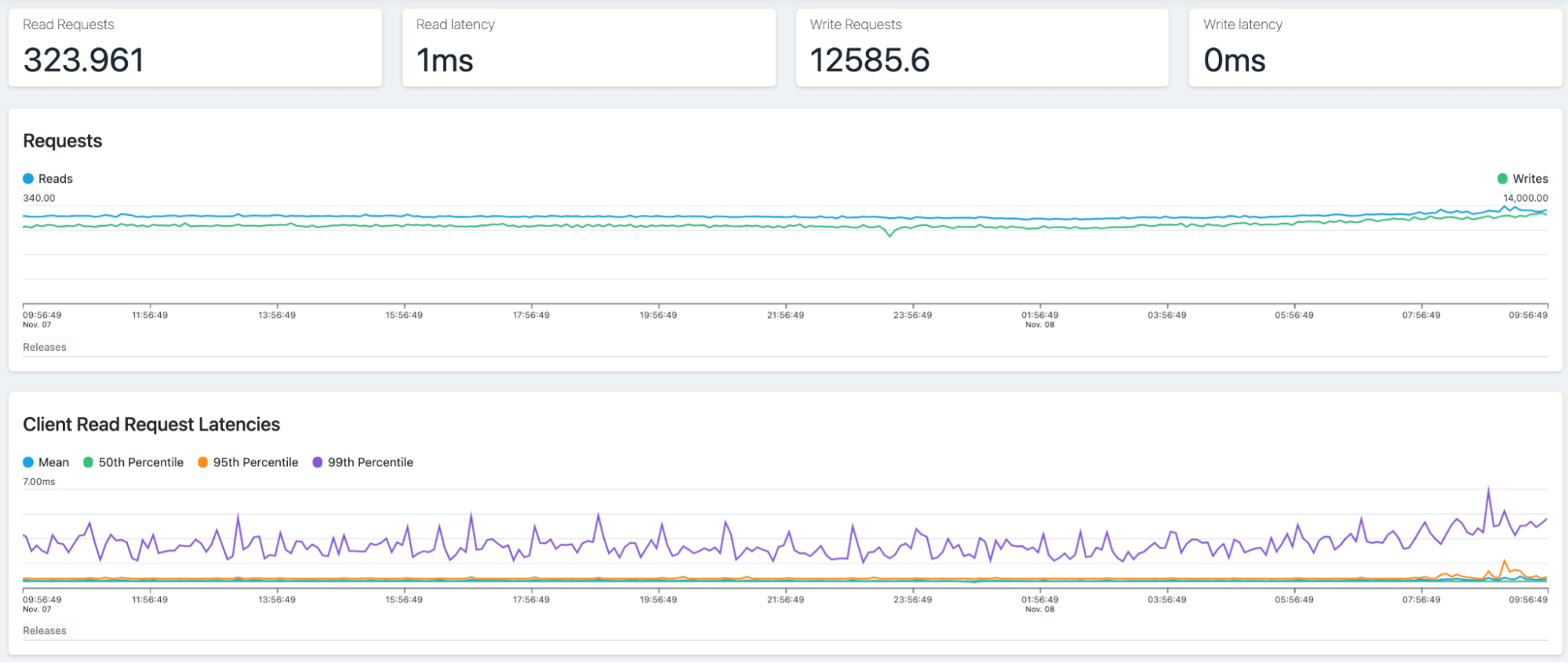
Apache Cassandra is an open source NoSQL distributed database used for scalability and high availability without compromising performance. Its masterless architecture and low latency let it withstand an entire data center outage with no data loss across public or private clouds and on-premises, making it a fit for mission-critical data.
Cassandra replicates across multiple data centers, so failed nodes can be replaced with no downtime, and read and write throughput both increase linearly as machines are added. Consistency is tunable per operation, letting teams balance consistency against performance for each update.
Key features include:
- Peer-to-peer architecture: Every node in the cluster is identical, which removes single points of failure and network bottlenecks and keeps the database available during outages.
- Tunable consistency: Teams choose synchronous or asynchronous replication and set consistency levels such as one, quorum, or all for each update to balance latency against durability.
- Linear scalability: Read and write throughput scale linearly as new machines are added, with no downtime or interruption to running applications.
- Elastic streaming: Zero Copy Streaming moves data between nodes during scaling operations up to five times faster without vnodes, which helps in cloud and Kubernetes environments.
- Security and observability: Audit logging tracks DML, DDL, and DCL activity with minimal performance impact, and the fqltool captures and replays production workloads for analysis.
Limitations (as reported by users on Capterra):
- Limited query flexibility: As a key-value oriented store, Cassandra makes aggregations such as SUM, MIN, MAX, and AVG resource intensive or impractical, and its options for retrieving data are limited compared with relational databases.
- No joins or analytics: It is not designed for analytical queries and cannot perform joins, so real-time analytics typically require pairing it with an engine such as Spark or Flink.
- Steep learning curve: Teams must understand partitioning and eventual consistency to use it well, and reviewers note that experienced Cassandra talent is scarce.
- Operational cost: Some users found it costly in terms of the resources required to manage load at scale, with limited training material available.
Source: Apache Cassandra
Databases
4. PostgreSQL

Best for: Reliable relational and JSON workloads
Strengths: ACID compliance with rich indexing and extensibility
Things to consider: Tuning and monitoring often need extra expertise and tools
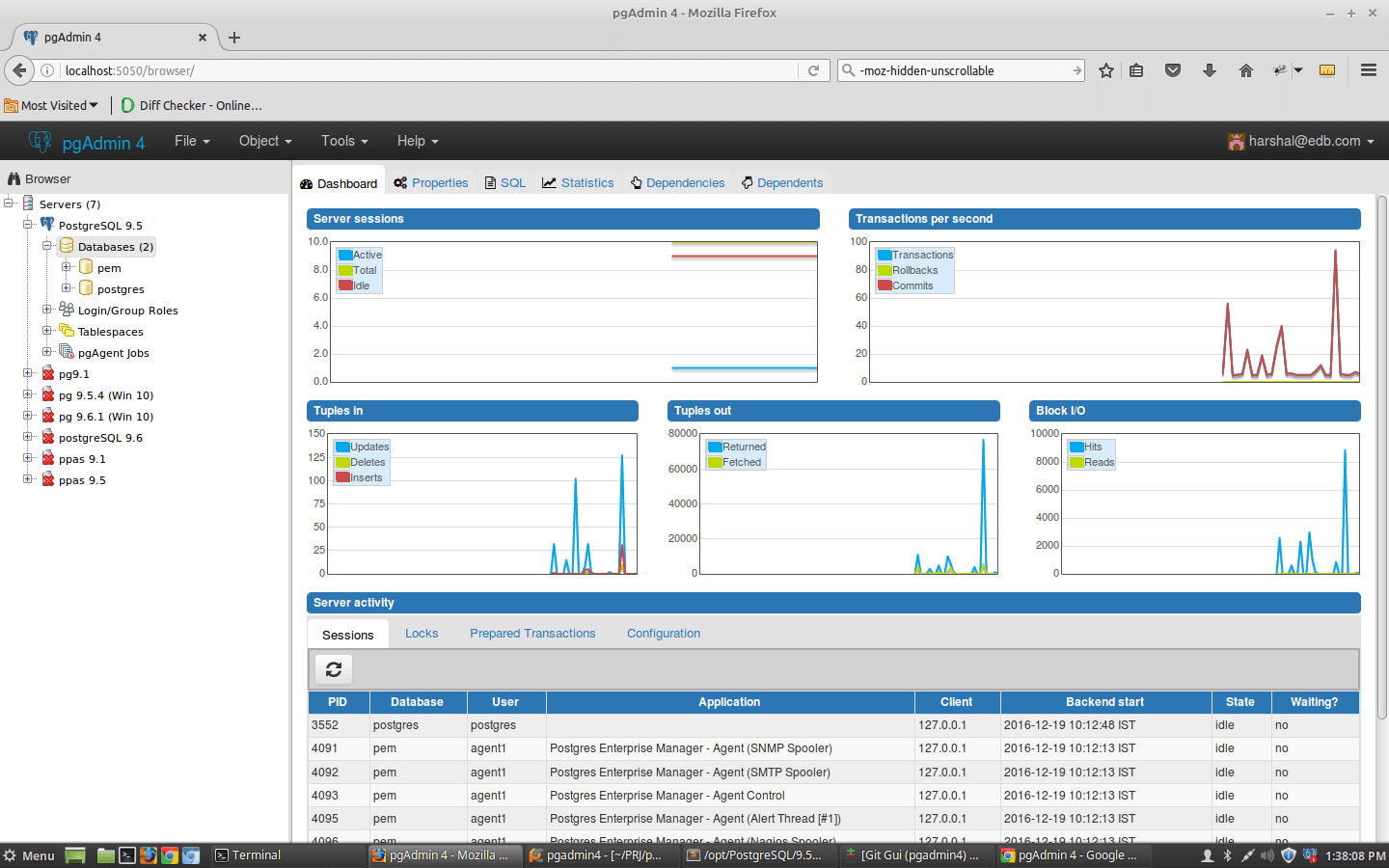
PostgreSQL is a powerful open source object-relational database that uses and extends SQL with features for safely storing and scaling complex data workloads. With roots going back to 1986 and nearly 40 years of development, it has earned a reputation for a proven architecture, reliability, data integrity, and standards compliance.
It runs on all major operating systems, has been ACID-compliant since 2001, and supports both SQL for relational data and JSON for non-relational data. PostgreSQL is highly extensible, letting teams define custom data types, functions, and even write code in different programming languages, and it scales from small prototypes to systems managing terabytes or petabytes.
Key features include:
- ACID compliance: Full atomicity, consistency, isolation, and durability support reliable transactions and data integrity, including nested transactions through savepoints and all standard isolation levels up to serializable.
- Advanced indexing: Support for B-tree, hash, GiST, SP-GiST, GIN, and BRIN indexes, plus covering indexes and index-only scans, lets teams optimize a wide range of query patterns.
- Extensibility: Custom functions, data types, operators, and procedural languages such as PL/pgSQL, Perl, Python, and Tcl let teams shape the database around their application without recompiling.
- Document and search support: JSON and JSONB types, SQL/JSON query functions, full-text search, and international character sets let one database handle relational and semi-structured data together.
- Reliability and replication: Write-ahead logging, asynchronous, synchronous, and logical replication, point-in-time recovery, and active standbys support fault-tolerant, recoverable deployments.
Limitations (as reported by users on G2):
- Tuning complexity: Users note that performance tuning and configuration can be complex for beginners, and managing replication or large-scale data requires deeper technical expertise.
- Limited built-in tooling: Compared with some commercial databases, built-in monitoring and GUI tools are limited, so teams often add third-party tools for a polished interface.
- Large-dataset performance: Some reviewers report that loading very large datasets can be slow without careful optimization.
- Multi-master gaps: Native active-active, multi-master replication is not built in, which can complicate certain high-availability designs.
Source: PostgreSQL
5. MongoDB

Best for: Flexible document data for fast application development
Strengths: Document model with horizontal scaling and native vector search
Things to consider: Document size limits and memory use at scale
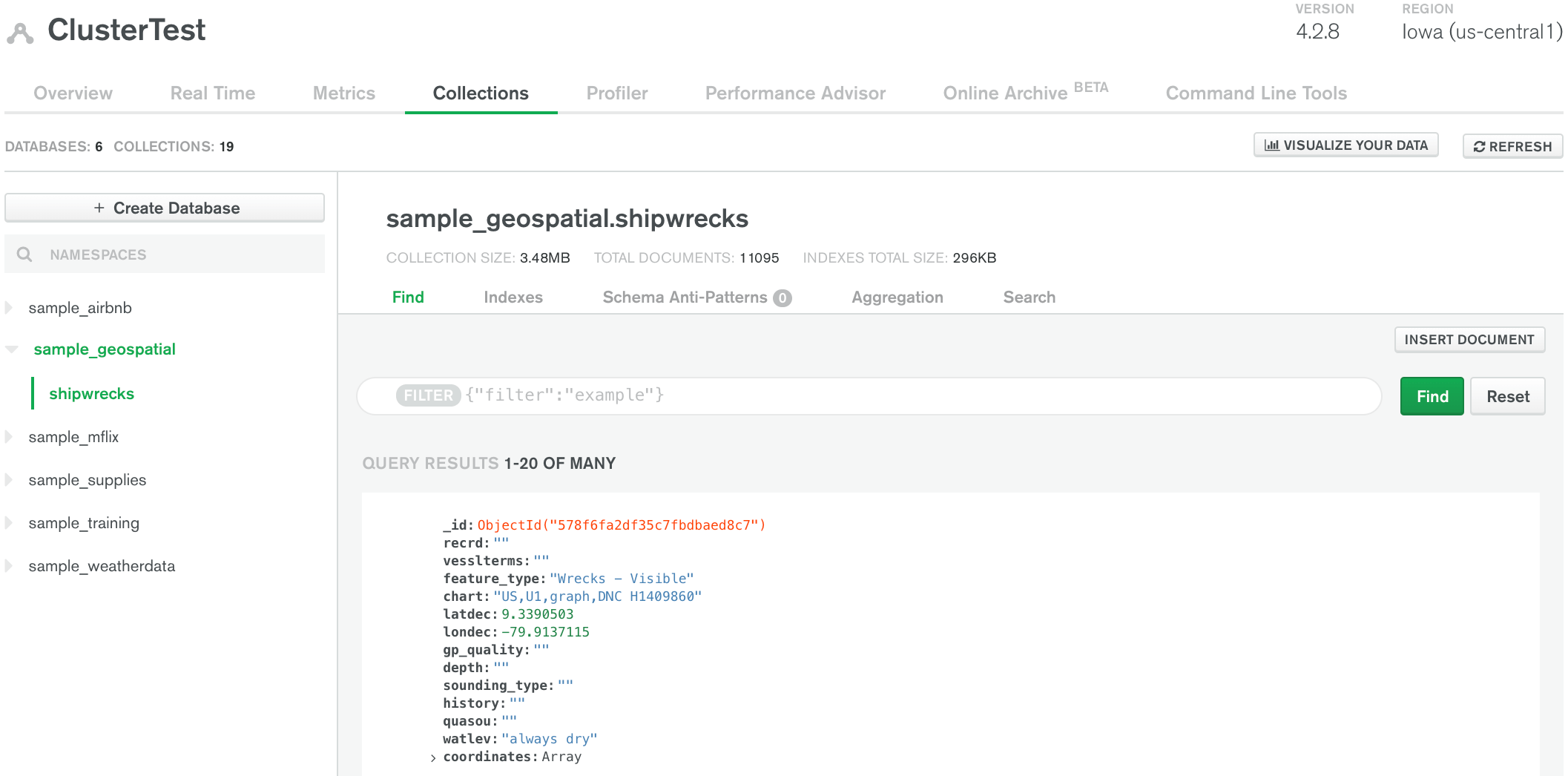
MongoDB is a popular open source NoSQL database that stores data in JSON-like BSON documents, allowing dynamic schema design. Its Community Edition is the source-available, free-to-use version of the document database and is suited to learning, prototyping, and building applications in self-managed environments on Windows, macOS, and Linux.
The document model consolidates data into flexible structures that let teams adapt schemas quickly. Starting with version 8.2, Community Edition includes native full-text and vector search, so developers can build semantic retrieval, autocomplete, and retrieval-augmented generation directly in the database without a separate search engine or vector store.
Key features include:
- Document-oriented storage: Data is stored as BSON documents, enabling flexible and hierarchical structures and letting schemas change without costly migrations.
- Horizontal scaling: Sharding distributes data across multiple servers, so the database can scale out to handle growing datasets and higher throughput.
- High availability: Built-in replication through replica sets provides data redundancy and fault tolerance to keep applications running through node failures.
- Flexible indexing: Single-field, compound, geospatial, and text indexes optimize a range of query patterns, and an aggregation pipeline supports data processing and analysis.
- Native full-text and vector search: From version 8.2, the database supports the $search, $searchMeta, and $vectorSearch stages for hybrid search and RAG without an external engine.
Limitations (as reported by users on G2):
- Document size limit: Individual documents are capped at 16MB, which reviewers cite as a constraint that has to be designed around for large records.
- Aggregation complexity: Users find map-reduce and complex aggregation queries harder to learn and slower to build than equivalent relational queries.
- Memory and performance at scale: Reviewers report high memory usage and occasional slowdowns or lag when working with very large datasets.
- Evolving feature set: Some users note the feature set can feel volatile as the product grows, requiring teams to track behavior across versions.
Source: MongoDB
6. Apache CouchDB

Best for: Offline-first sync across distributed and mobile clients
Strengths: HTTP/JSON API with multi-primary replication
Things to consider: No ACID transactions and limited ad-hoc querying
Apache CouchDB is an open source NoSQL database that uses a schema-free, JSON-based document store and speaks the ubiquitous HTTP protocol. Its replication protocol is implemented across environments that span globally distributed server clusters, mobile phones, and web browsers, which makes it a fit for offline-first applications.
CouchDB can run as a single node behind an application server or as a clustered database across many servers or VMs for higher capacity and availability without changing APIs. Individual nodes use a crash-resistant append-only data structure, and a multi-node cluster stores data redundantly.
Key features include:
- Multi-primary replication: The Couch Replication Protocol supports bidirectional sync between server clusters, mobile devices, and browsers, enabling offline-first experiences that reconcile when connectivity returns.
- HTTP/JSON API: CouchDB stores documents as JSON and exposes a RESTful HTTP interface, so it works with any software, proxy, or load balancer that speaks HTTP without special drivers.
- MVCC concurrency: Multi-version concurrency control allows concurrent reads and writes without locking, and provides consistency and isolation across operations.
- MapReduce views: Indexed MapReduce views let teams define queries over stored documents, which is how CouchDB handles retrieval in place of ad-hoc SQL.
- Cluster and single-node modes: Projects can start on a single node and scale to a cluster for higher capacity and high availability without changing application APIs.
Limitations (as reported by users on G2):
- No ACID transactions: CouchDB does not support the typical notion of a transaction, so enforcing uniqueness across documents or safely incrementing a value is difficult.
- Expensive ad-hoc queries: Creating ad-hoc queries that do not have a predefined view is expensive, and users report extra storage overhead compared with other databases.
- No built-in full-text search: Full-text search is not built in and requires external tools such as couchdb-lucene or a separate search engine.
- Learning curve and tooling: Reviewers note that new users need time to learn the concepts and interface, and that it works best at smaller scale.
Data processing, streaming, and query engines
7. Apache Spark

Best for: Large-scale batch, SQL, and machine learning processing
Strengths: In-memory engine unifying batch and streaming
Things to consider: High memory use and micro-batch streaming
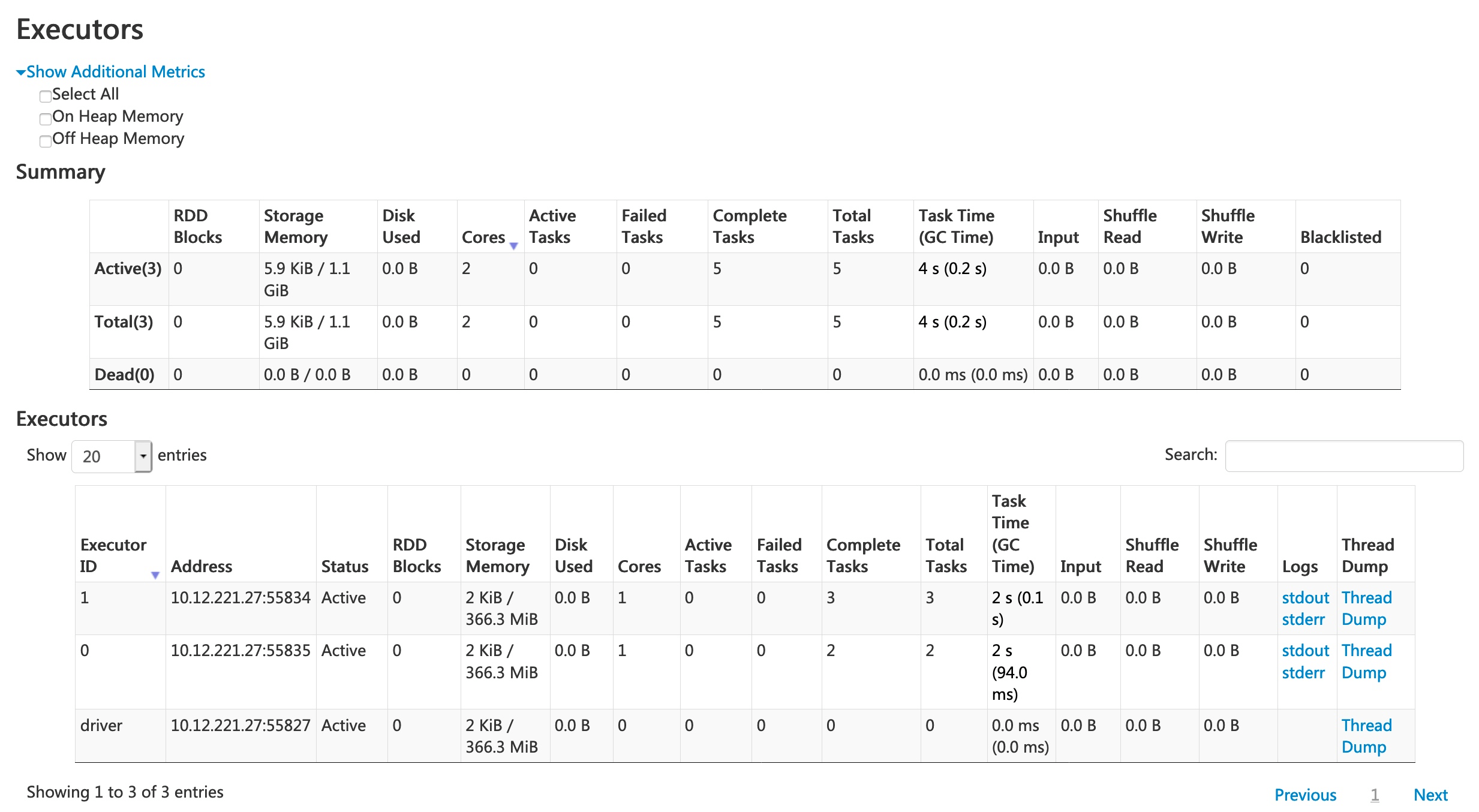
Apache Spark is an open source multi-language engine for executing data engineering, data science, and machine learning on single machines or clusters. It is compatible with the Hadoop ecosystem and provides an interface for programming entire clusters with implicit data parallelism and fault tolerance, using Python, SQL, Scala, Java, or R.
Spark is built on a distributed SQL engine and unifies the processing of data in batches and streams. It runs fast distributed ANSI SQL for dashboards and reporting, supports exploratory analysis on very large datasets, and lets teams train machine learning models on a laptop and scale the same code to clusters of thousands of machines.
Key features include:
- In-memory processing: Spark processes data in memory, which increases the speed of data processing tasks compared with disk-based engines and suits iterative workloads.
- Unified batch and streaming: A single engine handles both batch and streaming workloads in the language of choice, reducing the need for separate processing systems.
- Built-in libraries: MLlib for machine learning, Spark SQL for structured data, GraphX for graph processing, and structured streaming ship together for a broad range of applications.
- Adaptive query execution: Spark SQL adapts the execution plan at runtime, for example setting the number of reducers and join algorithms automatically to optimize queries.
- Broad ecosystem integration: Spark integrates with common storage, SQL, BI, and machine learning frameworks and scales them across many machines, working on structured tables and unstructured data alike.
Limitations (as reported by users on PeerSpot):
- High memory consumption: Spark relies on large amounts of RAM for in-memory processing, which drives up cost and can make it resource intensive to run cost-efficiently.
- Micro-batch streaming: Its streaming partitions live data into micro-batches rather than true record-by-record processing, and some users find engines such as Flink stronger for streaming.
- Small-file issues with Hadoop: Users report a small-file problem when Spark runs on Hadoop, along with latency on certain workloads.
- Resource and session management: Reviewers note that lingering Spark sessions can be hard to terminate because of deallocation behavior, and that some conventional SQL functions are missing.
Source: Apache Spark
8. Apache Kafka
Best for: High-throughput, durable event streaming
Strengths: Durable distributed log with high throughput
Things to consider: Operationally complex and expertise-dependent
Apache Kafka is an open source distributed event streaming platform used for high-performance data pipelines, streaming analytics, data integration, and mission-critical applications. It publishes and subscribes to streams of records, stores them durably in a fault-tolerant cluster, and processes them as they occur.
Kafka is built for high throughput and low latency, delivering messages at network-limited speeds with latencies as low as a few milliseconds. It scales production clusters to large numbers of brokers, partitions, and trillions of messages per day, and stretches across availability zones or regions for high availability.
Key features include:
- Durable distributed log: Kafka stores streams of data in a distributed, durable, replicated commit log, which provides fault tolerance and lets consumers replay records.
- High throughput and low latency: The platform delivers messages at network-limited throughput with latencies as low as a few milliseconds, handling large read and write volumes from many clients.
- Built-in stream processing: Kafka Streams and ksqlDB allow joins, aggregations, filters, and transformations with event-time and exactly-once processing directly on the streams.
- Kafka Connect: An out-of-the-box Connect framework integrates Kafka with hundreds of external sources and sinks such as PostgreSQL, Elasticsearch, and object storage.
- Scalability and high availability: Clusters scale to thousands of brokers and elastically expand storage and processing, while stretched clusters span zones and regions for resilience.
Limitations (as reported by users on G2):
- Operational complexity: Reviewers cite operational overhead across broker sizing, partition rebalancing, consumer group management, and monitoring, which smaller teams can find overwhelming.
- Expertise required: Integrating Kafka into existing applications demands a skilled team to set up and maintain the infrastructure, adding cost and effort.
- Resource consumption and cost: At scale, storage, replication, and compute add up, and users list high resource consumption as a common drawback.
- Limited queuing features: Some users note limited message-queuing features relative to purpose-built queues, so Kafka can be more than a simpler use case requires.
49. Apache Airflow

Best for: Orchestrating and scheduling complex data pipelines
Strengths: Python-defined DAGs with a rich monitoring UI
Things to consider: Requires programming skills and careful setup
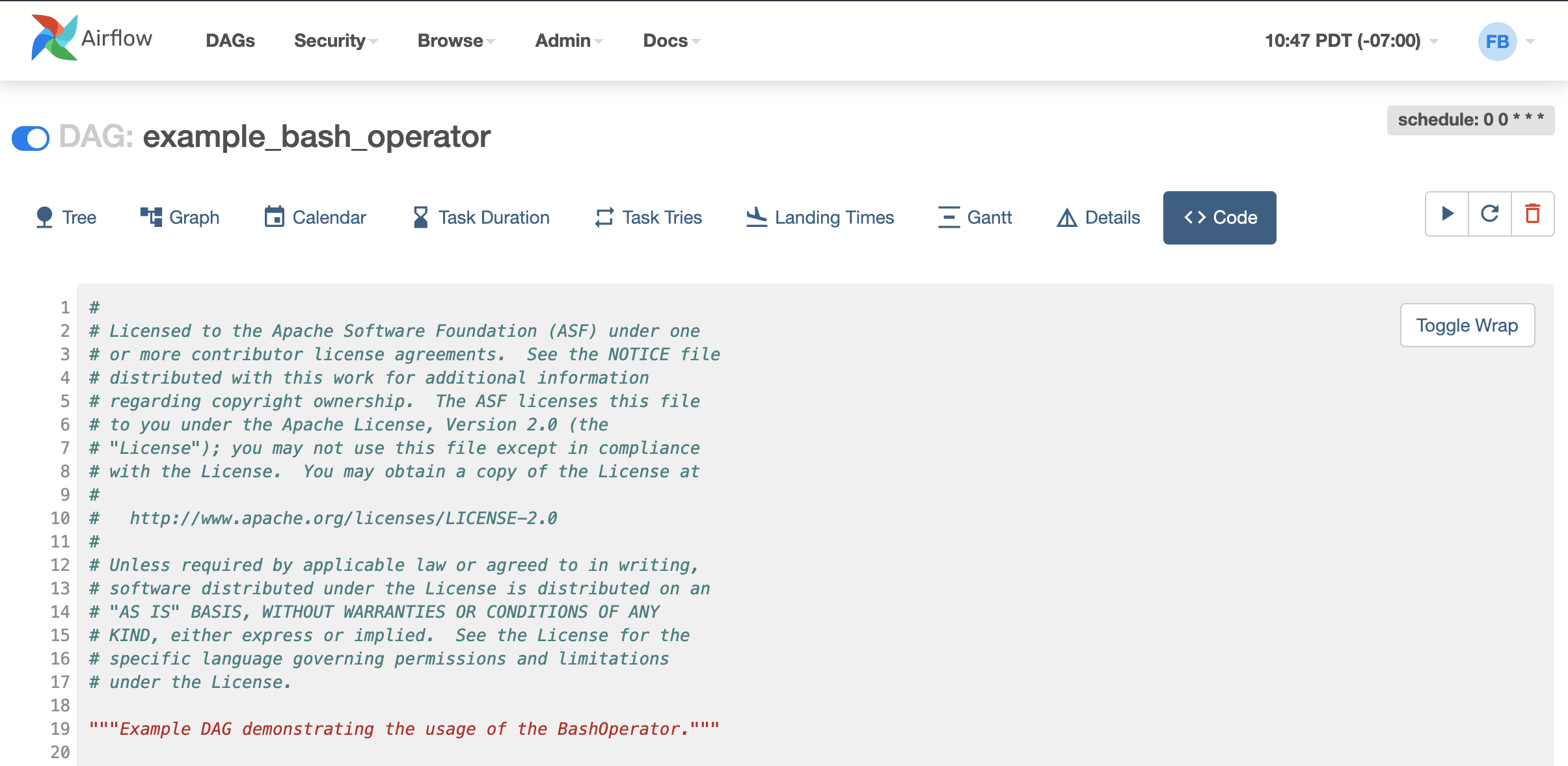
Apache Airflow is an open source platform created by the community to programmatically author, schedule, and monitor workflows. It orchestrates complex data pipelines by defining workflows as code, so tasks run in the right order and with clear visibility into their status.
Airflow uses a modular architecture and a message queue to coordinate an arbitrary number of workers, and its pipelines are defined in Python, which allows dynamic pipeline generation. It ships with many plug-and-play operators for cloud and third-party services, so it fits existing infrastructure and extends to new technologies.
Key features include:
- Python-defined DAGs: Workflows are defined as directed acyclic graphs of tasks in pure Python, making dependencies and execution order explicit and allowing tasks to be generated dynamically.
- Scalable architecture: A modular design and message queue orchestrate any number of workers, so pipelines can scale as workloads grow.
- Rich web UI: A modern web application lets teams monitor, schedule, trigger, and debug workflows with full insight into task status and logs.
- Extensible operators: A plugin architecture and custom operators integrate with services such as Google Cloud, AWS, and Azure, and extend the platform to new systems.
- Dynamic and reusable pipelines: Because pipelines are code, teams can use standard Python features, templating, and loops to build reusable, parameterized workflows for data movement, ML, and infrastructure tasks.
Limitations (as reported by users on Capterra):
- Requires programming skills: Airflow follows a workflow-as-code philosophy, so it is difficult for non-developers and calls for Python knowledge to build and maintain pipelines.
- Setup and configuration: Users report that it can be difficult to learn and properly configure, especially without prior programming or server administration experience.
- Environment stability: Setting Airflow up in different environments can lead to stability or performance problems for some teams.
- Logging detail: Reviewers note that logs do not always show granular details such as how many records were inserted, updated, or deleted by a task
Source: Apache Airflow
10. OpenSearch

Best for: Search, observability, and security analytics at scale
Strengths: Lucene-based search with dashboards and a vector engine
Things to consider: Setup complexity and occasional query latency
OpenSearch is an open source, enterprise-grade search and observability suite built on Apache Lucene that brings order to unstructured data at scale. It originated as a fork of Elasticsearch and is now a project of the Linux Foundation through the OpenSearch Software Foundation, helping teams build search, monitoring, and analysis solutions.
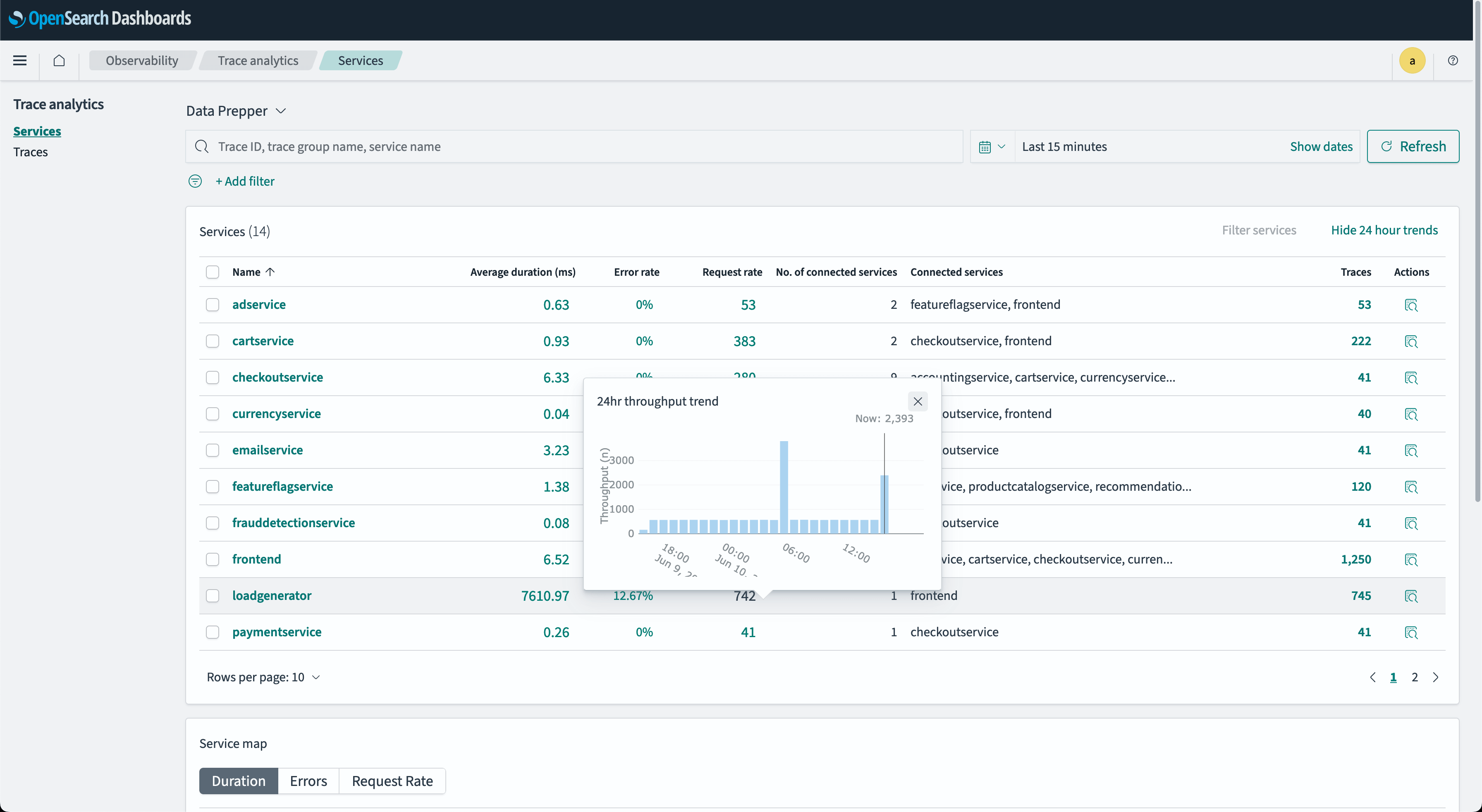
The suite pairs the OpenSearch engine with OpenSearch Dashboards for visualization, Data Prepper for ingestion, and a vector engine for machine learning and generative AI applications. Integrated components for ingestion, search, and visualization make it flexible and extensible across search, observability, and security use cases.
Key features include:
- Search capabilities: OpenSearch supports full-text and natural language search along with vector database capabilities for semantic and hybrid queries across large datasets.
- Observability stack: Log analytics, performance monitoring, and event correlation help teams identify and resolve issues across applications and infrastructure.
- Security analytics: Built-in threat intelligence and event correlation detect and respond to security threats in real time from ingested data.
- Dashboards and visualization: OpenSearch Dashboards provides an integrated toolset for visually exploring and querying data, with Data Prepper enriching and aggregating data on the way in.
- Vector engine and ML: A high-performance vector engine powers machine learning and generative AI applications such as vector search, anomaly detection, and retrieval workflows.
Limitations (as reported by users on G2):
- Query latency and outages: Some users report that OpenSearch occasionally suffers slow query responses or outages under heavy load.
- Setup complexity: Reviewers note the platform can be complex for beginners to set up and configure compared with fully managed alternatives.
- Support and visualization gaps: Users mention limited support and a desire for improvements in real-time visualization and updates.
- Cluster sizing constraints: On managed offerings, users cite per-node data limits and inflexible instance options that require planning around cluster sizing.
Source: OpenSearch
11. Presto

Best for: Federated interactive SQL across the open lakehouse
Strengths: Query data in place across many sources with ANSI SQL
Things to consider: No update/delete and resource-hungry queries
Presto, also known as PrestoDB, is an open source distributed SQL query engine designed for fast, interactive analytic queries against data of any size. It is a neutrally governed project under the Linux Foundation and does not manage storage; instead it queries data where it lives, from data lakes and lakehouses to relational and NoSQL databases.
Presto uses an in-memory, distributed architecture with a coordinator node and multiple worker nodes, and a single query can combine data from multiple sources. It is optimized for interactive and batch workloads across a few to thousands of users, and its native C++ worker, Prestissimo, built on Velox, targets higher performance.
Key features include:
- Federated in-place querying: Presto queries data across relational databases, NoSQL stores, data lakes, and lakehouses without moving it, and a single query can join data from multiple sources.
- ANSI SQL interface: Teams use one familiar ANSI SQL language and engine across sources, which avoids re-platforming and lets existing analytics tools connect directly.
- Distributed in-memory execution: A coordinator plans and schedules queries across worker nodes that process data in memory, supporting large amounts of small interactive queries.
- Broad connector support: Connectors let Presto read data stored in systems such as Hive, HDFS, S3, Cassandra, and MySQL, making it a shared query layer over the lakehouse.
- Scalability across workloads: Presto scales from a few to thousands of users and handles both interactive analytics and batch queries against gigabytes to petabytes of data.
Limitations (as reported by users on G2):
- No update or delete: Users note constraints with drop and delete statements and that insert overwrite is painful, so Presto cannot be relied on for end-to-end transactional work.
- Resource-hungry: Reviewers describe heavy, resource-hungry processes, with response time depending on how much can be cached.
- Limited UDFs and operators: Some users cite limitations in user-defined functions and certain operators, along with running-query limits.
- Complex on some connectors: Queries can become very complex when working against certain sources such as Elasticsearch, and it is not a transactional database replacement.

Source: Presto
12. Trino
Best for: High-concurrency federated analytics on big data
Strengths: Fast distributed SQL with strong query federation
Things to consider: Batch focus; concurrency and security need tuning
Trino, formerly known as PrestoSQL, is an open source distributed SQL query engine built for fast, low-latency analytics against data of any size. It is a highly parallel engine used by large organizations to query exabyte-scale data lakes and data warehouses, and it is ANSI SQL compliant so it works with BI tools such as Tableau, Power BI, and Superset.
Trino queries data natively in systems such as Hadoop, S3, Cassandra, and MySQL without copying it, and federated queries can access object storage, relational databases, and NoSQL systems in a single statement. It runs on-premises or in any major cloud and supports ad-hoc analytics, long batch queries, and high-volume sub-second applications.
Key features include:
- Query federation: A single Trino query can join data across object storage, relational databases, and streaming or NoSQL systems, giving a unified view without moving data.
- In-place analysis: Trino natively queries data in Hadoop, S3, Cassandra, MySQL, and others without slow, error-prone copy processes, which suits open lakehouse analytics.
- Distributed, low-latency engine: Built from the ground up as a parallel, distributed engine, Trino targets efficient, low-latency analytics at exabyte scale.
- ANSI SQL and BI support: As an ANSI SQL compliant engine, Trino connects to common BI and analytics tools and lets analysts use familiar SQL across sources.
- Batch ETL and interactive use: Trino speeds up resource-intensive batch ETL that runs across disparate systems and also serves interactive, sub-second application queries from the same engine.
Limitations (based on publicly available sources):
- Java engine performance ceiling: Analyses note that the Java-based engine cannot fully exploit vectorized execution on modern CPUs the way C++ engines can, which can limit interactive performance.
- Batch-oriented design: Trino was designed as a batch analytics engine, so streaming data must be ingested in batches and teams often add a separate platform for real-time analytics.
- Concurrency scaling: Sustaining performance as concurrency grows can be difficult, leading some teams to maintain another system for highly concurrent workloads.
- Security and resource limits: Commentary cites limited built-in security that must be configured, plus resource needs and query limits that can cancel queries under constraints.
Related content: Read our guide to managed open source databases
Benefits of using multiple open source big data tools
Using multiple big data tools within an open source data platform can provide several key benefits that enhance data processing, management, and analysis capabilities. Here are some notable advantages:
- Enhanced flexibility and customization: Combining different tools allows for a more tailored data ecosystem that can adapt to business needs. Each tool can be selected based on its strengths and integrated into the data pipeline to handle particular tasks, such as data ingestion, storage, processing, or visualization.
- Improved performance and efficiency: Specialized tools are often optimized for specific functions, leading to better performance and efficiency. For example, using Apache Kafka for real-time data streaming, Apache Spark for in-memory processing, and PostgreSQL for relational data storage ensures that each component operates at its best. This can significantly reduce processing time and resource consumption.
- Increased reliability and redundancy: Redundancy is built into the system, as different tools can provide backup options or failover mechanisms. For example, combining Hadoop’s HDFS for distributed storage with Cassandra’s fault-tolerant database design can ensure continuous data availability even in the event of individual component failures.
- Access to advanced features and capabilities: Different tools offer unique features for different use cases. For example, by using Elasticsearch for advanced search capabilities, Apache Airflow for workflow orchestration, and Grafana for real-time monitoring, organizations can exploit the best functionalities each tool offers.
- Community support and rapid innovation: Open source tools benefit from active communities that drive continuous improvement and innovation. By integrating multiple open source tools, organizations can tap into a range of community-driven enhancements, plugins, and integrations.
- Cost-effectiveness: Using open source tools reduces licensing costs associated with proprietary software. Organizations can allocate resources more effectively, investing in development and scaling rather than expensive software licenses.
Empowering open source data management with Instaclustr
Organizations are increasingly relying on open source technologies to gain a competitive edge–and for good reason.
Instaclustr offers a comprehensive suite of managed services that enable businesses to effectively leverage popular open source tools such as Apache Cassandra®, Apache Kafka®, OpenSearch®, PostgreSQL® and more. By simplifying the deployment and management of complex open source data technologies, organizations can focus squarely on building and scaling your applications.
Instaclustr’s managed services take care of the infrastructure setup, configuration, and ongoing maintenance, freeing organizations from the burden of managing these intricate systems themselves–all while ensuring the underlying data platform is running optimally, securely, and with high availability.
Other benefits you get with Instaclustr:
- 24x7x365 expert support ensuring minimal downtime in case of any issues
- Experienced engineers specializing in managing and optimizing open source data platforms
- Proactive monitoring, troubleshooting and performance tuning
- Scale seamlessly to meet the demands of increased workloads
- Ensure optimal performance and cost-efficiency by adding or removing nodes/resources whenever needed–and without worrying about capacity constraints or disruptions
- Industry-leading security and compliance, including GDPR, SOC2, PCI-DSS, ISO27001 and more
- Features like encryption at rest and in transit, fine-grained access controls, and regular security updates
- And more
Ready to experience the incredible power of an open source data platform? Explore our platform or request a personalized demo and let’s get started on creating the best open source solution for your organization.