What is open source vector database software?
TL;DR: Open source vector databases store and search embeddings for semantic search and RAG. Best for managed open source stores: Instaclustr; for billion-scale: Milvus; for filtered search: Qdrant; for PostgreSQL users: pgvector.
The leading open source vector databases include purpose-built stores such as Milvus, Weaviate, Qdrant, and Chroma, alongside general-purpose platforms and extensions like OpenSearch, Apache Cassandra, Redis, and pgvector for PostgreSQL. These tools store high-dimensional vector embeddings that power AI workloads, semantic search, and retrieval-augmented generation (RAG). Choosing the right platform depends on your existing infrastructure, scale requirements, and preferred programming language.
Open source vector database software stores, indexes, and searches high-dimensional vectors: numerical representations of data such as text, images, or audio. Unlike traditional relational or document databases, vector databases are optimized for operations like nearest neighbor search, which is crucial for AI and machine learning applications.
These databases allow organizations to build applications that rely on finding similar items or identifying patterns within complex datasets, harnessing the power of vector embeddings. The open source aspect means the software is freely available, with source code that can be modified or extended by anyone. This encourages community-driven innovation, faster bug fixes, and greater transparency regarding data handling and algorithms.
Adoption of open source vector databases has accelerated as retrieval-augmented generation and agentic AI move into production, and industry research points to rapid market growth in the years ahead. Newer deployments increasingly emphasize memory-efficient indexing, hybrid retrieval that blends semantic and keyword search, and support for the far higher query volumes that autonomous agents generate.
Purpose-built vector databases include:
- Milvus: Distributed database that scales to billions of vectors for enterprise GenAI workloads.
- Weaviate: AI-native database with built-in embeddings and hybrid search for RAG and agents.
- Qdrant: Rust-based engine optimized for high-speed, memory-efficient filtered search.
- Chroma: Lightweight, embeddable database tuned for fast local prototyping.
Broader platforms and extensions include:
- OpenSearch and Cassandra: General-purpose data platforms that add vector search to existing workloads.
- Pgvector: PostgreSQL extension that keeps vectors and relational data in one database.
- Redis: In-memory platform that unifies caching and low-latency vector search.
Editor’s note: Updated the article to add recent market and technology trends, a new section on quantization and memory efficiency, and refreshed detail across capabilities as of 2026.
This is part of a series of articles about vector databases
Open source vector databases at a glance
The table below summarizes the key differences between the open source vector databases covered in this guide. We explore each option in more detail in the sections that follow.
| Category | Solution | Best For | Key Strengths | Things to Consider |
|---|---|---|---|---|
| Managed and general-purpose platforms | Instaclustr | Managed open source vector stores | Runs vector stores on PostgreSQL, Cassandra, and OpenSearch | Docs and auto-scaling could be fuller |
| Managed and general-purpose platforms | OpenSearch | RAG and hybrid search in a search suite | Vector, keyword, and analytics in one platform | Setup and cluster tuning need expertise |
| Managed and general-purpose platforms | Apache Cassandra | Distributed, always-on vector storage | Masterless, fault-tolerant, linear scaling | Reads and data modeling can be complex |
| Purpose-built vector databases | Milvus | Billion-scale similarity search | Scales to tens of billions of vectors | Distributed setup adds overhead |
| Purpose-built vector databases | Qdrant | Filtered vector search at scale | Rust engine, quantization, one-stage filtering | Limited UI operations |
| Purpose-built vector databases | Weaviate | RAG with built-in embeddings | Embeddings and hybrid search in one system | Latency can grow at scale |
| Purpose-built vector databases | Chroma | Fast local prototyping | Simple setup, multiple search types | Single-node scaling limits |
| Vector search for existing infrastructure | Pgvector | Vector search inside PostgreSQL | Vectors with relational data, SQL and ACID | Two index types; Postgres limits |
| Vector search for existing infrastructure | Redis | Low-latency in-memory search | Sub-ms retrieval, caching, agent context | Memory cost at large scale |
| Vector search for existing infrastructure | FAISS | Embeddable similarity search | High-speed CPU and GPU search | Library, not a database |
Core capabilities of open source vector databases software
High-dimensional vector storage
A core function of vector database software is its capacity to store vast numbers of vectors, each possibly containing hundreds or thousands of dimensions. This storage is optimized for read and write operations at scale, ensuring that large datasets, such as those generated by modern AI models, are accessible with low latency.
Unlike conventional databases, these systems can efficiently accommodate the unique requirements of vector data, like rapid changes in vector size or structure, without performance degradation. Storing high-dimensional vectors effectively means dealing with the challenges of memory usage, compression, and maintaining quick access. Most open source solutions offer features such as memory mapping, efficient serialization, and sharding.
Indexing mechanisms
Efficient similarity search in large-scale vector datasets depends on indexing techniques. Open source vector databases implement algorithms such as IVF (inverted file), HNSW (hierarchical navigable small world), and Annoy-style approximate nearest neighbor indexes. These indexing methods reduce the number of comparisons needed to find similar vectors, cutting down search time from minutes to milliseconds even when working with millions of items.
Such indexes are essential for practical deployment, especially in latency-sensitive applications like recommendation engines or real-time search. Open source systems often allow customization of indexing parameters, like index type and recall guarantees, so users can tune performance according to their workloads.
Scalability and distributed architecture
Open source vector databases are designed to scale horizontally, supporting distributed deployments across clusters of machines. By sharding data and distributing both storage and search workloads, these systems can manage immense datasets that exceed the capacity of single servers. Horizontal scaling is critical for applications that require real-time responses from vast collections of high-dimensional vectors, such as in eCommerce or content platforms.
Distributed architecture also ensures high availability and fault tolerance. If a node goes down, the workload shifts to other nodes, maintaining uninterrupted service. This resilience makes vector databases suitable for production environments and mission-critical applications.
Scaling requirements have also shifted as autonomous agents enter production. Agentic systems can issue far more queries than human users, which changes how teams provision throughput and plan capacity for vector workloads.
Metadata filtering and hybrid queries
Vector search alone is rarely enough for practical applications; most real-world use cases require combining vector similarity with traditional filtering based on metadata. Open source vector databases support hybrid queries that blend vector-based nearest neighbor search with structured queries over associated metadata fields. This enables fine-grained control, like retrieving only vectors tied to certain categories or date ranges.
Metadata filtering enables richer, more flexible application logic. For instance, semantic search can be limited to specific document types, languages, or geographic regions. Open source platforms frequently implement efficient bitmaps and indexing on metadata fields, ensuring that filtering doesn’t significantly impact performance even as datasets grow.
Hybrid retrieval has become a default expectation rather than an add-on. Modern systems combine dense vector search with learned sparse or keyword methods such as BM25 and SPLADE, and use techniques like reciprocal rank fusion to merge the two result sets.
Integration with machine learning frameworks
Integration with machine learning frameworks is a key aspect of modern open source vector databases. These systems often provide APIs and plugins to connect directly with frameworks like TensorFlow, PyTorch, or HuggingFace Transformers. Such integrations simplify the process of embedding generation, vector ingestion, and retrieval within end-to-end AI pipelines.
By supporting native ingestion of vectors produced by external ML workflows, and sometimes offering built-in embedding models, these databases close the loop between model training and production deployment. Developers can automate the flow from feature extraction to live search, experiment with different models, or update embeddings dynamically.
Integration now extends to orchestration frameworks such as LangChain and LlamaIndex, and to emerging standards like the Model Context Protocol (MCP) that let agents retrieve context through tool calls.
Quantization and memory efficiency
As vector collections grow into the hundreds of millions, memory becomes a primary cost and performance constraint. Quantization has moved from research into production as a way to compress vectors while preserving search quality. Scalar, product, and binary quantization reduce the precision of stored vectors, and recent industry benchmarks report memory reductions of several times to more than an order of magnitude with only minor loss of recall.
Many open source engines now expose quantization alongside disk-based indexing so teams can hold larger datasets in less memory. This makes it practical to scale similarity search on commodity hardware without a proportional rise in infrastructure cost.
Use cases for open source vector database software
Semantic search applications
Semantic search uses vector embeddings to understand content beyond mere keyword matches, enabling retrieval based on meaning and context. Open source vector databases make this possible by supporting nearest neighbor search in high-dimensional space, which can identify subtle relationships between queries and documents. This improves search accuracy, making it more useful for knowledge management, legal research, and technical documentation.
These systems also enable features such as query expansion and contextual ranking, helping retrieve information even if the user input doesn’t match the stored data word-for-word. This is crucial for conversational AI, chatbots, and enterprise search platforms where nuanced understanding and relevance matter most.
Image and video similarity search
With the proliferation of digital media, finding visually similar images or videos is a growing challenge. Open source vector databases address this by indexing embeddings generated from image or video content, often using pre-trained convolutional neural networks or other computer vision models.
Users can search for content that is visually alike, rather than relying on manual metadata or tags, simplifying workflows for media, eCommerce, and digital asset management. Beyond simple similarity, these databases support tasks such as deduplication, copyright detection, and recommendation. They scale efficiently as media collections grow to millions or billions of items, maintaining fast retrieval times even for high-resolution or lengthy video embeddings.
Multimodal search and retrieval
Multimodal search refers to retrieving information using a combination of input types, such as text queries returning image results, or images retrieving related documents. Open source vector databases make this feasible by storing and searching across different embedding spaces concurrently.
Supporting multimodal applications demands careful data organization, type-aware indexing, and cross-modal alignment. Such systems enable use cases in social media, digital marketing, and content moderation, where understanding links between varied data types is essential. Open source solutions often provide playgrounds and APIs to accelerate the development of custom multimodal search interfaces and workflows.
Multi-vector records are increasingly treated as first-class, where a single item carries several embeddings, such as separate vectors for a title, body, and image, to improve retrieval quality.
Anomaly detection and pattern recognition
Anomaly detection relies on identifying data points that deviate significantly from established patterns, often measured as outliers in vector space. Open source vector databases can be leveraged to conduct fast similarity and distance calculations over streams of incoming vectors, flagging anomalies in real time. This approach is broadly used in areas like fraud detection, security event monitoring, and equipment fault diagnosis.
These databases also support pattern recognition by enabling clustering and grouping of similar vectors without manual labeling. Through integrated indexing and search functions, developers can build analytical applications that spot trends, segment customer profiles, or classify unseen data.
Tips from the expert

David vonThenen
Senior AI/ML Engineer
As an AI/ML engineer and developer advocate, David lives at the intersection of real-world engineering and developer empowerment. He thrives on translating advanced AI concepts into reliable, production-grade systems all while contributing to the open source community and inspiring peers at global tech conferences.
In my experience, here are tips that can help you better implement and operate open source vector database software with an edge:
- Choose “library vs database” intentionally, then design the boundary: FAISS is a killer retrieval library—but it becomes “a database” only after you wrap persistence, concurrency, replication, backfills, and schema/versioning around it. Decide early whether you want to own that boundary or buy it via a real DB.
- Model your data as “chunks + provenance,” not “documents + embeddings”: For RAG/search, store immutable chunk IDs, source doc version, offsets, and extraction pipeline version. This makes re-chunking and re-embedding tractable and prevents “mystery chunks” when content changes.
- Use dual indexes for churny workloads: High update rates can degrade graph quality (especially HNSW). Maintain a small “fresh” index for recent writes and a larger “stable” index for consolidated data; query both and merge results. Periodically compact fresh→stable.
- Treat delete/TTL as a first-class performance feature: Deletions often turn into tombstones until compaction/merge. Plan compaction windows, vacuum strategy, or segment-merge tuning so TTL-heavy datasets don’t silently rot into slow queries.
- Exploit “vector normalization as an API contract”: If you do cosine similarity, normalize vectors at write time (and enforce it). It simplifies distance math, reduces mistakes across services, and makes debugging scoring anomalies much easier.
Notable open source vector database software
How we selected these tools: We shortlisted open source vector databases based on production readiness, indexing and query performance, hybrid search and metadata filtering, scalability, and integration with AI and machine learning workflows.
Managed and general-purpose data platforms
1. NetApp Instaclustr

Best for: Managed open source vector stores across cloud and on-prem
Strengths: Runs PostgreSQL, Cassandra, and OpenSearch vector stores as one service
Things to consider: Documentation depth and auto-scaling policies could be fuller
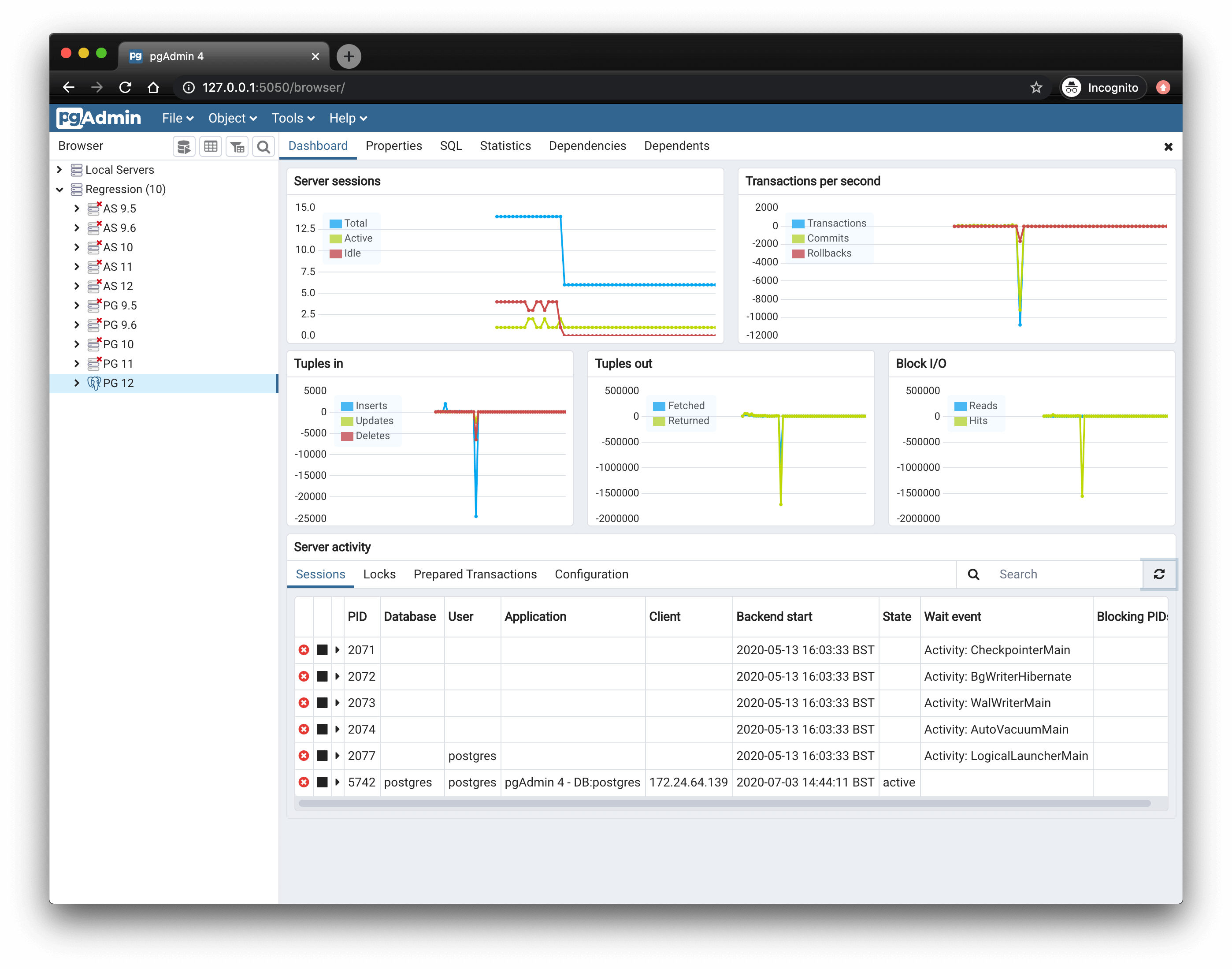
The NetApp Instaclustr Managed Platform runs open source data infrastructure as a fully managed service across AWS, Azure, Google Cloud, on-premises, and hybrid environments. For vector workloads, it builds and operates vector stores on PostgreSQL, Cassandra, and OpenSearch, so embeddings sit alongside existing operational data.
The platform handles provisioning, monitoring, scaling, backups, and security, and integrates with NetApp storage for added throughput and resiliency. It supports GenAI patterns such as vector search and hybrid search without requiring teams to run the underlying databases themselves.
Key features include:
- Managed vector stores on open source engines: Provisions and operates vector search on PostgreSQL, Cassandra, and OpenSearch, letting teams store embeddings next to relational and operational data in trusted open source databases.
- Dynamic scaling: Adjusts cluster processing capacity within minutes rather than over days, and can raise throughput significantly and reverse the change to reduce infrastructure cost.
- Monitoring and application console: Collects thousands of metrics from every node and exposes over 1,000 performance metrics through a console for visibility into cluster health and availability.
- Backup, restore, and replication: Schedules daily off-node backups and automates multi-region and multi-cloud replication for geographic redundancy and disaster recovery.
- Security and compliance: Applies default security configuration, TLS with client certificate authentication, and access controls, with SOC 2, ISO 27001, ISO 27018, GDPR, and PCI DSS coverage.
- Multi-cloud and hybrid deployment: Runs clusters across AWS, Azure, Google Cloud, on-premises, and hybrid setups, including integration with NetApp storage for open source and AI workloads.
Limitations (as reported by users on G2):
- Documentation depth: Some users would like more comprehensive documentation and tutorials to speed up onboarding.
- Scaling automation: Users note that workload-based automatic scaling policies, such as scheduled peak-hour scaling, would further improve efficiency.
- Platform breadth: Because the platform spans several open source technologies, new teams may need time to become familiar with the console and options.
2. OpenSearch

Best for: RAG and hybrid search within a unified search suite
Strengths: Combines vector, keyword, and analytics in one platform
Things to consider: Setup, cluster tuning, and scaling need search expertise
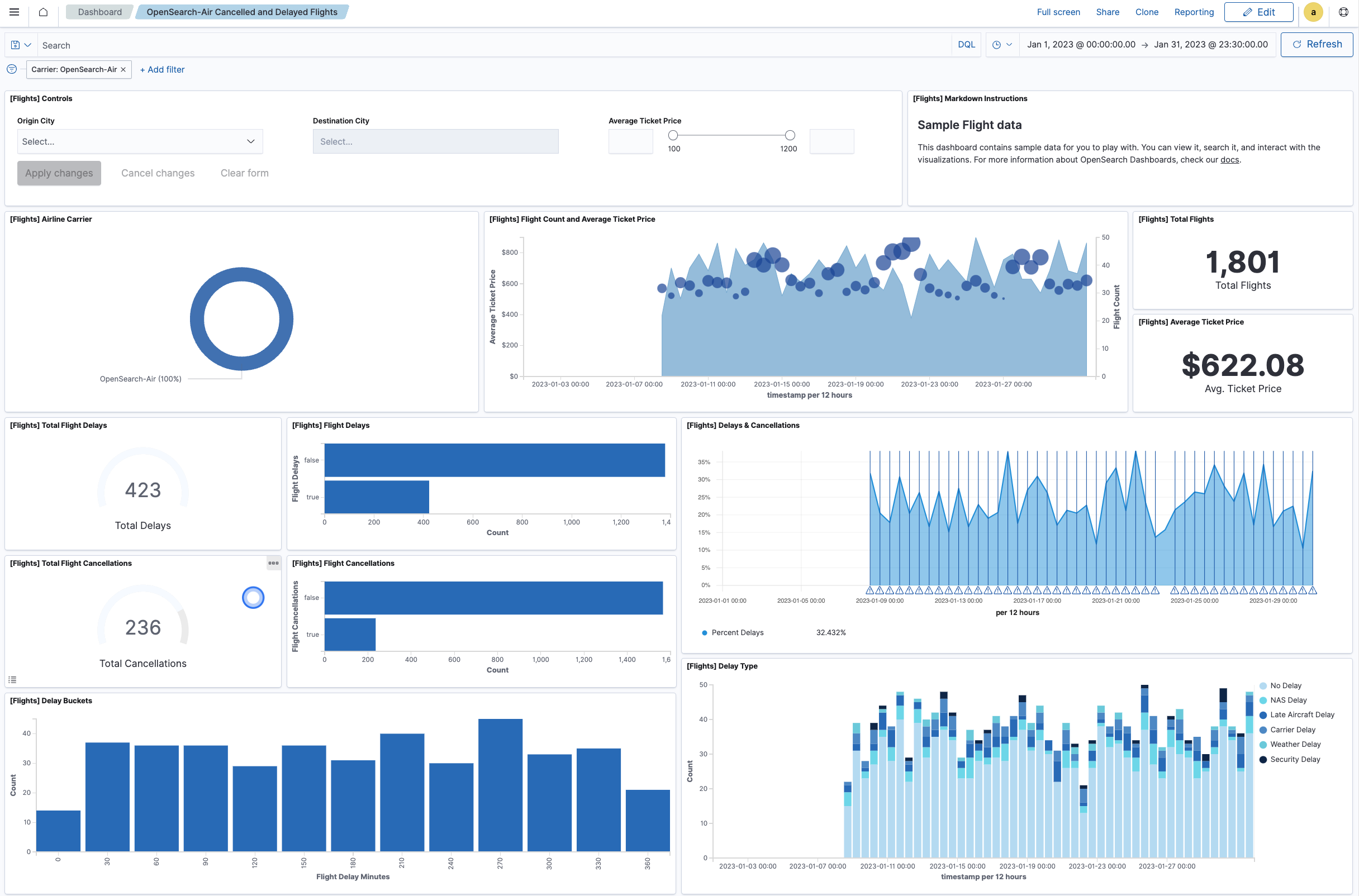
OpenSearch is an open source search and analytics engine built on Apache Lucene, and its Vector Engine adds a vector database for storing and searching high-dimensional embeddings. It uses k-nearest neighbor search to find similar items across text, images, and audio, and stores embeddings alongside traditional data in one system.
The Vector Engine supports semantic, hybrid, multimodal, neural sparse, and conversational search, and integrates with common large language model frameworks as a vector store for RAG applications.
Key features include:
- Vector engine for embeddings: Stores, indexes, and searches high-dimensional vector embeddings using k-nearest neighbor techniques for similarity search across unstructured data types.
- Multiple AI search methods: Supports semantic, hybrid, multimodal, neural sparse, and conversational search with RAG in a single platform, combining vector similarity with keyword relevance.
- Reciprocal rank fusion for hybrid search: Merges keyword and vector result sets so hybrid queries return ranked results that balance lexical and semantic matches.
- GPU-accelerated and disk-based indexing: Offers GPU-powered index builds to cut build times and cost for large workloads, and disk-based vector search to lower memory requirements.
- Real-time ingestion and pipelines: Continuously ingests and indexes data from multiple sources through ingest pipelines that filter, transform, and enrich data as it arrives.
- LLM integration and query DSL: Integrates with popular large language model frameworks as a vector store and exposes a JSON-based query domain-specific language for search.
Limitations (as reported by users on G2):
- Setup complexity: Users report that initial setup and configuration can be difficult for newcomers.
- Cluster tuning at scale: Managing and tuning clusters for larger workloads requires understanding of indexing and shard strategies.
- Query latency and support: Some users note occasional slow query responses and limited support.

Source: OpenSearch
3. Apache Cassandra

Best for: Distributed, always-on vector storage at large scale
Strengths: Masterless, fault-tolerant architecture with linear scaling
Things to consider: Reads and data modeling can be slower and more complex
Apache Cassandra is an open source NoSQL distributed database with a masterless architecture that provides linear scalability and fault tolerance across data centers and clouds. Every node is identical, so there is no single point of failure, and read and write throughput increase as nodes are added.
Cassandra 5.0 adds a native vector data type and Storage Attached Indexing, which together enable approximate nearest neighbor search over embeddings directly in CQL, bringing similarity search into a high-availability operational database.
Key features include:
- Native vector data type: Introduces a VECTOR type for storing embeddings as fixed-length float arrays in a table column, defined and queried through CQL.
- Storage Attached Indexing for ANN: Creates SAI indexes on vector columns to run approximate nearest neighbor search, with selectable similarity functions for dot product, cosine, and Euclidean distance.
- Masterless distributed architecture: Uses identical peer nodes with no single point of failure, so the cluster can survive node and data center outages without downtime.
- Linear scalability: Increases read and write throughput as machines are added, with no interruption to running applications.
- Multi-datacenter replication: Replicates data across regions with tunable synchronous or asynchronous replication for lower latency and regional fault tolerance.
- Elastic streaming and operations: Streams data between nodes during scaling, with Zero Copy Streaming for faster node additions, plus audit logging for operational tracking.
Limitations (as reported by users on G2):
- Read and query flexibility: Users report reads can lag under heavy load and that the query model lacks aggregates and ad-hoc querying.
- Data modeling learning curve: Effective schema and data modeling require experience, which can slow initial adoption.
- Memory management: Handling very large datasets can surface JVM memory management challenges.
Purpose-built vector databases
4. Milvus

Best for: Billion-scale similarity search for GenAI applications
Strengths: Distributed architecture scales to tens of billions of vectors
Things to consider: Distributed setup and resource use add operational effort
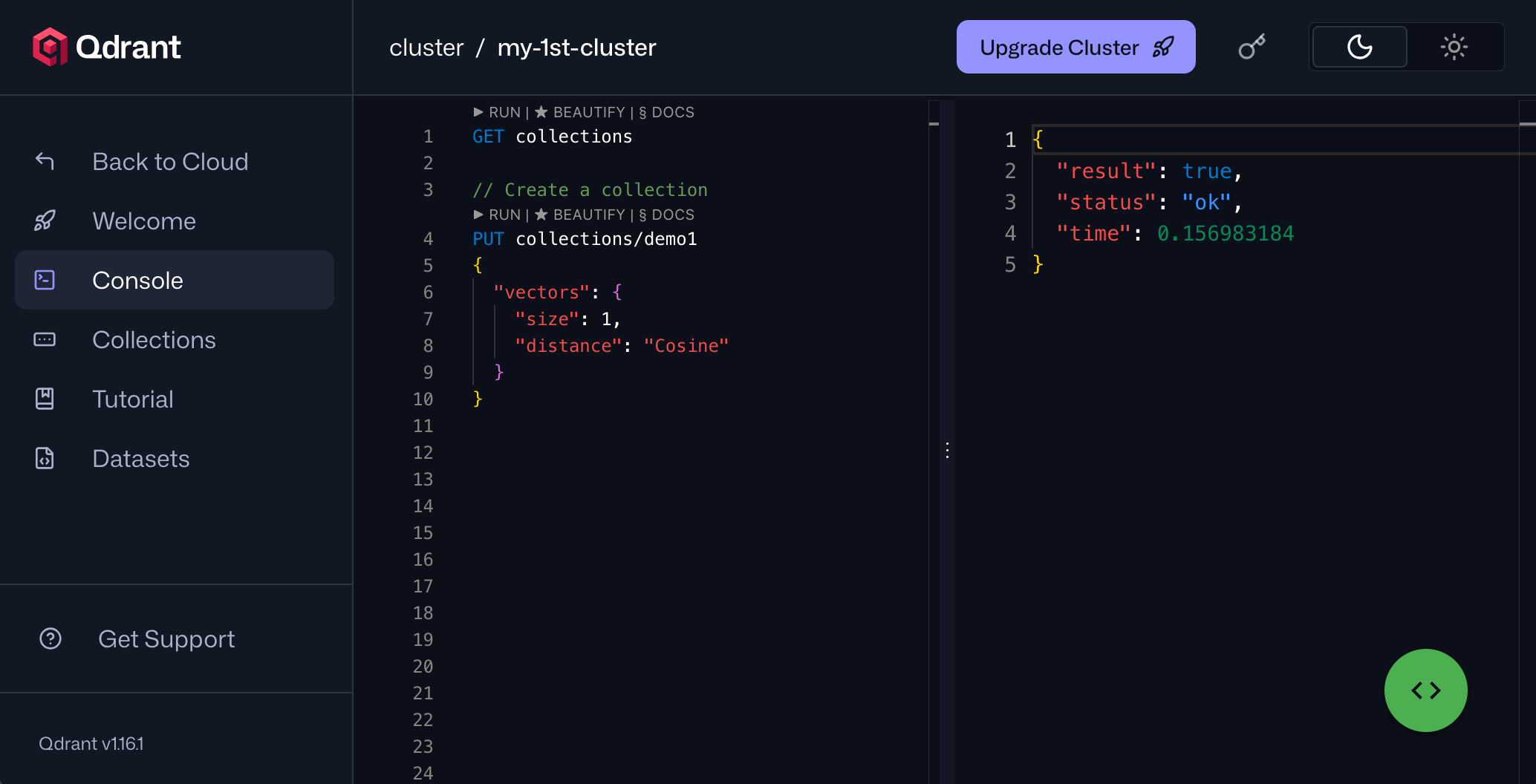
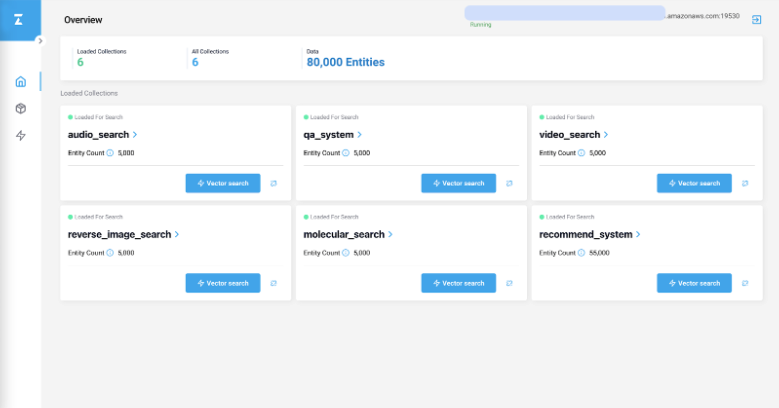
Milvus is an open source vector database built for GenAI applications, installable with pip and able to scale to tens of billions of vectors with minimal performance loss. It offers several deployment modes: Milvus Lite for notebooks and prototyping, Standalone for single-machine use, and Distributed for horizontal scaling.
Milvus supports similarity search on high-dimensional vectors and includes metadata filtering, hybrid search, and multi-vector support, with use cases spanning RAG, image search, multimodal search, and Graph RAG.
Key features include:
- Deployment options for each stage: Provides Milvus Lite for laptops and notebooks, Standalone for single-machine production or testing, and Distributed for scaling horizontally to billions of vectors.
- Global index for fast retrieval: Retrieves results quickly and accurately using a Global Index that maintains performance regardless of dataset scale.
- Metadata filtering and hybrid search: Combines vector similarity with metadata filters and hybrid search so queries apply structured constraints alongside semantic matching.
- Multi-vector support: Stores and searches multiple vectors per entity, supporting multimodal and more expressive retrieval workloads.
- Similarity search on massive datasets: Performs high-speed similarity search on high-dimensional vectors across very large collections for AI and machine learning applications.
- Broad AI tool integration: Works with common GenAI development tools and provides guided notebooks for building RAG and search applications.
Limitations (as reported by users on G2):
- Learning curve: Users note a steep learning curve, particularly for distributed deployments.
- Resource and deployment overhead: Running Milvus efficiently in larger environments requires careful planning and can consume significant resources.
- Documentation gaps: Some users find the documentation insufficient for getting started quickly.
Source: Milvus
5. Qdrant

Best for: High-performance filtered vector search at scale
Strengths: Rust engine with quantization and one-stage filtering
Things to consider: Limited UI operations and no built-in visualization
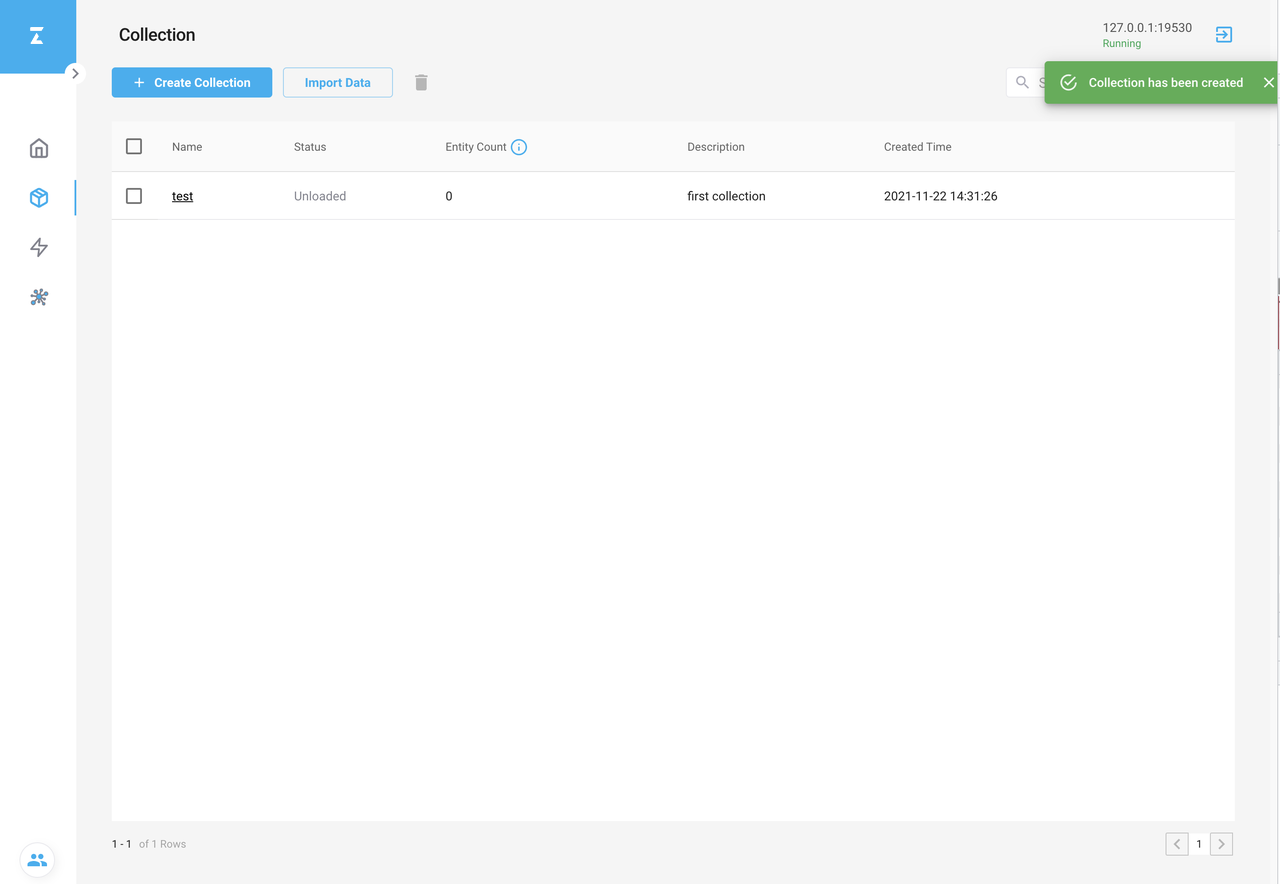
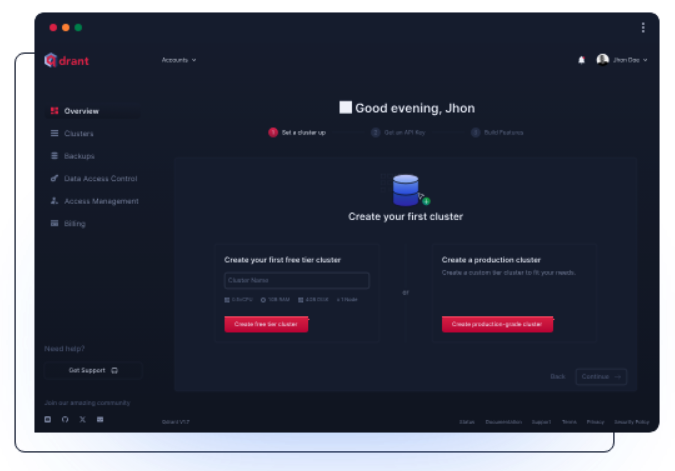
Qdrant is an open source vector search engine built entirely in Rust with a custom storage engine, aimed at production-grade AI retrieval at scale. It supports dense and sparse vectors and deploys as managed Qdrant Cloud, Hybrid Cloud on your own Kubernetes, Private Cloud, or a lightweight edge build.
Qdrant applies filters during index traversal rather than before or after search, and supports quantization to reduce memory use, which suits memory-limited and filter-heavy workloads.
Key features include:
- Rust engine and storage: Built in Rust with SIMD and a custom storage engine for fast, scalable vector search without external wrappers.
- Expansive metadata filtering: Stores metadata as JSON and supports advanced filters including nested, text, geo, and value conditions applied during search.
- One-stage filtering: Applies filters during graph traversal instead of pre- or post-filtering, maintaining high recall with low latency under complex conditions.
- Native hybrid search: Blends dense and sparse vectors in a single query, with support for BM25, SPLADE, and related sparse methods, plus multi-vector objects.
- Quantization for memory efficiency: Offers scalar, asymmetric, and binary quantization to cut memory use substantially while preserving search quality.
- Reranking and real-time indexing: Supports score boosting, late interaction reranking, and maximal marginal relevance, and makes new vectors searchable as soon as they are added.
Limitations (as reported by users on G2):
- Limited UI operations: Users report that bulk or pattern-based tasks, such as deleting multiple collections, require code rather than the interface.
- No built-in visualization: Reviewers note the lack of built-in visualization tooling.
- Initial learning curve: Some users find the initial learning curve steep, though documentation helps.
Source: QDrant
6. Weaviate

Best for: RAG and hybrid search with built-in embeddings
Strengths: Generates embeddings and runs hybrid search in one system
Things to consider: Latency can grow at larger scale and it is heavy locally
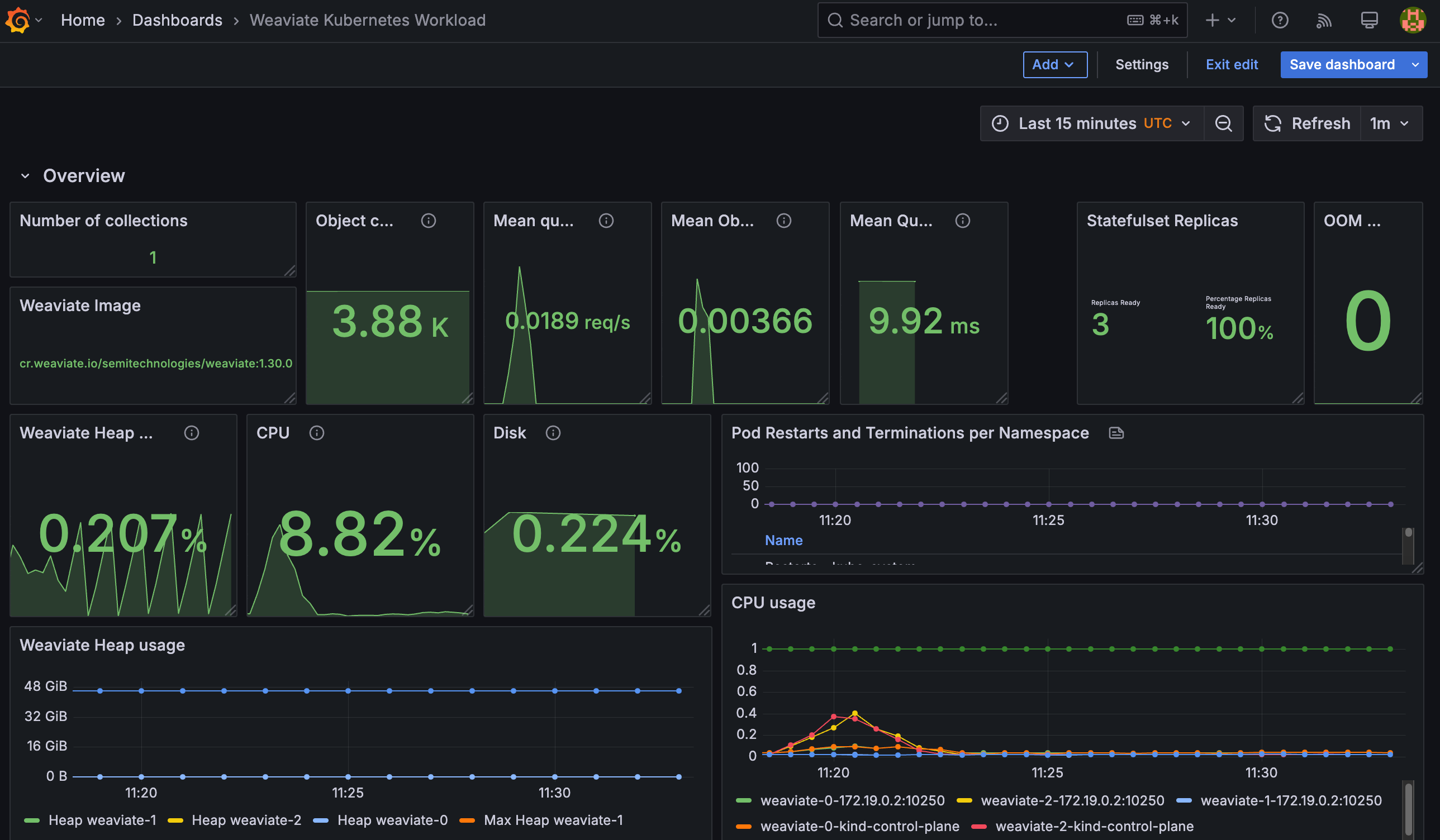
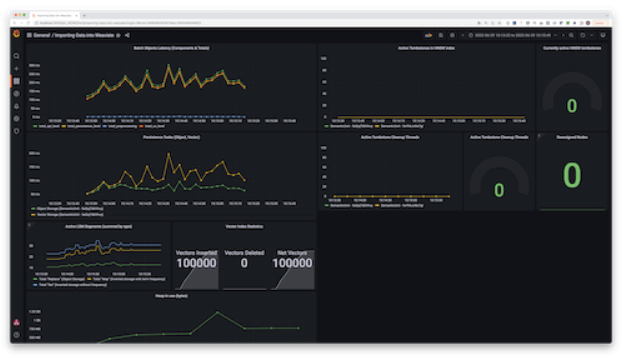
Weaviate is an open source AI-native vector database that stores, indexes, and searches high-dimensional vectors as the foundation for search, RAG, and agents. It can generate embeddings from text and images through built-in vectorization, so teams do not need a separate embedding pipeline.
Weaviate supports pure vector, semantic, and hybrid search that blends vector similarity with keyword matching, and includes multi-tenancy that scales to large numbers of segmented indexes. It offers SDKs for Python, Go, TypeScript, and JavaScript, plus GraphQL and REST APIs.
Key features include:
- Vector database core: Stores, indexes, and searches high-dimensional vectors at scale as the base layer for search, RAG, and agent applications.
- Built-in embeddings: Generates vectors from text and images inside the platform, removing the need to run an external embedding pipeline before ingestion.
- Hybrid and semantic search: Runs pure vector, semantic, and hybrid searches that combine vector similarity with keyword matching using a tunable blend parameter.
- Multi-tenancy: Supports large numbers of isolated, segmented indexes in a single cluster, which suits multi-tenant SaaS workloads.
- Query agent and developer APIs: Translates natural language questions into database queries and exposes SDKs for several languages plus GraphQL and REST interfaces.
- Enterprise operations: Provides security and governance, high availability, observability, and role-based access control with SOC 2 and HIPAA coverage.
Limitations (as reported by users on G2):
- Performance at scale: Users report latency can become unpredictable as datasets grow larger.
- Console depth: Reviewers describe the management console as limited for self-service tasks.
- Onboarding and local use: Some users find documentation scattered and note it is heavy to run locally.
Source: Weaviate
7. Chroma
Best for: Fast local prototyping of RAG and search
Strengths: Simple setup with vector, full-text, and metadata search
Things to consider: Single-node design limits very large production scale
Chroma is an open source search infrastructure for AI, licensed under Apache 2.0, that supports vector, full-text, regex, and metadata search. It is built on object storage and runs in-process or as a client-server service, which makes it quick to start for local development and prototyping.
Chroma provides semantic similarity search, sparse lexical search with BM25 and SPLADE, and metadata filtering, and supports dataset forking for versioning and A/B testing. It integrates natively with common LLM frameworks used in RAG pipelines.
Key features include:
- Multiple search types: Supports semantic vector search, sparse lexical search with BM25 and SPLADE, full-text trigram and regex search, and metadata filtering in one system.
- In-process and client-server modes: Runs embedded in an application or as a server, which reduces setup friction for local prototyping and development.
- Object storage foundation: Built on object storage with automatic data tiering, which the project associates with lower cost at scale.
- Metadata and faceted search: Filters and facets results by metadata so queries can combine similarity with structured constraints.
- Dataset forking: Supports forking datasets for versioning, A/B testing, and staged roll-outs of changes.
- LLM framework integration: Integrates natively with common LLM application frameworks and is widely used as a default vector store in RAG tutorials.
Limitations (as reported by users on G2):
- Production readiness: Users report memory issues and note it is not always production-ready under load.
- Single-node scaling: Its single-node design limits horizontal scaling and high availability for very large datasets.
- Feature gaps: Users note performance can trail purpose-built engines and that some capabilities require additional libraries.
Vector search for existing infrastructure
8. Pgvector (PostgreSQL)

Best for: Adding vector search to an existing PostgreSQL database
Strengths: Stores vectors with relational data under full SQL and ACID
Things to consider: Two index types; scaling is limited by PostgreSQL
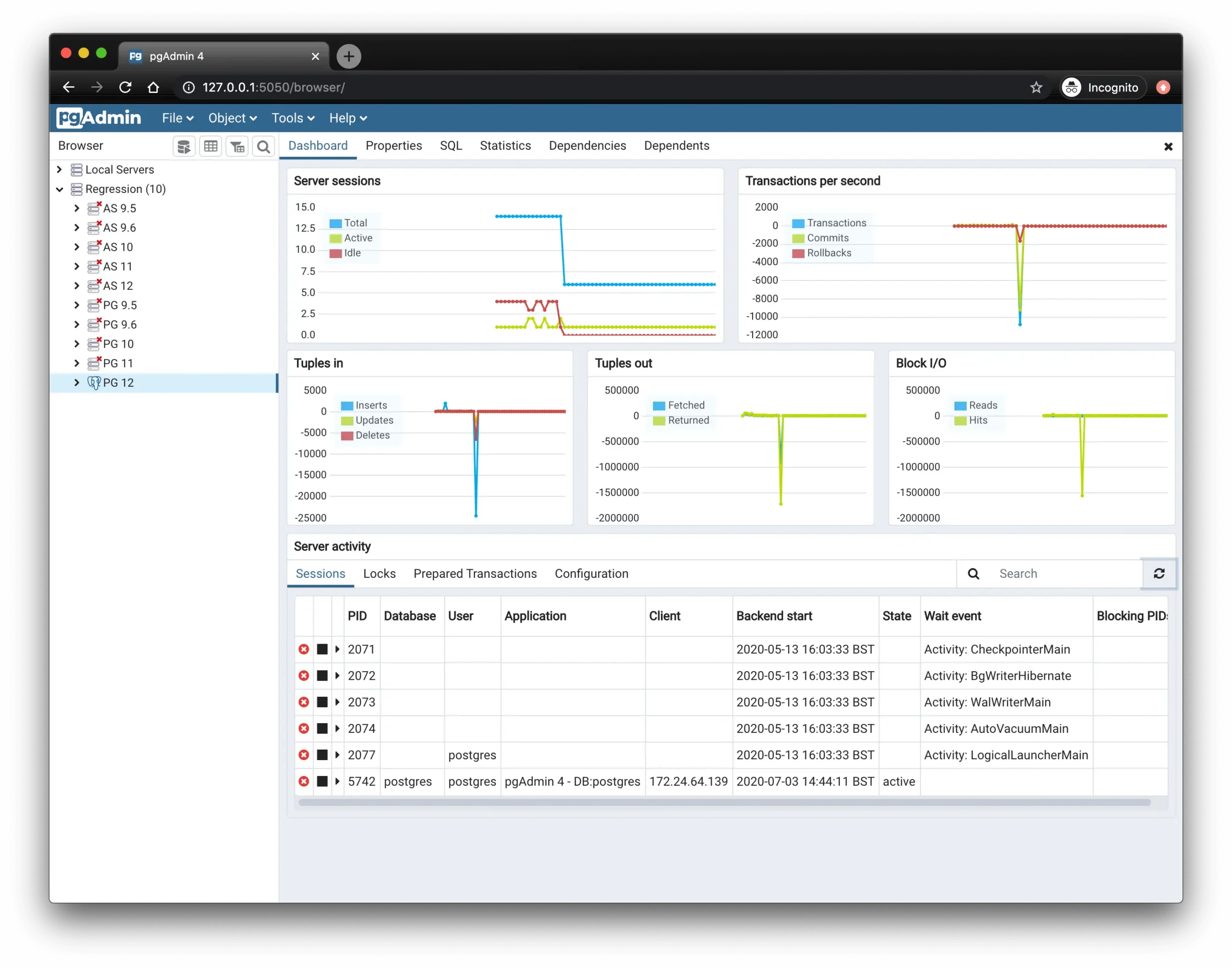
Pgvector is an open source extension that adds vector similarity search to PostgreSQL, letting teams store embeddings in table columns next to relational data. It supports exact and approximate nearest neighbor search and works from any language with a PostgreSQL client.
Pgvector handles single-precision, half-precision, binary, and sparse vectors and several distance metrics, and provides HNSW and IVFFlat index types. Because it runs inside PostgreSQL, it inherits ACID compliance, point-in-time recovery, and JOINs alongside vector queries.
Key features include:
- Vectors alongside relational data: Stores embeddings in PostgreSQL columns so vector queries and relational queries, including JOINs, run in one database.
- Exact and approximate search: Performs exact nearest neighbor search for full recall, or approximate search through indexes that trade some recall for speed.
- HNSW and IVFFlat indexes: Provides an HNSW graph index for query performance and an IVFFlat index that builds faster, each supporting multiple distance operators.
- Multiple vector types and metrics: Handles single-precision, half-precision, binary, and sparse vectors with L2, inner product, cosine, L1, Hamming, and Jaccard distance.
- PostgreSQL features and durability: Inherits ACID compliance, point-in-time recovery, and the broader PostgreSQL feature set for operational reliability.
- Quantization to scale: Supports quantization to reduce storage and memory footprint for larger vector collections.
Limitations (based on publicly available sources):
- Index options: Pgvector offers only HNSW and IVFFlat, without built-in DiskANN or GPU-accelerated indexing.
- Scaling ceiling: Performance can degrade as the corpus grows beyond available memory, and large HNSW indexes are slow to build.
- Missing retrieval features: It lacks native hybrid search with BM25, built-in reranking, and native multi-vector retrieval.
Source: PostgreSQL
9. Redis
Best for: Low-latency, in-memory vector search and semantic caching
Strengths: Sub-millisecond retrieval with agent context and caching
Things to consider: In-memory design makes very large datasets costly
Redis is an in-memory data platform that adds vector search to the caching, streaming, and session workloads it already handles, serving embeddings at low latency. It provides real-time context for agents and pairs vector search with search and query over structured data in the same system.
Redis includes products for agent context and memory, semantic caching that reduces repeated token costs, and context retrieval, and it deploys as Redis Cloud, Redis Software on-premises, or open source. Client libraries are available for Python, Node, Java, Go, and .NET.
Key features include:
- In-memory vector search: Stores and queries vectors in memory for sub-millisecond retrieval, which suits real-time serving and high query rates.
- Semantic caching: Redis LangCache caches answers to common questions so repeated queries avoid recomputation and reduce token cost.
- Agent context and memory: Provides real-time context for agents and agent memory features for consistent multi-step AI experiences.
- Search and query on structured data: Combines vector search with search and query over structured data within the same platform.
- Flexible deployment: Runs as managed Redis Cloud, Redis Software on-premises, or open source, and is available on AWS, Google Cloud, and Azure.
- Broad client support: Offers client libraries and SDKs for Python, Node, Java, Go, and .NET, plus tooling such as Redis Insight for visualization.
Limitations (as reported by users on G2):
- Memory cost at scale: Users note the in-memory design makes storing very large datasets more expensive than disk-based systems.
- Persistence tradeoffs: Reviewers point to durability and persistence considerations inherent to an in-memory store.
- Reviews cover Redis broadly: Available reviews reflect Redis as a whole rather than its vector search feature specifically.
10. FAISS

Best for: Fast in-memory similarity search you embed in code
Strengths: High-speed CPU and GPU search over billions of vectors
Things to consider: A library, not a database, with no persistence layer
FAISS (Facebook AI Similarity Search) is an open source library for efficient similarity search and clustering of dense vectors, developed by Meta’s AI research group. It is written in C++ with Python wrappers, and some algorithms run on the GPU for high-speed search over large vector sets.
FAISS builds an in-memory index that supports k-nearest neighbor and maximum inner product search, batch queries, range search, and index storage on disk. It can trade precision for speed and memory, and can index binary as well as floating-point vectors.
Key features include:
- Similarity search index: Builds an index that returns nearest neighbors, including the k closest matches, for dense vectors of any size.
- CPU and GPU acceleration: Runs on CPU and GPU, with GPU implementations of key algorithms for faster search on large datasets.
- Precision and memory tradeoffs: Allows approximate search that trades some accuracy for large gains in speed or reduced memory use.
- Multiple search modes: Supports batch search over many query vectors, maximum inner product search, and range search that returns all vectors within a radius.
- Binary and disk-based indexes: Indexes binary vectors as well as floating-point vectors and can store indexes on disk rather than only in RAM.
- Filtering by ids: Can ignore a subset of index vectors based on a predicate on vector ids during a search.
Limitations (based on publicly available sources):
- Not a full database: FAISS is a library focused on search and lacks the persistence, concurrency, and replication of a database.
- Operational wrapping required: Production use requires building storage, updates, and a serving layer around it.
- In-memory orientation: Indexes are RAM-oriented by default, so scaling and durability need additional engineering.
Learn more in our detailed guide to Pgvector
Unleashing the power of vector databases with Instaclustr
Harnessing the power of artificial intelligence and machine learning requires a new approach to data management. Vector databases are at the forefront of this shift, providing the essential infrastructure for similarity searches that fuel applications like recommendation engines, image recognition, and natural language processing. Instaclustr delivers a robust, enterprise-ready platform for deploying, managing, and scaling these critical technologies, empowering smarter, more responsive applications.
Instaclustr simplifies the complexity of running high-performance vector databases. It provides production-ready deployments of leading open source technologies like Casssandra, PostgreSQL with the pgvector extension and OpenSearch, fully optimized for vector search workloads. This enables the power of advanced similarity search without the operational overhead. Instaclustr handles the provisioning, monitoring, and maintenance, so DevOps teams can focus on innovation instead of infrastructure management. The Instaclustr Managed Platform is built for scalability, allowing seamless growth of clusters as data volume and query traffic increase, ensuring consistent performance at any scale.
Instaclustr is designed to fit perfectly within existing data ecosystems. By combining vector database capabilities with other technologies, such as Apache Kafka® for real-time data streaming and Apache Cassandra for massive-scale data storage, organizations can build a unified, powerful data layer. This synergy allows for the creation of sophisticated, end-to-end data pipelines that support even the most demanding data-driven applications. Backed by world-class, 24x7x365 expert support, Instaclustr unlocks the full potential of data.
For more information: