What Is ClickHouse as a Service?
TL;DR: Enterprise ClickHouse-as-a-service providers run and scale the columnar analytics database for you. Best for: NetApp Instaclustr (compliance), ClickHouse Cloud (official service), Altinity (control), Tinybird (analytics APIs).
Enterprise ClickHouse as a Service (DBaaS) providers manage high-performance columnar OLAP databases on your behalf, handling scaling, maintenance, and backups. The top-tier providers deliver dedicated infrastructure, enterprise support, and integrations tailored to different analytical workloads.
ClickHouse itself is an open source, column-oriented database designed for high-performance analytics on large datasets, especially for real-time or near-real-time workloads. By leveraging ClickHouse as a Service, organizations can access the full capabilities of ClickHouse while offloading the complexity of deployment, configuration, scaling, and maintenance to the service provider.
This approach allows businesses to focus on deriving insights from their data, rather than on managing clusters or troubleshooting database issues. The service typically includes automated provisioning, monitoring, patching, backups, and support, ensuring that the ClickHouse environment is always optimized and secure.
Enterprise ClickHouse as a Service Providers at a Glance
The table below summarizes the key differences between the providers covered in this article. We explore each one in more detail in the sections that follow.
| Category | Solution | Best For | Key Strengths | Things to Consider |
|---|---|---|---|---|
| Dedicated managed platform | NetApp Instaclustr for ClickHouse | Compliance-focused open source ClickHouse | 99.99% SLA, SOC 2/ISO/HIPAA, 24×7 support, cloud or on-prem | Can run multiple open source technologies |
| Dedicated managed platform | ClickHouse Cloud | The official, serverless managed service | Compute/storage separation, autoscaling, multi-AZ HA | Cloud cost at scale; coarse autoscaling |
| Dedicated managed platform | Altinity.Cloud | Raw open source ClickHouse with expert support | BYOC/BYOK, any version, 24/7 ClickHouse-expert support | Fewer built-in integrations; guided onboarding |
| Dedicated managed platform | Tinybird | Real-time analytics APIs on managed ClickHouse | SQL-to-API, streaming ingestion, SOC 2/HIPAA | Limited customization; cost at high volume |
| Cloud platform / hosting | Elestio | Low-cost managed ClickHouse on any cloud | Dedicated VMs, all-inclusive pricing, ISO/SOC 2/HIPAA | Less deep customization |
| Cloud platform / hosting | Alibaba Cloud ApsaraDB for ClickHouse | Real-time OLAP for Alibaba Cloud users | Hot/cold tiering, resource isolation, auto scaling | Some engines unsupported; limited tuning |
| Cloud platform / hosting | Tencent Cloud TCHouse-C | High-concurrency analytics for Tencent Cloud users | MPP speed, one-click scaling, VPC isolation, HA | Region fixed at purchase; China/APAC focus |
Why Enterprises Use ClickHouse as a Service
Faster Deployment for Real-Time Analytics
Enterprises are increasingly driven by the need to access insights from data as quickly as possible. ClickHouse as a Service enables organizations to deploy analytics environments in minutes, rather than days or weeks, by automating setup and configuration. This rapid deployment is critical for real-time analytics use cases, such as monitoring, fraud detection, or IoT data processing, where the speed of data ingestion and query execution directly impacts business outcomes.
By removing the need to manually provision infrastructure or tune database settings, teams can launch proof-of-concept projects, experiment with new data sources, and scale up analytics workloads with minimal friction. This agility allows organizations to react faster to market changes and make data-driven decisions with up-to-date information, without being held back by infrastructure bottlenecks or lengthy project timelines.
Reduced Operational Burden
Managing a high-performance analytics database like ClickHouse requires specialized expertise in areas such as cluster management, performance tuning, backup strategies, and failure recovery. ClickHouse as a Service eliminates much of this operational burden by providing automated management, monitoring, and maintenance. Service providers handle patching, upgrades, backups, and resource scaling, freeing internal teams to focus on application development and analytics.
This reduction in operational workload translates to lower total cost of ownership and decreased risk of downtime or data loss due to human error. Enterprises can rely on the service provider’s experience and best practices, ensuring that their ClickHouse clusters are always running optimally and securely. This is especially valuable for organizations with limited in-house database administration resources or those looking to optimize their IT staffing.
Better Scalability for High-Volume Workloads
ClickHouse is designed to handle petabyte-scale datasets and high query concurrency, but scaling it efficiently requires careful planning and infrastructure management. ClickHouse as a Service providers offer automated scaling features, allowing enterprises to adjust compute and storage resources dynamically as workloads grow or fluctuate. This elasticity ensures that performance remains consistent even as data volumes and user queries increase.
Service providers often support multi-node, distributed deployments and can add or remove nodes with minimal downtime or manual intervention. This means that organizations can handle traffic spikes, seasonal demand, or rapid business growth without the risk of outgrowing their analytics infrastructure.
Stronger Reliability and Support
High availability and reliability are essential for enterprise analytics workloads, where downtime or data loss can have significant business consequences. ClickHouse as a Service offerings typically include built-in redundancy, automated failover, and disaster recovery features. This infrastructure resilience ensures that analytics systems remain accessible and performant, even in the event of hardware failures or network issues.
Enterprise-focused service providers deliver 24/7 support and proactive monitoring, allowing issues to be identified and resolved before they impact business operations. Access to a team of ClickHouse experts ensures that organizations receive timely assistance, whether troubleshooting performance problems or planning for future growth. This level of reliability and support is difficult to match with self-managed deployments, especially for teams without deep ClickHouse expertise.
Key Features to Look for in Enterprise ClickHouse as a Service Providers
1. Fully Managed Operations
A key expectation from an enterprise ClickHouse as a Service provider is fully managed operations. This means the provider handles all day-to-day database management tasks, including:
- Provisioning
- Monitoring
- Patching
- Upgrades
- Backups
By automating these activities, the provider reduces the risk of misconfigurations and ensures best practices are consistently applied across environments. Enterprises benefit from predictable performance and less downtime, as the service includes proactive health checks, resource scaling, and failure recovery. This allows internal teams to dedicate more time to building analytics solutions and less time troubleshooting infrastructure issues.
2. Enterprise Deployment Options
Enterprise customers often have diverse infrastructure requirements, ranging from public cloud to private cloud or even hybrid deployments. Leading ClickHouse as a Service providers offer flexible deployment options, supporting multiple cloud providers and, in some cases, on-premises installations. This flexibility allows organizations to:
- Comply with data residency requirements
- Optimize costs
- Leverage existing investments in cloud or datacenter infrastructure
Additionally, support for single-tenant and multi-tenant architectures enables enterprises to choose the right balance of isolation, performance, and cost. Providers should also support seamless migration and scaling between deployment models as business needs evolve. Comprehensive deployment options ensure that ClickHouse can be integrated into complex enterprise environments without major architectural changes.
3. Performance and Scalability
Performance and scalability are central to the value proposition of ClickHouse, and these must be maintained in any managed service offering. Providers should offer dedicated resources, workload isolation, and performance tuning features to ensure consistent query response times, even as data volumes and concurrency levels increase. Automated horizontal and vertical scaling should be available to support both sudden spikes and long-term growth.
Enterprises should also look for features to further improve analytical query performance, such as:
- Intelligent caching
- Optimized storage layouts
- Advanced indexing
Transparent monitoring and alerting help teams track performance metrics and identify bottlenecks before they impact end users. Reliable scalability ensures that analytics platforms remain responsive as organizational data needs evolve.
4. Security and Compliance
Security and compliance are non-negotiable for enterprise data platforms. ClickHouse as a Service providers must deliver robust security controls, including encryption at rest and in transit, fine-grained access management, and comprehensive auditing. Integration with enterprise identity providers and support for role-based access control (RBAC) are essential to meet internal security policies.
For regulated industries, providers should demonstrate compliance with standards such as SOC 2, GDPR, HIPAA, or ISO 27001. This includes:
- Regular security assessments
- Data residency options
- Support for customer-managed keys
Transparent compliance documentation and third-party audits help organizations verify that their data is protected and regulatory obligations are met.
5. Integration Ecosystem
A rich integration ecosystem is crucial for maximizing the value of ClickHouse as a Service. Providers should offer:
- Connectors and APIs for popular data ingestion, transformation, and visualization tools, enabling seamless data flows from source systems to analytics dashboards.
- Support for open standards and major data platforms (such as Kafka, Spark, or BI tools), which reduces integration friction and shortens time to value.
- SDKs, REST APIs, and webhooks for custom development and automation.
A robust integration ecosystem empowers organizations to build end-to-end analytics pipelines that leverage ClickHouse’s speed and scalability while fitting into existing data architectures. This interoperability is essential for supporting a wide range of analytics and business intelligence use cases.
6. ClickHouse Expertise
The quality of a managed ClickHouse service is closely tied to the expertise of the provider’s technical team. Enterprises should look for providers with proven experience in deploying, operating, and optimizing large-scale ClickHouse environments. This expertise enables the provider to deliver advanced support, performance tuning, and guidance on best practices for schema design, data partitioning, and query optimization.
Access to ClickHouse experts also accelerates onboarding and troubleshooting, reducing the risk of costly missteps or performance issues. Providers should offer:
- Detailed documentation
- Training resources
- Responsive support channels
Deep ClickHouse knowledge ensures that enterprises can fully leverage the database’s capabilities while minimizing operational risks and maximizing return on investment.
Notable Enterprise ClickHouse as a Service Providers
How we selected these providers: We shortlisted enterprise ClickHouse as a service providers based on fully managed operations, deployment flexibility, performance and scalability, security and compliance, and the depth of ClickHouse expertise and support.
Dedicated Managed ClickHouse Platforms
1. Instaclustr for ClickHouse

Best for: Enterprises running open source ClickHouse with strict compliance needs
Strengths: 99.99% SLA, SOC 2/ISO/HIPAA, 24×7 support, cloud or on-prem
Things to consider: Some open source technologies are consulting-only, not self-serve
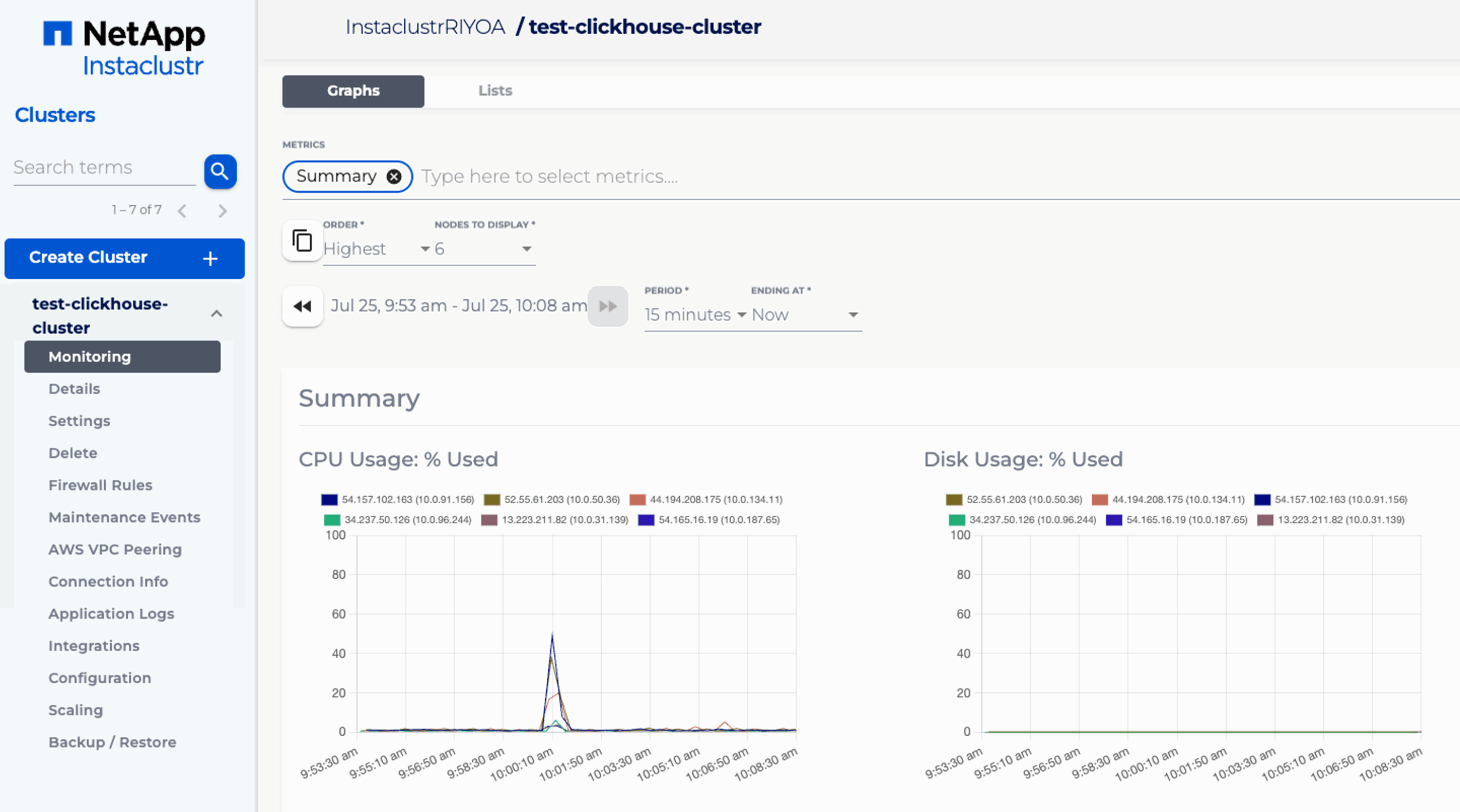
Instaclustr for ClickHouse is NetApp’s fully managed service for the open source column-oriented database, delivered on the Instaclustr Managed Platform. Teams provision production-ready clusters through a console, API, or Terraform provider and run them in their own cloud account, Instaclustr’s account, or on-premises. NetApp’s operations team handles monitoring, scaling, upgrades, and incident response around the clock.
Key features include:
- Deployment flexibility: Clusters run in a customer’s own AWS or Azure account, in Instaclustr’s account, or on-premises, supporting cloud, hybrid, and on-prem environments from one platform.
- Availability SLA and resilience: Enterprise deployments include up to a 99.99% availability SLA, with built-in redundancy and high availability for analytical workloads.
- Security and compliance: The platform is SOC 2, ISO 27001, and ISO 27018 certified and PCI-DSS and HIPAA compliant, with security controls applied by default.
- 24×7 expert support: A dedicated Technical Operations team takes end-to-end responsibility for cluster health, from initial setup through ongoing maintenance, available around the clock.
- Zero downtime scaling: Clusters scale horizontally by adding or removing nodes to match the workload without interrupting service.
- Provisioning and monitoring automation: Clusters are provisioned through the console, API, or Terraform, with continuous health checks and proactive alerting when action is needed.
- Cost-effective tiered storage: Integration with AWS FSx for NetApp ONTAP automatically tiers data, keeping active data on high-performance storage and moving colder data to cheaper tiers.
Limitations (as reported by users on G2):
- Third-party monitoring integration: Connecting certain external monitoring tools has required some additional setup effort.
- Cloud account access: Running the managed service inside a customer’s own cloud requires granting access credentials so the provider can operate the clusters.
2. ClickHouse Cloud

Best for: Teams that want the official, serverless managed ClickHouse
Strengths: Compute/storage separation, autoscaling, multi-AZ HA, SOC 2
Things to consider: Cloud usage can get costly; autoscaling lacks granular control
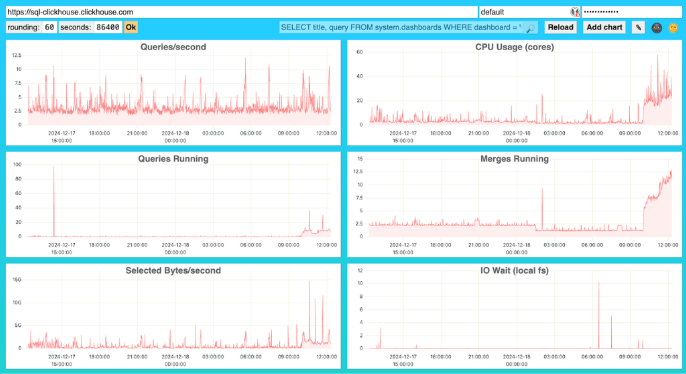
ClickHouse Cloud is the managed service from ClickHouse Inc., the company behind the open source database. It runs on AWS, GCP, and Azure, with a Bring Your Own Cloud tier for AWS and GCP. The architecture separates storage and compute, so clusters autoscale with demand and bill for what they use. The platform removes manual sharding, replica balancing, and upgrade work, and includes a SQL console for querying.
Key features include:
- Separation of storage and compute: Object-backed storage with independent, autoscaling compute layers, including separate read and write services for workload isolation.
- High availability by default: Each service is replicated across multiple availability zones, with automatic failover during localized AZ outages.
- Security and compliance: Includes encryption in transit and at rest, user and network access controls, activity logging, query-time data masking, and SOC 2 Type II compliance, with HIPAA-compliant regions.
- Managed ingestion with ClickPipes: A managed ingestion layer connects sources such as Apache Kafka, Amazon S3, PostgreSQL, MongoDB, GCS, and MySQL without operating separate pipelines.
- Backups and disaster recovery: Scheduled automated backups and guided restore workflows are built into the service.
- Automation and APIs: A Terraform provider and infrastructure APIs let teams codify configuration and reuse settings across deployments.
- Bring Your Own Cloud: A fully managed deployment can run inside a customer’s own AWS or GCP account for tighter infrastructure control.
Limitations (as reported by users on G2):
- Cloud cost at scale: Some users find the cloud option expensive and prefer self-hosting on a larger server when they have the disk capacity.
- Learning curve for tuning: Complex query optimization requires deeper expertise that can challenge newer users.
- Materialized view and function limits: Some users want more powerful materialized view joins and the ability to create custom functions.
3. Altinity.Cloud
Best for: Engineers who want raw open source ClickHouse with expert support
Strengths: BYOC/BYOK, any ClickHouse version, 24/7 expert support, SOC 2
Things to consider: Fewer built-in integrations; guided onboarding over self-serve
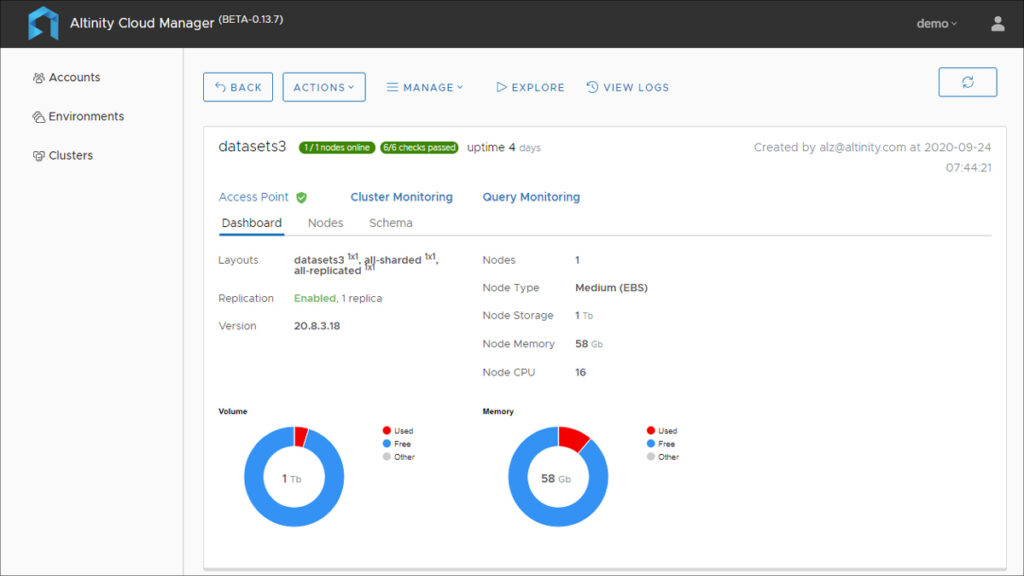
Altinity.Cloud is a managed service for 100% open source ClickHouse, run by a team that contributes heavily to the project and maintains the widely used Altinity Kubernetes Operator. Clusters run in Altinity’s cloud or in a customer’s own cloud or Kubernetes through Bring Your Own Cloud and Bring Your Own Kubernetes models, across AWS, GCP, Azure, and Hetzner. Users can run any ClickHouse version, including Altinity Stable builds.
Key features include:
- Flexible deployment models: Run in Altinity’s cloud, in your own cloud account (BYOC), or against your own Kubernetes (BYOK), across AWS, GCP, Azure, and Hetzner in any region.
- Version flexibility and no lock-in: Runs 100% open source ClickHouse, including Altinity Stable builds, with the option to disconnect a VPC deployment and self-manage.
- Scaling without downtime: Compute scales up and down and storage extends without downtime, and shards and replicas can be added to running clusters.
- High availability and backups: Built-in availability and automated backups support resilience, with each user running in a dedicated Kubernetes environment.
- 24/7 ClickHouse-expert support: Support engineers who contribute to ClickHouse assist with schema and query optimization and provide bug and CVE fixes.
- Security and isolation: SOC 2 Type 2 certified, with a dedicated, isolated environment for each user.
- Resource-based billing: Billing is based on allocated compute and storage rather than usage metering, with volume and prepayment discounts available.
Limitations (based on publicly available sources):
- Limited built-in integrations: Altinity offers fewer built-in integrations than some managed alternatives.
- Onboarding over self-serve: Signup uses a guided onboarding process rather than instant self-service provisioning, which can add time before building.
- Aimed at hands-on teams: The service provides a raw ClickHouse experience suited to engineers comfortable operating the database, and Kubernetes familiarity helps when troubleshooting.
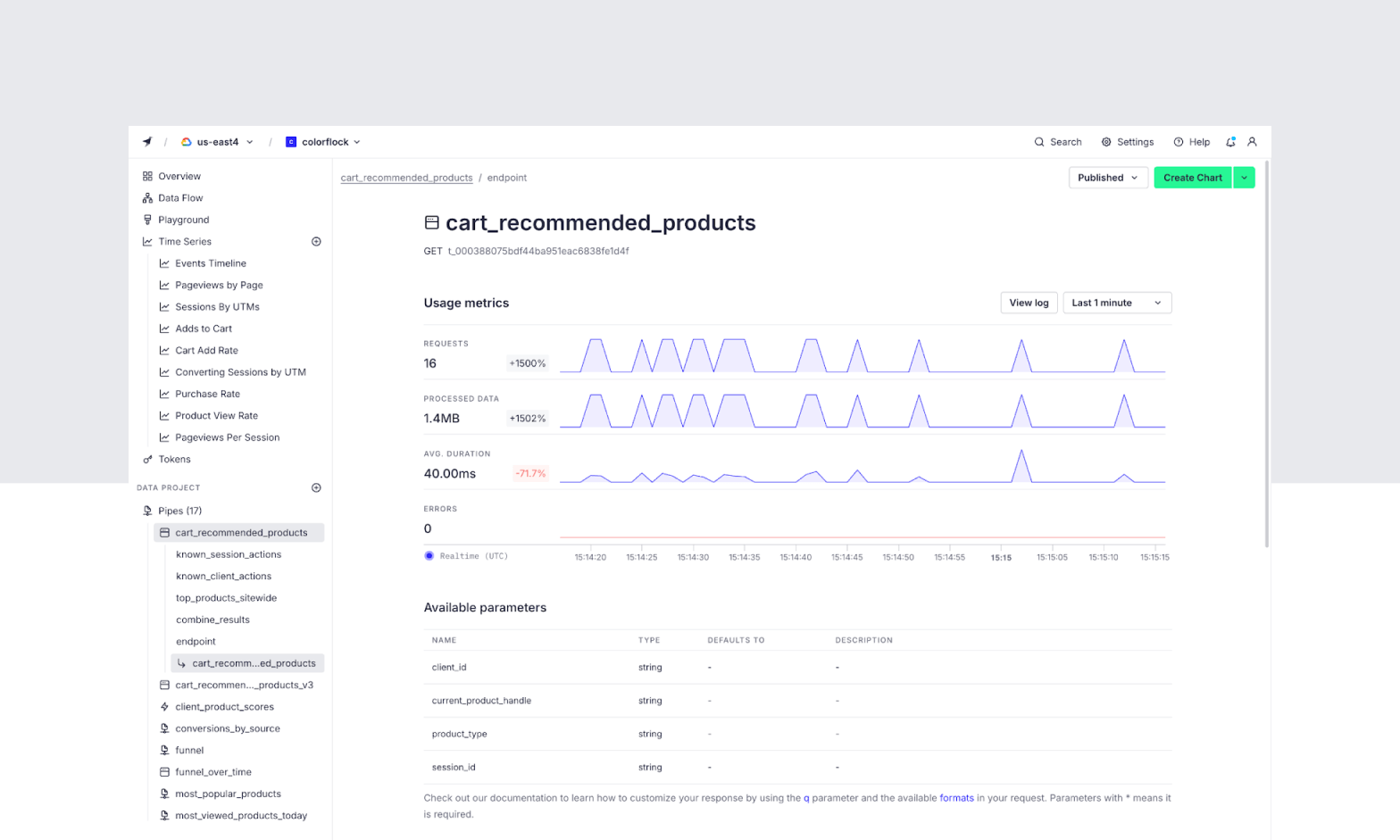
4. Tinybird

Best for: Developer teams building real-time analytics APIs on managed ClickHouse
Strengths: SQL-to-API, streaming ingestion, autoscaling, SOC 2/HIPAA
Things to consider: Limited customization; costs can climb at high data volumes
Tinybird is a managed ClickHouse platform aimed at developers building real-time analytics features. It runs native ClickHouse underneath and adds tooling to ingest data, transform it with SQL, and publish results as REST API endpoints. The platform handles cluster management, scaling, and version upgrades, and supports a Git-based workflow with a CLI, local development, branching, and CI/CD for production data projects.
Key features include:
- Managed ClickHouse with autoscaling: A managed cluster scales vertically and horizontally with unlimited multi-cloud storage and automatic ClickHouse version upgrades.
- Streaming and batch ingestion: Streaming ingestion APIs, an enterprise-grade Kafka connector, and native object storage ingestion bring data in from multiple sources.
- SQL-to-API with access controls: Queries publish as serverless, secure REST APIs with role-based access control and scoped tokens, alongside the native ClickHouse HTTP interface.
- Enterprise networking and support: Private infrastructure and networking, SLAs, and dedicated support are available on enterprise plans.
- Security and compliance: SOC 2 Type II and HIPAA compliant, with data encrypted in transit and fine-grained access controls.
- High availability: Fault tolerance and automatic failovers are built into the platform.
- Developer workflow: A CLI, local development, Git-based data branching, automatic schema migrations, and CI/CD integration support production workflows.
Limitations (as reported by users on G2):
- Limited customization: Some users find customization options limited for more specialized or diverse requirements.
- Learning curve: New users report a learning curve, particularly with the ClickHouse SQL dialect and data pipeline design.
- Cost at high volume: Some users note costs can climb with high data volumes and that pricing can be hard to predict.
- Support and documentation: A few users report uneven support responsiveness and gaps in documentation depth.
5. ChistaDATA
Best for: Teams that want ClickHouse operated by a dedicated DBA bench
Strengths: 24×7×365 coverage, 15 minute Sev 1 response, zero lock-in
Things to consider: Hours-based plans, no published uptime SLA, SSD-only nodes
ChistaDATA is a ClickHouse specialist that takes operational ownership of clusters rather than selling a self-service platform. Managed services cover installation and configuration, automated backups and recovery, upgrades and patch management, and security hardening across TLS/SSL, RBAC, and LDAP. Engineering is delivered from 11 global offices with continuous monitoring and a 15 minute Severity 1 incident response SLA.
The company also runs ChistaDATA Cloud, a DBaaS built on shared or dedicated NVMe SSD nodes in general purpose, CPU optimized, memory optimized, and storage optimized configurations. It is compatible with standard ClickHouse Server, so existing applications and tools connect without modification, and every engagement runs on 100% open source ClickHouse with no vendor lock-in.
Key features include:
- Managed cluster operations: 24×7 health checks, anomaly detection, and incident response, with telemetry tracking query latency, CPU and memory use, disk I/O, replication lag, and cluster health.
- Hosted DBaaS node plans: ChistaDATA Cloud provides shared and dedicated node tiers, with capacity planning and sizing assistance and compute scaling operations completed in a few minutes.
- Performance engineering: Parameter tuning of settings such as max_memory_usage and merge_tree options, schema audits covering table engines and sorting keys, slow query log analysis, and data skipping index recommendations, with before-and-after benchmarking on each change.
- Replication and disaster recovery: ReplicatedMergeTree architectures coordinated through ZooKeeper or ClickHouse Keeper, with replication queue configuration, lag monitoring, and failover across nodes or data centers.
- Sharding and distributed queries: Distributed table design with even data distribution, cluster configuration in config.xml, inter-node communication management, and distributed query timeout tuning for petabyte-scale deployments.
- Migration and upgrade services: Source-to-target schema conversion from PostgreSQL, MySQL, or Redshift, ETL pipeline design, data consistency validation, and staged rollout with documented rollback plans.
- Security and compliance work: Row-level and column-level security, audit logging with retention policies, encrypted transmission and storage, and security assessments and vulnerability scans mapped to GDPR, HIPAA, and SOC 2 requirements.
Limitations (based on publicly available sources):
- No published availability SLA: The published commitment is a 15 minute Severity 1 response time rather than an uptime percentage, so availability targets are set per contract instead of stated up front.
- Hours-based service plans: Remote DBA plans are sold in monthly blocks ranging from 8 to 160 hours, and continuous 24×7×365 coverage sits in the highest priced tier.
- Node-based storage model: ChistaDATA Cloud scales on fixed SSD and NVMe node plans, without the object storage tiering that separates storage from compute on some managed alternatives.
- Compliance assistance rather than platform certification: Security work is framed as helping organizations meet GDPR, HIPAA, and SOC 2 requirements, rather than platform-level certifications published in the way several competitors list them.
Cloud Platform and Hosting Providers with Managed ClickHouse
6. Elestio Managed ClickHouse

Best for: Teams that want low-cost, fully managed ClickHouse on any cloud
Strengths: Dedicated VMs, all-inclusive pricing, ISO/SOC 2/HIPAA, on-prem
Things to consider: Less deep customization; not a ClickHouse-only specialist
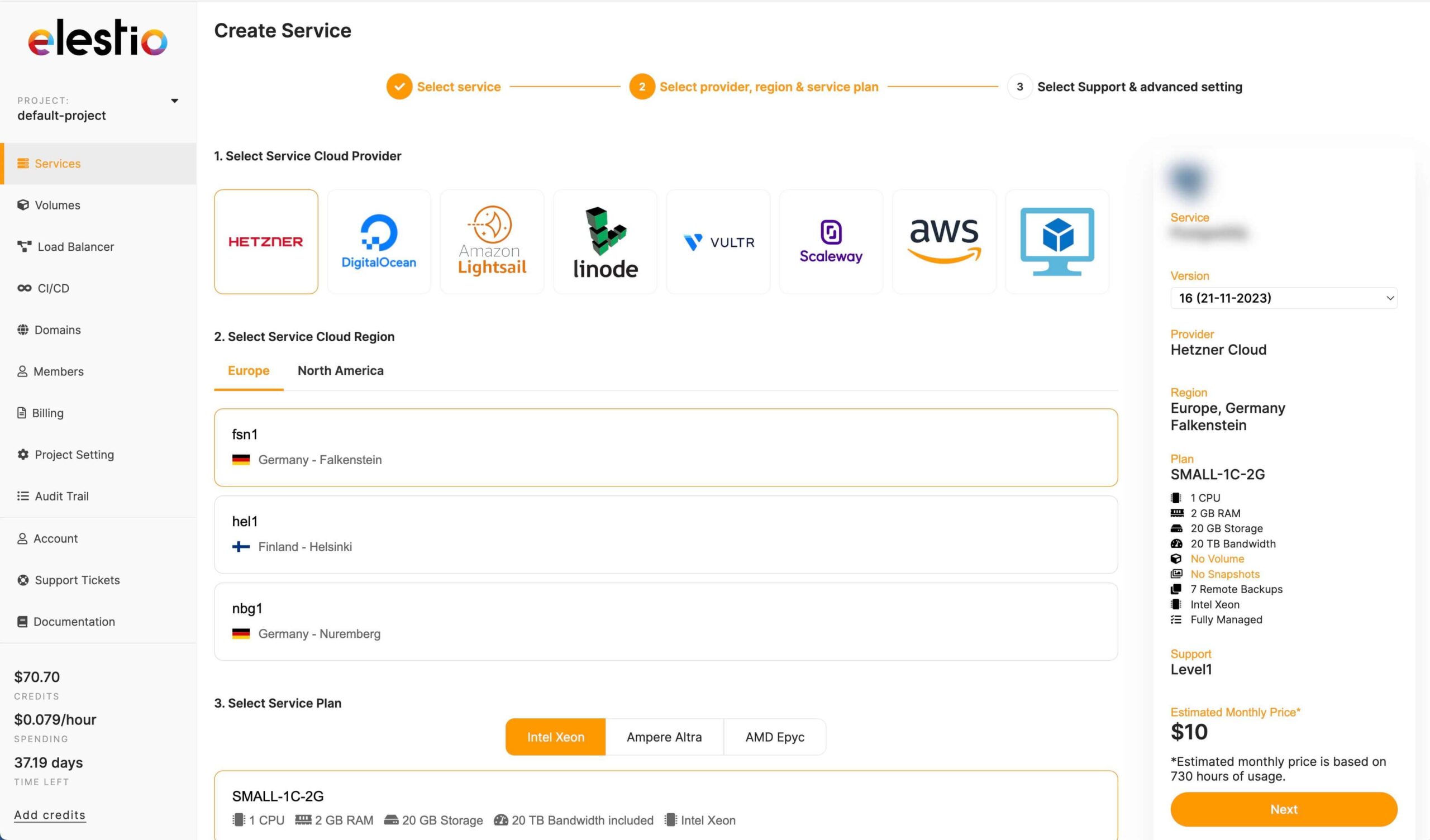
Elestio is a managed hosting platform that deploys ClickHouse, along with hundreds of other open source tools, on dedicated virtual machines. It handles installation, configuration, encryption, backups, monitoring, and software and OS updates, and can run on a wide range of cloud providers, on-premises, or on a customer’s own VM. Pricing is all-inclusive and predictable, covering compute, storage, bandwidth, updates, and maintenance.
Key features include:
- Deployment flexibility: ClickHouse can run on multiple cloud providers, on-premises, or on a customer’s own VM, with data centers across many regions.
- Dedicated virtual machines: Each service runs on its own isolated VM with full access to underlying resources and kernel-level security.
- Managed operations: Automated backups, SSL, monitoring and alerts, and software and OS updates are handled by the platform, with a 24/7 AI DevOps capability.
- Security and compliance: Elestio is ISO 27001, SOC 2, HIPAA, and GDPR compliant, with a per-service firewall and encrypted private networking between services.
- High availability clusters: Clustering supports high availability and multi-node scaling.
- Predictable pricing and no lock-in: A guaranteed monthly price covers compute, storage, bandwidth, and maintenance, and services can be migrated to any provider at any time.
- Migration and automation: A database migration service, a Terraform provider, and CI/CD pipelines support onboarding and operations.
Limitations (as reported by users on G2):
- Depth of customization: Users who want deeper control or highly customized infrastructure can run into platform constraints as requirements grow more complex.
- Cost predictability: Resource usage costs can be hard to predict upfront, particularly for more complex setups.
- Advanced changes via support: Deeper customization is not always self-service and may require working with the support team, which adds lead time.
7. Alibaba Cloud ApsaraDB for ClickHouse

Best for: Enterprises on Alibaba Cloud needing real-time OLAP at scale
Strengths: Hot/cold tiering, resource isolation, auto scaling, OSS/MaxCompute
Things to consider: Some open source engines unsupported; limited self-serve tuning
ApsaraDB for ClickHouse is Alibaba Cloud’s managed, distributed column-oriented database service for real-time analysis, offered in Single-Replica and High-Availability (double-replica) editions. It uses a vectorized execution engine and column-level compression for fast analytical queries, and provides enterprise operations such as data redistribution, multi-tenant resource isolation, online database management, and data integration. It is offered as a ClickHouse Enterprise Edition in partnership with ClickHouse Inc.
Key features include:
- High-availability editions: A double-replica High-Availability edition adds disaster recovery, while a Single-Replica edition targets lower-cost workloads.
- Tiered hot and cold storage: Cold data is archived to object storage based on usage and TTL policies, which reduces storage costs substantially.
- Resource isolation and queues: Multi-tenant resource isolation and resource queues bind users to defined query priorities for workload separation.
- Data integration and real-time writes: Built-in integration ingests from many sources and supports real-time writes from Flink, Spark, and Kafka, plus synchronization from DataWorks and DTS.
- Lakehouse integration: Integration with OSS and MaxCompute external tables supports analysis on a data lake architecture.
- Auto scaling and monitoring: Cluster auto scaling keeps data balanced, and monitoring covers disks, CPU, memory, IOPS, connections, TPS, ZooKeeper, and slow SQL queries.
- Security and management: The console lets you configure clusters, replicas, parameters, and network security settings, with online account, network, and parameter management.
Limitations (based on publicly available sources):
- Unsupported engines and functions: Some open source capabilities are unavailable, including the File and URL table engines and functions, remote_servers configuration, and custom user profiles.
- Limited self-service tuning: Most system settings cannot be changed directly, advanced tuning requires contacting support, and experimental features are disabled by default in production.
- Compatibility differences: Certain DDL differs from open source ClickHouse, such as no support for CREATE AS SELECT, which can require query adjustments when migrating.
8. Tencent Cloud TCHouse-C
Best for: Enterprises on Tencent Cloud needing high-concurrency analytics
Strengths: MPP speed, one-click scaling, hot/cold tiering, VPC isolation, HA
Things to consider: Region fixed at purchase; strongest in China and APAC
Tencent Cloud TCHouse-C is a managed ClickHouse service built on the open source OLAP engine, aimed at high-concurrency, sub-second analytics. Its kernel is highly compatible with open source ClickHouse, and it uses a massively parallel processing architecture for fast queries on large datasets. Teams deploy a production cluster in minutes through the console, with built-in operations management, monitoring, and alerting that remove most infrastructure work.
Key features include:
- MPP query engine: A massively parallel processing architecture processes queries several times faster than traditional data warehouses, up to terabytes per second per query.
- Elastic scaling: One-click cluster scaling and node configuration adjustment scale resources as workloads grow, with vertical adjustment for standard clusters.
- Permission and operations management: Database and table-level permission management, high-risk permission policies, query and dictionary management, and a DW Studio query workspace.
- Security and high availability: Clusters deploy in isolated VPCs, and high-availability configurations use a two-replica mechanism with automatic, transparent failover.
- Hot and cold data tiering: Cold data moves to COS object storage with configurable tiering coefficients and TTL, supported by ClickHouse compression to reduce cost.
- Ecosystem integration: Data integration from sources such as MySQL, Oracle, PostgreSQL, CKafka, Hive, and HBase, real-time writes via Oceanus with insert, update, and delete, and migration from self-built ClickHouse.
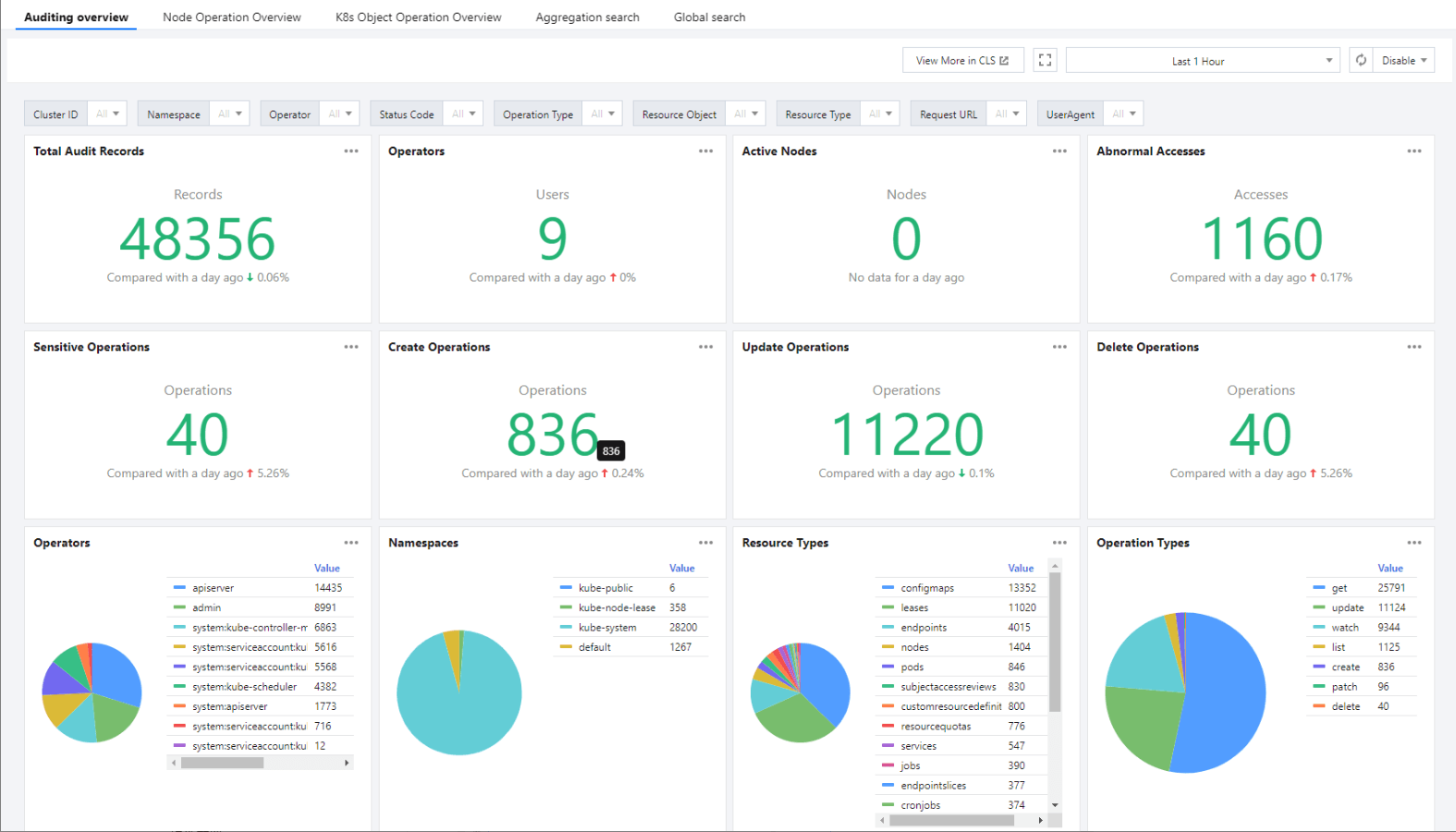
- Backup and monitoring: Metadata and table backup and restore, log search across nodes, and basic and advanced monitoring and alarming.
Limitations (based on publicly available sources):
- Scaling constraints: Vertical configuration adjustment applies only to standard clusters, storage can be expanded but not reduced, and compute and ZooKeeper nodes are adjusted separately.
- Region is fixed: A cluster’s region cannot be changed after purchase, and networks are fully isolated between regions.
- Regional focus: Documentation depth and ecosystem coverage are strongest in China and the wider APAC region, which may matter for global deployments.
Conclusion
Selecting an enterprise ClickHouse as a Service provider involves more than comparing database performance. Organizations should evaluate deployment flexibility, operational automation, scalability, security, compliance, integration capabilities, and the depth of technical expertise available from the provider. The best fit is one that aligns with long-term data strategy, minimizes operational overhead, delivers predictable performance under production workloads, and provides the reliability, governance, and support needed to operate business-critical analytics at scale.