What Is a managed OpenSearch platform?
TL;DR: Managed OpenSearch platforms run and scale OpenSearch search and analytics clusters for you. Best for open source flexibility: NetApp Instaclustr; AWS-native teams: Amazon OpenSearch Service; search support: Bonsai.
A managed OpenSearch platform is a cloud-based service that automates the deployment, operation, and scaling of OpenSearch clusters. OpenSearch, a fork of the Elasticsearch project, is widely used for search, analytics, and observability workloads.
With a managed platform, users no longer need to manually handle the complexities of cluster operations, infrastructure setup, or routine maintenance tasks. Instead, the platform provider assumes responsibility for tasks such as provisioning resources, configuring nodes, monitoring clusters, and rolling out updates.
These platforms are designed for organizations wanting the capabilities of OpenSearch without the overhead of maintaining it themselves. They provide predictable performance, robust security controls, and scalability aligned with demand, making them suitable for production environments handling logs, metrics, or search workloads.
Editor’s note: Updated the article to include recent market trends, updated information about managed OpenSearch platforms to reflect features and capabilities in 2026.
Managed OpenSearch Platforms at a Glance
The table below summarizes the key differences between the platforms covered in this article. We explore each of them in more detail below.
| Category | Solution | Best For | Key Strengths | Things to Consider | ||||
|---|---|---|---|---|---|---|---|---|
| Independent and multi-cloud managed OpenSearch platforms | NetApp Instaclustr for OpenSearch | Teams wanting 100% open source OpenSearch across cloud and on-prem | Vendor-neutral deployment, high availability SLAs, expert support | Some open source technologies are offered through consulting only | ||||
| Independent and multi-cloud managed OpenSearch platforms | Logz.io | Teams wanting OpenSearch-powered observability without managing raw clusters | Fully managed SaaS built on OpenSearch, AI-powered log analysis, cloud-agnostic deployment | A curated observability product rather than direct access to a raw OpenSearch cluster | ||||
| Independent and multi-cloud managed OpenSearch platforms | Bonsai Managed OpenSearch | Teams wanting managed search backed by a search engineering team | Bring your own cloud, managed upgrades, hands-on support | USD-only billing and limited regions on multitenant plans | ||||
| Cloud provider managed OpenSearch services | Amazon OpenSearch Service | AWS-native teams needing search, analytics, and observability | Deep AWS integration, serverless option, petabyte-scale scaling | Tied to AWS, and costs can rise without careful tuning | ||||
| Cloud provider managed OpenSearch services | DigitalOcean Managed OpenSearch | Developers and small teams centralizing logs and search | Simple setup, predictable pricing, easy log forwarding | Fewer advanced features than larger cloud providers | ||||
| Cloud provider managed OpenSearch services | UpCloud Managed OpenSearch | European teams wanting fast, transparent-priced OpenSearch | Rapid deployment, NVMe storage, high availability SLA | Narrower service catalog than hyperscaler providers |
Managed OpenSearch market trends
The managed OpenSearch market is experiencing rapid growth, driven by the broader shift toward cloud-native architectures and the increasing need for real-time data analytics. The global managed OpenSearch services market is projected to grow at a strong CAGR of around 18-19%, reaching over $6-7 billion by the early 2030s, reflecting rising enterprise demand for scalable search and analytics solutions.
The explosion of data volumes is a primary driver of growth. Organizations are generating massive volumes of logs, metrics, and event data, creating a need for platforms that can efficiently index, search, and analyze information in real time. Managed OpenSearch platforms address this by offering scalable infrastructure without operational overhead, making them increasingly attractive for digital-first businesses.
There is growing adoption of managed services over self-hosted deployments. As organizations prioritize speed, cost efficiency, and operational simplicity, cloud-based managed OpenSearch solutions are becoming the default choice. This shift aligns with broader industry trends toward managed databases and platform-as-a-service offerings.
Security and compliance requirements are also shaping the market. As regulations such as GDPR and industry-specific standards tighten, managed providers are enhancing their offerings with built-in encryption, access controls, and audit capabilities. This makes managed OpenSearch particularly valuable in sectors like finance, healthcare, and government, where secure data handling is critical.
From a technology perspective, OpenSearch itself is evolving. Recent advancements include improved performance, scalability, and the integration of AI-driven features such as vector search and machine learning–based analytics. These innovations are expanding OpenSearch use cases beyond traditional log analytics into areas like predictive analytics, anomaly detection, and generative AI applications.
Sources:
Key features of managed OpenSearch platforms
Automatic provisioning
Automatic provisioning allows users to launch OpenSearch clusters with minimal effort. Instead of manual setup, the platform automates resource allocation, software installation, and initial cluster configuration. This process ensures that best practices for security, reliability, and performance are implemented by default, lowering the risk of misconfiguration and reducing time-to-value for new projects.
Templates and wizards typically simplify onboarding, allowing users to specify requirements such as cluster size, storage, or networking, which the platform translates into a properly configured environment. In addition to initial setup, automatic provisioning extends to essential operational needs like updates and scaling.
Seamless horizontal/vertical scaling
Managed OpenSearch platforms enable seamless scaling both horizontally (adding nodes) and vertically (increasing the resources of existing nodes). Horizontal scaling is critical for accommodating increased data volumes or query loads, as adding nodes distributes the workload and maintains performance.
Vertical scaling helps accommodate changes in memory or CPU requirements for specific nodes, making it possible to fine-tune cluster performance based on observed workloads without redeploying the cluster. These scaling actions are typically performed with minimal disruption thanks to the orchestrated workflows built into managed services. Most platforms provide auto-scaling triggers or user-driven controls through management consoles or APIs.
Tiered storage capabilities
Tiered storage in managed OpenSearch platforms separates data across different storage classes based on age, importance, or access frequency. Hot data—recent and frequently queried indices—reside on high-performance storage for fast retrieval. Warm or cold data—older and less-accessed indices—can be migrated to more cost-effective, lower-performance storage tiers.
This method optimizes storage costs while preserving access to historical data for compliance, analytics, or audit requirements. These platforms automate the movement of data between storage tiers using lifecycle policies. Users can define retention periods and storage rules within the platform’s interface, and the system enforces these rules automatically.
Multi‑AZ deployment
Multi-Availability Zone (Multi-AZ) deployment increases resilience and high availability by spreading OpenSearch cluster nodes across multiple, isolated datacenter locations within a cloud region. If one AZ experiences a failure, nodes in other zones continue serving requests, reducing the chance of a total outage.
Managed OpenSearch platforms configure replication, shard allocation, and failover logic automatically, helping clusters survive infrastructure failures without data loss or significant downtime. The platform abstracts away the operational complexity of coordinating between AZs, including network routing and data synchronization. Administrators can verify health and failover readiness through dashboards.
Built-in monitoring and cluster health dashboards
Managed OpenSearch platforms include built-in monitoring to track resource utilization, query performance, node health, and storage status. Out-of-the-box dashboards provide real-time and historical views into cluster operations, surfacing metrics such as indexing rates, search latency, memory usage, and disk space consumption.
With these insights, users can troubleshoot issues faster, anticipate bottlenecks, and adjust configuration or resources before problems impact application performance. In addition to performance monitoring, dashboards help track events like node failures, shard relocations, and configuration changes. Platforms often offer integration with alerting systems and external observability tools, making it easier to build automated workflows for incident response.
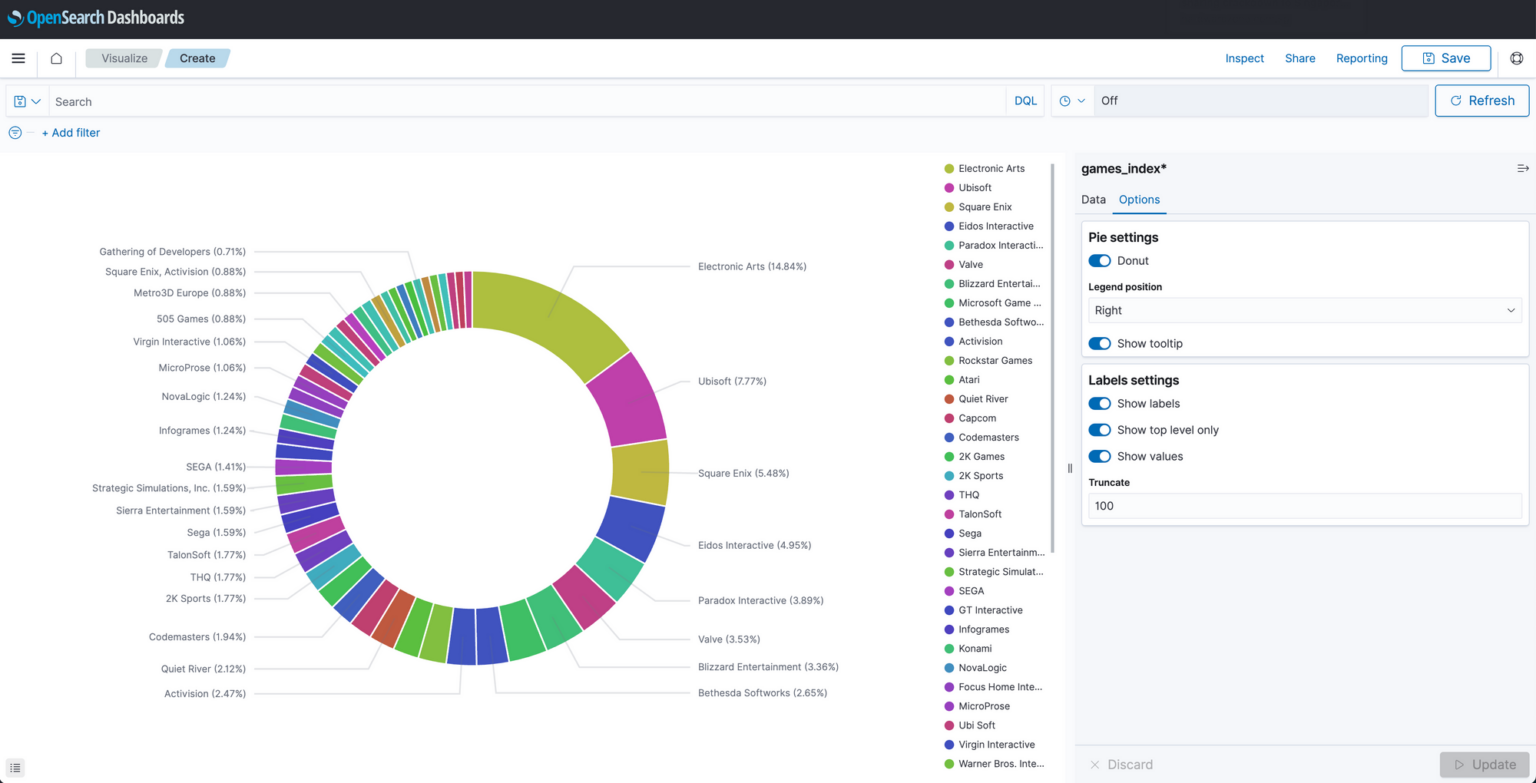
Learn more in our detailed guide to OpenSearch dashboards
Vector search and AI integration
Vector search allows OpenSearch clusters to index and query unstructured data—such as text, images, or embeddings—using semantic similarity rather than keyword matches. Managed platforms provide native support for high-dimensional vector data and algorithms, enabling use cases like recommendation systems, natural language search, and anomaly detection.
This is crucial for organizations adopting machine learning and AI workloads, as it simplifies the integration of language models, image classifiers, or other AI systems with OpenSearch for fast, relevant results. AI integration can include features like anomaly detection, log analytics, and predictive insights. Managed OpenSearch platforms often provide connectors or APIs for importing model outputs and structured metadata directly into searchable indexes.
Related content: Read our guide to OpenSearch tutorial
Notable managed OpenSearch platforms
How we selected these tools: We shortlisted managed OpenSearch platforms based on how they provision, scale, secure, and support OpenSearch clusters, including deployment options, availability and SLAs, search and vector capabilities, and observability.
Independent and multi-cloud managed OpenSearch platforms
1. NetApp Instaclustr

Best for: Teams wanting 100% open source OpenSearch across cloud and on-prem
Strengths: Vendor-neutral deployment, high availability SLAs, expert support
Things to consider: Some open source technologies are offered through consulting only
Instaclustr for OpenSearch is a fully managed version of OpenSearch under the OpenSearch Foundation. NetApp Instaclustr delivers fully managed, hosted OpenSearch clusters that Uusers can run hosted clusters in Instaclustr’s cloud account, their own cloud provider account, or on premises. It provisions production-ready clusters through a console, API, or Terraform provider, and handles scaling, monitoring, upgrades, patching, and maintenance.
The service runs a 100% open source OpenSearch distribution with no proprietary lock-in. Configurations are tuned for reliability, performance, and security across each supported cloud, drawing on operational experience across many node hours. It supports log analytics, application monitoring, and semantic search, including vector search and retrieval augmented generation pipelines.
Key features include:
- Deployment options: Clusters can be provisioned through a console, API, or Terraform provider and run in the customer’s own cloud account, in Instaclustr’s account, or on premises, with support for hybrid environments.
- Scaling and resilience: The platform provides dynamic scaling for changing workloads, along with built-in redundancy, automatic failover, and high availability so clusters keep running during node or zone disruptions.
- Service level agreements: Instaclustr offers up to 99.999% availability SLAs for enterprise OpenSearch clusters and up to 99% latency SLAs for read and write transactions to a maintained index within a specified latency threshold.
- Security and compliance: Deployments include enterprise-grade security features such as encryption for data at rest and in transit, access controls, and private network clusters, with SOC 2, ISO 27001, ISO 27018, PCI-DSS, and HIPAA compliance.
- Special purpose nodes and searchable snapshots: Users can configure dedicated special purpose node types to tune cluster configuration, and search snapshot data stored in remote storage directly from the cluster without performing a full restore.
- Backups and dashboards: The service schedules hourly backups of OpenSearch data and lets users add an OpenSearch Dashboards node to visualize data through histograms, pie charts, line graphs, geospatial views, graph exploration, and time series.
- Plugin framework: Instaclustr for OpenSearch includes a range of OpenSearch plugins that can be enabled through the console, API, or Terraform to support functions such as reducing storage costs and refining search results.
Limitations (as reported by users on G2):
- Coverage of some technologies: Some open source technologies in the portfolio are available through consulting engagements rather than as part of the fully managed platform.
- Suited to managed open source workloads: The platform is oriented toward organizations adopting managed open source data infrastructure, so teams seeking a proprietary or single-cloud native service may find the model less familiar.
2. Logz.io

Best for: Teams wanting OpenSearch-powered observability without managing raw clusters
Strengths: Fully managed SaaS built on OpenSearch, AI-powered log analysis, cloud-agnostic deployment
Things to consider: A curated observability product rather than direct access to a raw OpenSearch cluster
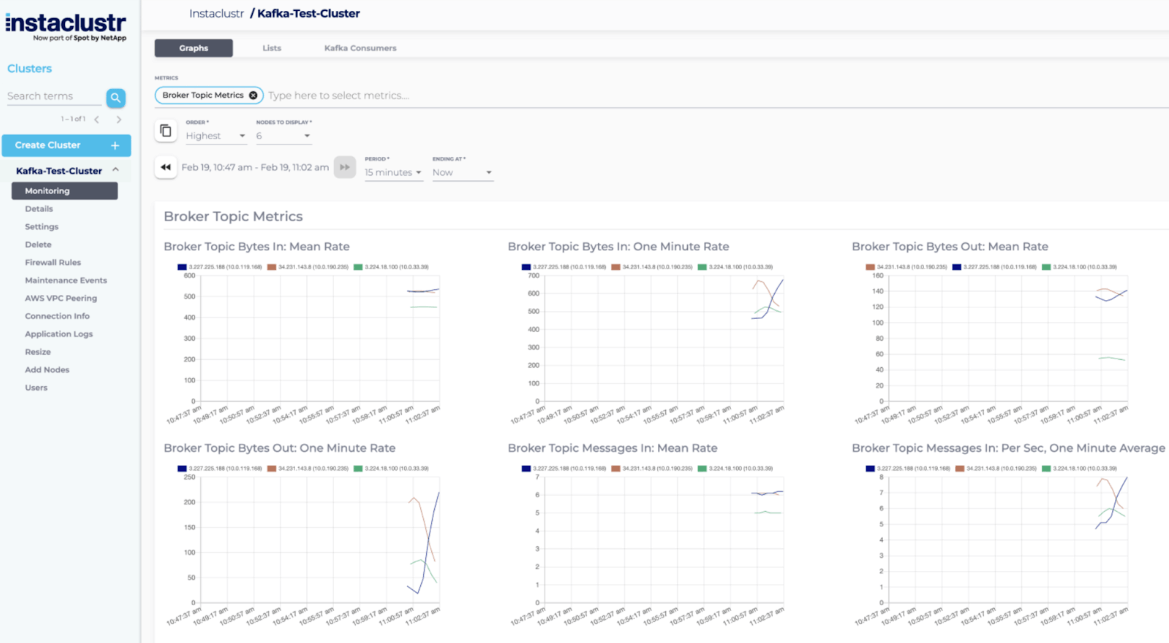
Logz.io is a fully managed observability and security SaaS platform built on top of open source OpenSearch, alongside Prometheus for metrics and Jaeger for tracing. Rather than exposing a raw OpenSearch cluster for customers to configure directly, Logz.io curates and operates the OpenSearch layer underneath its Log Management and Cloud SIEM products, so teams get OpenSearch’s search and analytics power without provisioning or patching clusters themselves.
The platform runs as SaaS independent of any single cloud, ingesting logs, metrics, traces, and security data from workloads running on AWS, Azure, Google Cloud, or on-premises. Logz.io was an early OpenSearch community supporter and contributor after Elastic’s 2021 licensing change, and it has scaled the underlying OpenSearch clusters to support large observability workloads with tiered hot/cold storage.
Key features include:
- Managed OpenSearch-based log management: Delivers log analytics on top of a Logz.io-operated OpenSearch cluster, removing the operational burden of cluster provisioning, patching, and scaling.
- Unified observability platform: Combines logs, metrics, traces, and security monitoring (Cloud SIEM) in one managed service rather than requiring separate infrastructure for each pillar.
- AI-powered analysis: Applies machine learning to reduce alert noise, detect anomalies, and speed up troubleshooting across ingested telemetry.
- Tiered storage for cost control: Uses hot/cold tiered storage on top of OpenSearch to keep large volumes of historical log data queryable at a lower cost.
- Cloud-agnostic ingestion: Ingests data from workloads across AWS, Azure, Google Cloud, and on-premises environments through the Telemetry Collector and related agents.
- ELK migration path: Positions itself as a migration route for teams moving off the closed-source Elastic Stack onto an OpenSearch-based alternative without managing the transition themselves.
Limitations (as reported by users on G2):
- Cost at higher log volumes: Reviewers describe pricing as high compared with some competitors, particularly as daily log volume grows, and note that pricing tied to average daily volume can throttle ingestion if usage spikes.
- Limited raw cluster access: Because the platform curates the OpenSearch layer as part of its own product, teams wanting direct, low-level control over cluster configuration or the ability to run arbitrary OpenSearch plugins have less flexibility than with a raw managed OpenSearch service.
- Interface and configuration friction: Some users note that certain integrations can be difficult to set up, that navigation can become harder to follow as new features are added and menu items relocate, and that alert configuration could be more refined.
3. Bonsai Managed OpenSearch

Best for: Teams wanting managed search backed by a search engineering team
Strengths: Bring your own cloud, managed upgrades, hands-on support
Things to consider: USD-only billing and limited regions on multitenant plans
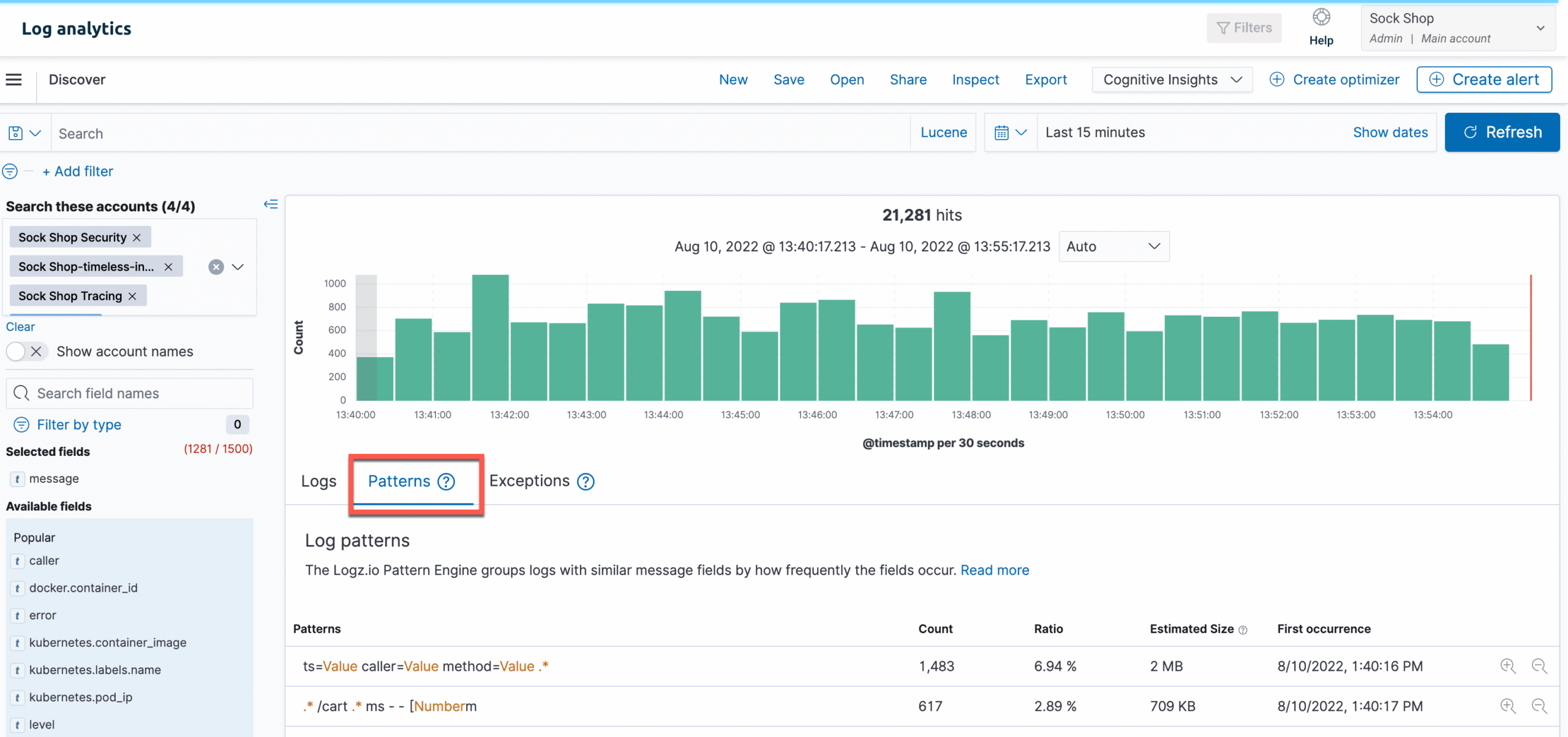
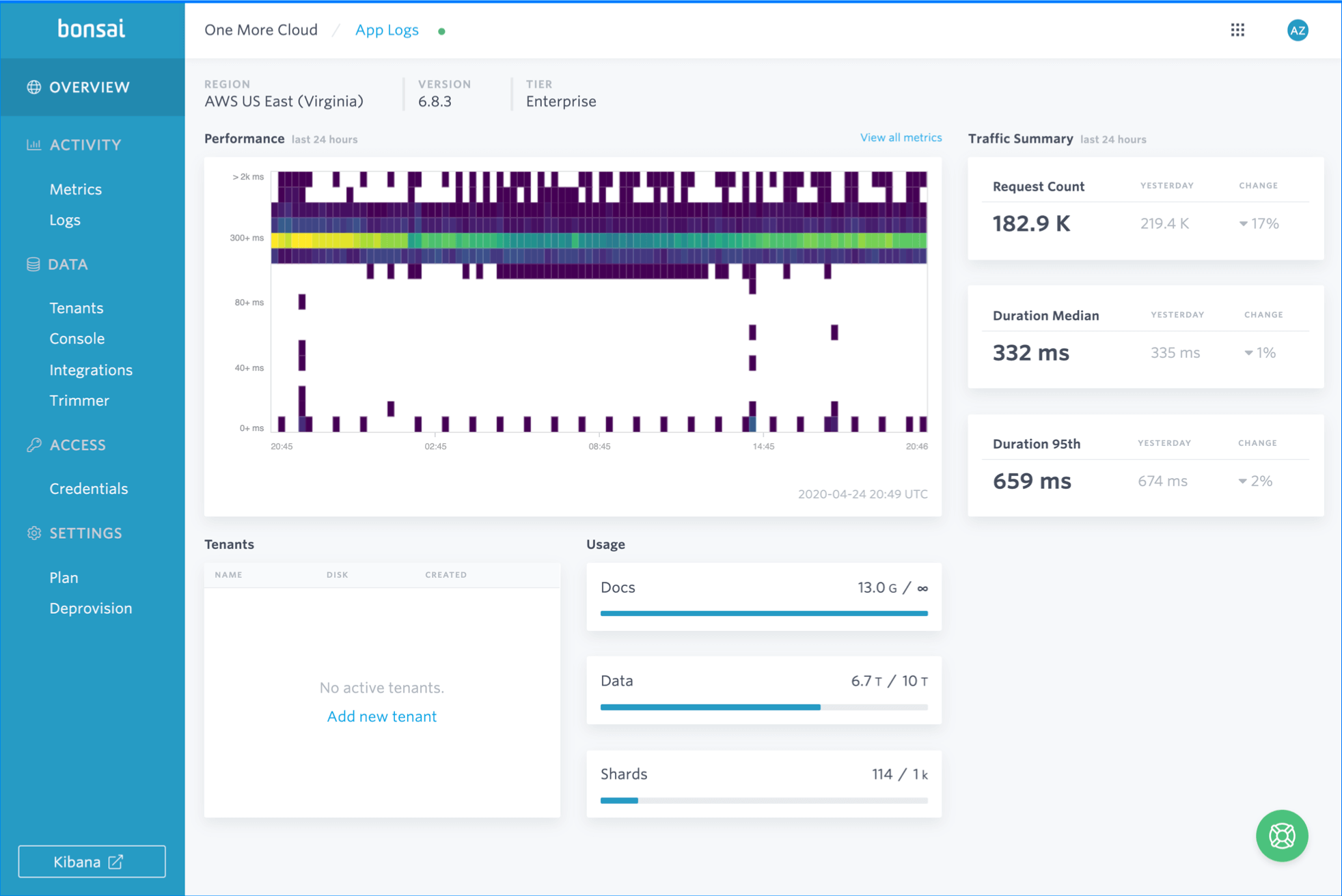
Bonsai is a fully managed and hosted OpenSearch and Elasticsearch platform operated by One More Cloud. It was the first official managed provider to support OpenSearch after the project launched in 2021, and it pairs the managed service with access to a search engineering team.
Clusters can run on Bonsai’s infrastructure or be deployed directly in a customer’s own AWS, Google Cloud, or Azure account, which lets customers use their own instance choices and reserved instance billing. Bonsai handles version, security, and patch upgrades using separate clusters for production, staging, and development, and monitors clusters to address issues.
Key features include:
- Bring your own cloud: Clusters can be deployed in a customer’s own AWS, Google Cloud Platform, or Azure account, where the customer pays the cloud provider for compute while Bonsai runs the search layer.
- Managed upgrades: Separate clusters for production, staging, and development support version, security, and patch upgrades intended to avoid breaking changes and downtime.
- Search performance insights: The platform provides analytics that measure how searches perform and integrate with the customer’s stack to inform hardware use, upgrades, and query and index optimizations.
- Security controls: Every cluster is provisioned with a randomized URL and HTTP Basic Authentication by default, SSL/TLS encryption in transit, encryption at rest, a layer 7 routing proxy, and a controlled firewall.
- Networking and isolation: Bonsai supports IP whitelisting and VPC peering for single tenant clusters, and offers single tenant and multitenant deployment classes.
- Backups: Paid clusters receive regular snapshots stored in an offsite, encrypted S3 bucket in the same region as the cluster, with hourly snapshots retained for 24 hours and daily snapshots for 14 days.
- Expert support: On-demand support from search engineers, a dedicated contact model, and advisory playbooks are included with the managed service.
Limitations (based on publicly available sources):
- Billing currency: All invoices are billed in USD only, which can complicate budgeting for organizations operating in other currencies.
- Region and version availability: Multitenant plans are supported in a limited set of regions and offer limited versions on free plans, with wider region and version choice reserved for single tenant, Business, and Enterprise subscriptions.
- Fees for older versions: Clusters running major search engine versions behind the current primary supported version are charged an operational and maintenance fee.
- Plan step-ups: The vendor has acknowledged user feedback that the jump in price to the next plan up could be a large increase for some workloads.
Source: Bonsai
Cloud provider managed OpenSearch services
4. Amazon OpenSearch Service

Best for: AWS-native teams needing search, analytics, and observability
Strengths: Deep AWS integration, serverless option, petabyte-scale scaling
Things to consider: Tied to AWS, and costs can rise without careful tuning
Amazon OpenSearch Service is a managed retrieval engine built on OpenSearch for AI, search, and analytics. It combines vector, lexical, hybrid, and agentic retrieval in a single system and runs at petabyte scale, handling backups, patching, monitoring, and cluster maintenance.
The service ingests data in real time or batch through Amazon Kinesis, AWS Glue, or Zero-ETL integrations with Amazon S3 and Amazon DynamoDB, and connects to AI services such as Amazon Bedrock and Amazon SageMaker. A serverless option scales automatically, and the service supports observability across logs, traces, and metrics.
Key features include:
- Serverless option: OpenSearch Serverless scales up and to zero without infrastructure to manage or capacity planning, adjusting to demand for dynamic workloads.
- Vector database: The service stores and searches high-dimensional vectors for semantic and multimodal search across text, image, audio, and video, with indexing strategies such as HNSW and IVF and vector quantization to balance accuracy, latency, and cost.
- Managed operations: It automatically detects and replaces failed nodes, and Cluster Insights surfaces issues with prescriptive recommendations, reducing self-managed overhead.
- Scaling and availability: Clusters scale horizontally or vertically up to 3 petabytes with zero downtime through a single API call, and Multi-AZ with Standby provides automatic failover in under a minute for 99.99% availability.
- Observability: The service analyzes logs, traces, and metrics through unified dashboards with direct query for Amazon S3, Amazon CloudWatch, and Amazon Security Lake, plus built-in anomaly detection and alerting.
- Data ingestion and AI integration: Built-in ingestion pipelines, model connectors, MCP server support, and integrations with Amazon Bedrock and SageMaker let teams add AI models through configuration, and intelligent tiering manages data across storage tiers based on access patterns.
- Security: Role-based access control provides fine-grained permissions, and index-level encryption supports tenant data isolation for multi-tenant applications.
Limitations (as reported by users on G2):
- Cost management: Users report that costs can rise significantly if indexing and retention policies are not carefully managed, and that reducing spend often requires ongoing cost analysis.
- Setup and tuning complexity: While basic setup is straightforward, users find that scaling clusters and optimizing index and shard strategies for production workloads requires experience.
- Vendor lock-in: Users note that migrating away from the service can be difficult and that the offering is tied to the AWS ecosystem.
- Cluster visibility: Some users find it harder to monitor activity at the index level compared with third-party tools, and note limits when a cluster runs inside a VPC.

Source: Amazon
5. DigitalOcean Managed OpenSearch

Best for: Developers and small teams centralizing logs and search
Strengths: Simple setup, predictable pricing, easy log forwarding
Things to consider: Fewer advanced features than larger cloud providers
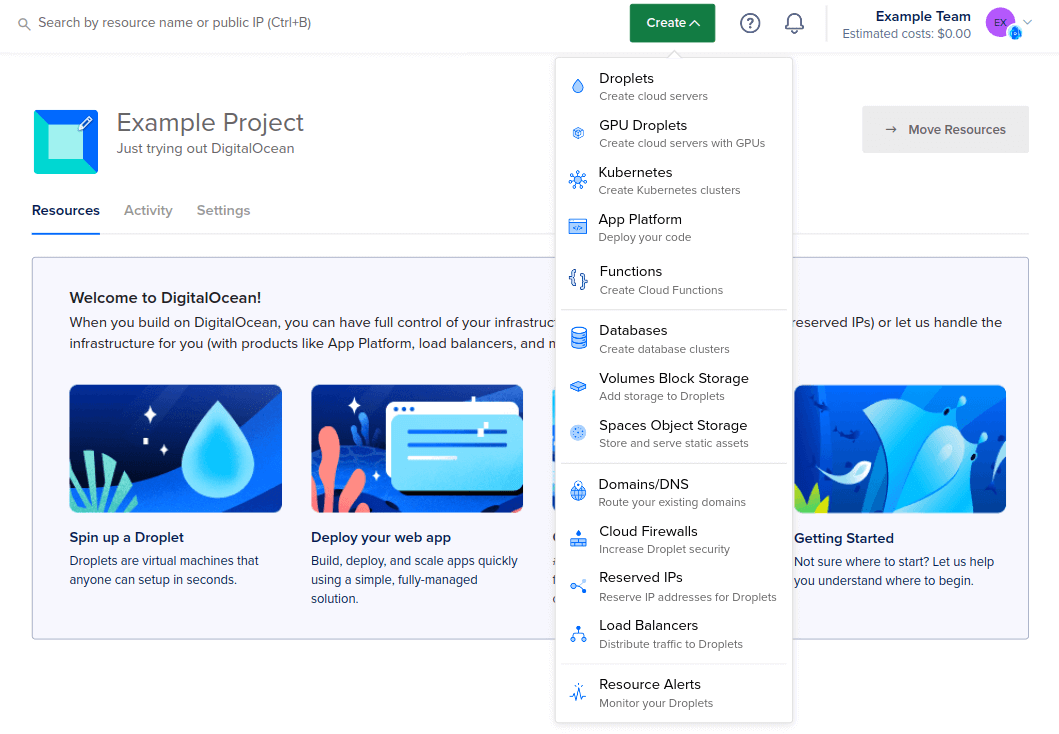
DigitalOcean Managed OpenSearch is a fully managed OpenSearch service within DigitalOcean Managed Databases. It handles cluster provisioning, backups, updates, and maintenance, and targets log management, real-time application monitoring, and full-text search for growing businesses.
Clusters can be set up in minutes with a chosen amount of storage and nodes, and users can scale by adding CPUs, RAM, storage, or nodes, with storage autoscaling available. The service supports log forwarding from other DigitalOcean sources and vector similarity search through the k-NN, ML Commons, and Neural Search plugins.
Key features include:
- Managed cluster operations: DigitalOcean handles provisioning, backups, updates, monitoring, and failover, so teams can deploy a cluster without managing the underlying infrastructure.
- Scaling: Users can dynamically increase CPUs, RAM, and storage on existing clusters, add nodes, or enable storage autoscaling to handle growing workloads.
- Backups: The service provides hourly backups for the first 24 hours followed by up to 3 days of daily backup retention, depending on the plan.
- Log forwarding and analytics: Logs from DigitalOcean sources such as Managed Databases, App Platform, and Kubernetes can be forwarded in a few clicks, and Managed Database logs can be sent to a Datadog account, feeding real-time log, application, metrics, and security analytics.
- Vector and hybrid search: OpenSearch bundles the k-NN, ML Commons, and Neural Search plugins for hybrid keyword and vector search, and ML Commons connectors to providers such as OpenAI, Bedrock, Cohere, and SageMaker support server-side embeddings.
- Security: Clusters can run in a Virtual Private Cloud with IP whitelisting, encryption in transit and at rest, authentication, access control, and audit logging, and DigitalOcean applies regular security updates and patches.
Limitations (as reported by users on G2):
- Managed database pricing: Users report that the cost of managed databases can rise steeply when adding storage or a standby node, and that database pricing can feel high for small projects.
- Limited advanced features: Users note that some managed services, regions, and deep customization options are more limited than on larger cloud providers, with basic metrics but limited detailed analytics.
- Maintenance updates: Some users report that a managed database update caused data loss, leading them to keep extra backups.
- Support responsiveness: Users describe support response times that can be slow, particularly outside higher paid support tiers.
Source: DigitalOcean
6. UpCloud Managed OpenSearch

Best for: European teams wanting fast, transparent-priced OpenSearch
Strengths: Rapid deployment, NVMe storage, high availability SLA
Things to consider: Narrower service catalog than hyperscale providers
UpCloud Managed OpenSearch is a fully managed database service from UpCloud, a European cloud provider. It deploys production-ready OpenSearch clusters in minutes on high-performance infrastructure and handles infrastructure, maintenance, and updates.
The service runs on low-latency NVMe storage across data centers in Europe, the USA, Australia, and Asia, and is backed by UpCloud’s 99.999% SLA. It uses a master and replica model for high availability, supports full-text search, log management, and analytics, and integrates with tools such as Grafana and Prometheus.
Key features include:
- Rapid deployment: Fully managed OpenSearch clusters can be deployed within minutes, with single-node options for development and 3 to 15 node clustered configurations for production.
- Performance and storage: Clusters run on low-latency NVMe storage and compute instances aimed at fast queries, with the service available in data centers across Europe, the USA, Australia, and Asia.
- High availability: High availability clusters use a master and replica model with automatic failover and tolerate multiple node failures, backed by a 99.999% SLA and interruption-free maintenance.
- Scaling: Users can increase storage, RAM, and CPU and deploy across multiple regions for redundancy and lower latency.
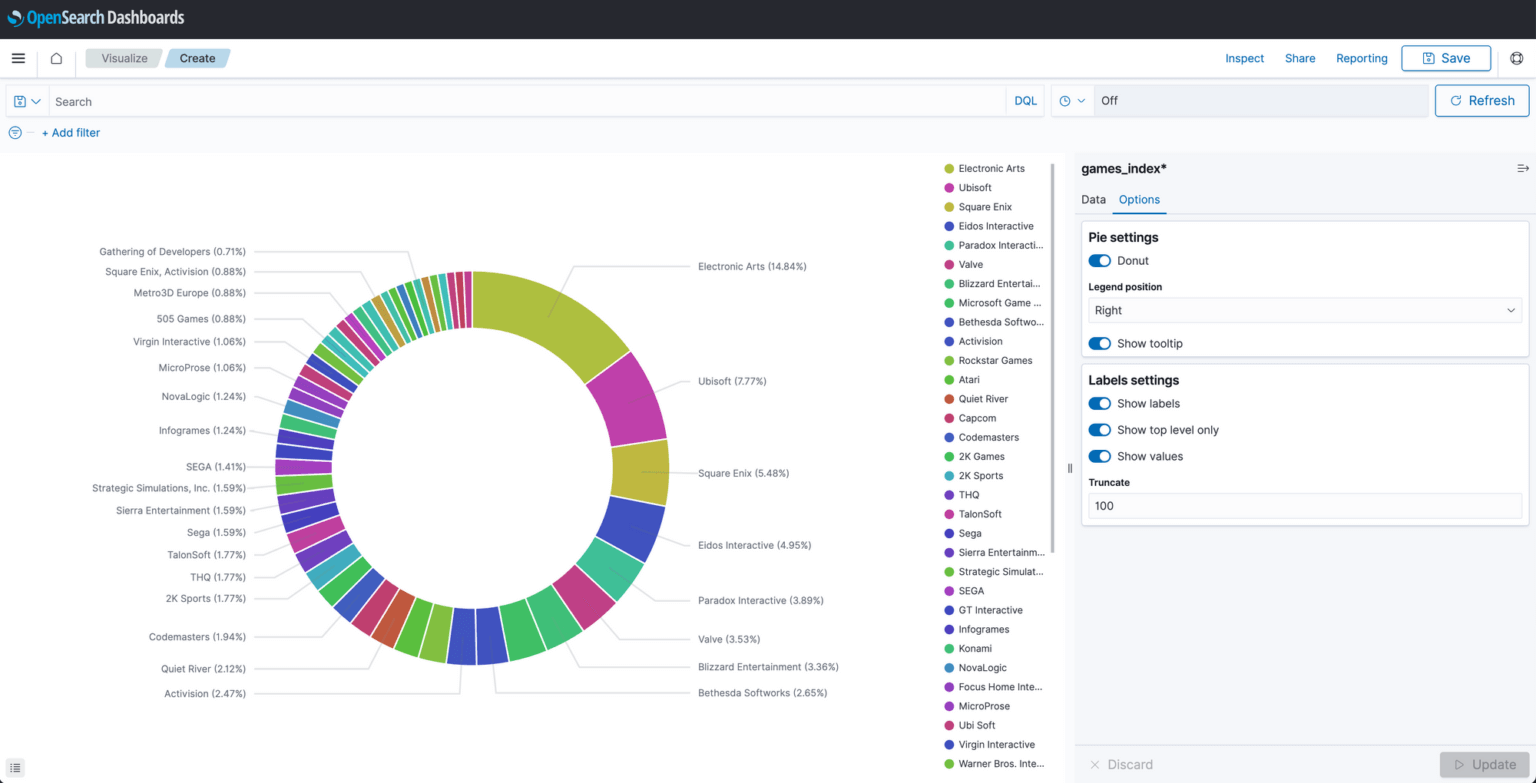
- Search and analytics: The service supports full-text search, autocomplete, and ranking, centralizes and analyzes logs in real time, runs aggregations, and visualizes data with OpenSearch dashboards.
- Extensions and security: Built-in extensions add SQL support, anomaly detection, and alerting, while private networking, end-to-end encryption, custom firewall rules, and IP access control protect data.
- Backups and upgrades: Automatic backups run daily with retention that varies by plan, and updates and patches are applied without interrupting workflows.
Limitations (as reported by users on G2):
- Managed database pricing: Users report that managed database services carry a premium over comparable plain servers, which can raise costs for smaller deployments.
- Narrower service catalog: Users note that UpCloud offers fewer services than the large hyperscale providers, which may not suit teams needing a broad managed catalog.
- Account and project management: Users point to the absence of team or project grouping for managing shared resources and invoicing, a feature the vendor has placed on its roadmap.
- Documentation and templates: Some users find that documentation does not always match current implementations and that certain server templates are kept outdated.
Source: UpCloud
Conclusion
Managed OpenSearch platforms simplify the complexities of deploying and operating OpenSearch clusters, making them accessible for teams without deep infrastructure expertise. By automating provisioning, scaling, monitoring, and data lifecycle management, these services allow organizations to focus on extracting value from their data rather than managing the underlying systems.