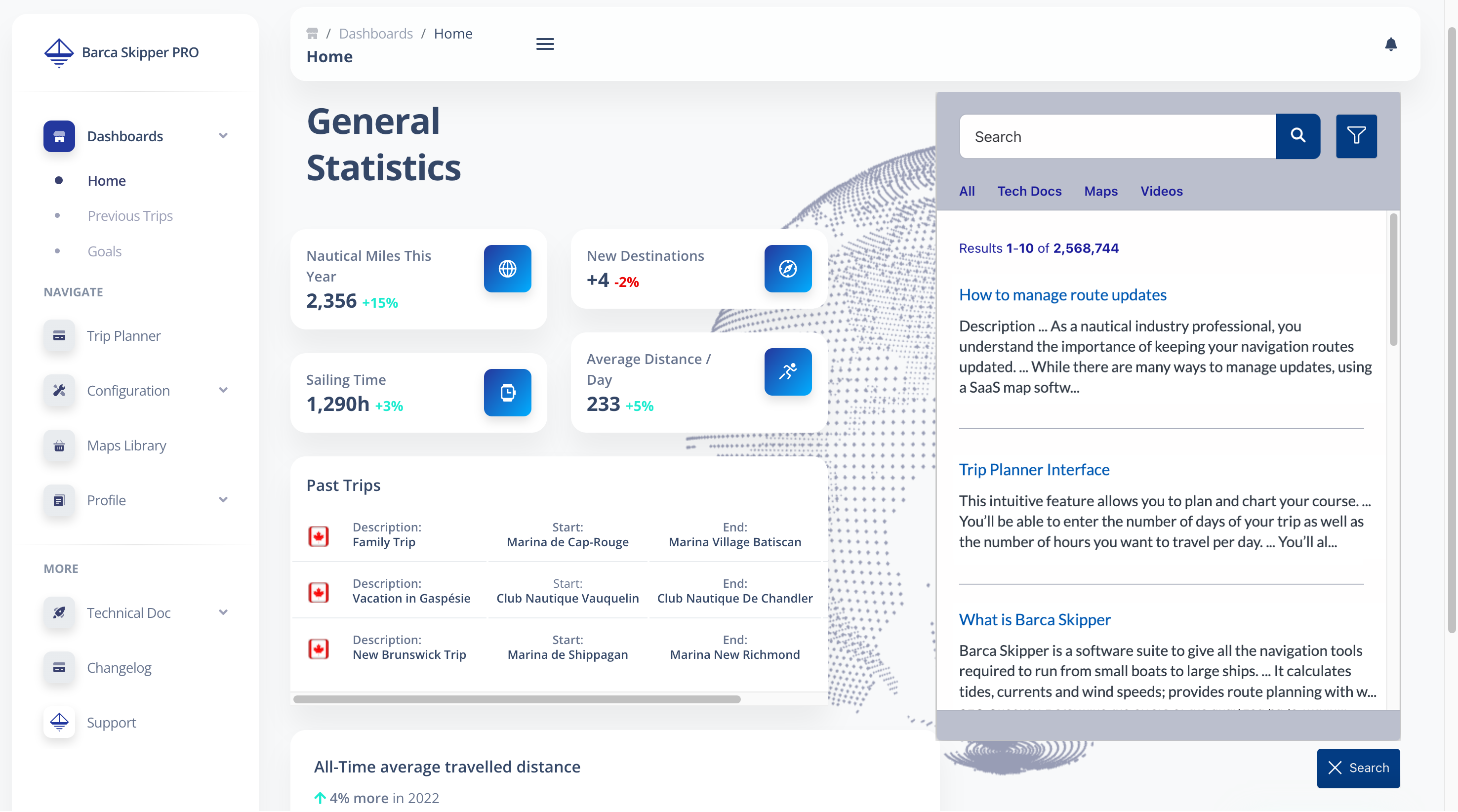
What Is enterprise AI search software?
Enterprise AI search software helps organizations find, retrieve, and analyze relevant information from massive stores of data. Unlike traditional search engines, these solutions use artificial intelligence to go beyond simple keyword matching, interpreting user intent and contextual relationships within and across documents. This leads to more accurate, relevant results across a complex landscape of structured, semi-structured, and unstructured data, such as emails, wikis, databases, cloud apps, and internal systems.
The need for enterprise AI search stems from the exponential growth of digital information within organizations. Employees spend significant time hunting for files, emails, policies, or subject matter expertise, often spread across numerous disconnected platforms.
AI search platforms address these challenges by unifying access to disparate sources, providing semantic search capabilities, and leveraging machine learning for continuous improvement. The result is faster, more accurate information retrieval, which drives productivity and informed decision-making.
This is part of a series of articles about vector database
Core technology components of enterprise AI search software
AI models and machine learning for semantic understanding
AI models form the core of modern enterprise search, especially those built on machine learning techniques for semantic understanding. Instead of relying only on keywords, these models interpret the meaning behind queries and documents, capturing nuances like synonyms, relationships, and contextual usage. This involves training on vast datasets so the algorithms can build a sense of real-world language, intent, and content relevance.
Machine learning continuously refines search outcomes by analyzing user interactions, click patterns, and feedback, which improves relevance over time. These adaptive systems evolve to the unique language, terminology, and workflows within a given organization, leading to smarter search experiences.
Natural language processing (NLP) and intent recognition
Natural language processing (NLP) enables enterprise search software to handle conversational queries, extracting meaning from complex sentences and informal phrasing. NLP goes beyond matching specific words, recognizing things like date ranges, named entities, document types, or ambiguous references. This allows users to ask questions or express needs much as they would to a colleague, and receive relevant, context-aware results quickly.
Intent recognition is a subfield within NLP focused on identifying what the user wants to accomplish. By parsing context, entity mentions, and user profile data, AI search platforms reliably infer objectives from vague requests. For example, “Show me last year’s sales presentations” requires understanding the timeframe, topic, and document type.
Data indexing, vector embeddings, and federated search
To enable AI-driven retrieval, enterprise search software depends on sophisticated data indexing and vector embeddings. Data indexing organizes and catalogs every piece of content (whether files, emails, or database records) for rapid lookup.
However, AI search goes further by converting text, images, and other content into dense numerical vectors using specialized models like BERT or CLIP. These vector embeddings allow the system to perform similarity searches based on meaning, not just surface keywords.
Federated search unifies access to information spread across multiple platforms, repositories, or clouds. Rather than requiring employees to search each source separately, federated indexing maintains connections with enterprise systems. The AI then orchestrates a single search across sources, applying security and ranking logic, and merging results into one list.
Retrieval-Augmented Generation (RAG) and generative AI
Retrieval-Augmented Generation (RAG) improves enterprise AI search using generative AI models. In this architecture, the search engine first retrieves relevant snippets from across enterprise data, then passes them into a generative model to synthesize coherent, contextually accurate responses. This approach means users can receive direct, readable answers sourced from trusted organizational content, not just a list of links.
Generative AI doesn’t just echo existing material; it can condense, summarize, or explain findings tailored to user intent. Combined with retrieval techniques, RAG ensures responses are both grounded in actual enterprise knowledge and delivered in a natural, conversational style.
Key features of enterprise AI search software
Unified data access
Unified data access is foundational in enterprise AI search, consolidating information from CRMs, cloud storage, email, wikis, databases, and line-of-business apps. By implementing extensive connectors and APIs, these platforms break down data silos, presenting a unified search interface across the enterprise landscape.
Beyond convenience, unified access supports compliance and knowledge management. IT teams can enforce global search permissions and audit trails, while users gain confidence that results reflect the full span of enterprise knowledge. This access means that critical insights are less likely to be missed due to system fragmentation.
Multimodal search
Multimodal search extends beyond textual queries and results, allowing users to search and receive answers from various data types such as images, videos, audio recordings, presentations, and diagrams. AI models enable this by using techniques like image recognition and voice transcription, transforming non-textual content into searchable data and integrating it into a single result set.
This capability is particularly valuable in organizations with diverse content (like engineering, legal, or marketing teams) where vital information may live in design files, meeting recordings, or multimedia presentations. Multimodal search removes barriers to discovery, allowing employees to ask complex, cross-modal questions and instantly retrieve relevant assets.
AI-powered insights
AI-powered insights represent one of the biggest advantages of enterprise AI search. By analyzing search queries, clickstreams, behavioral data, and document relationships, the system can surface patterns and trends that manual review would miss. This can include identifying frequently accessed resources, subject matter experts, popular knowledge gaps, or emerging business topics.
Enterprise AI search can proactively suggest relevant content, related documents, or expert contacts based on the user’s current work context. These predictive and prescriptive insights save time and promote best practices and knowledge sharing within departments.
Security and compliance
Security and compliance are paramount in enterprise environments, and leading search platforms incorporate controls. Advanced permission models ensure users only access data they are authorized to see, inheriting access policies set by underlying business systems. Search indexing processes respect these permissions, scanning and exposing only the data that matches each user’s profile.
Additionally, enterprise AI search solutions support audit logging, data residency, and regulatory compliance such as GDPR and HIPAA. Encryption, authentication, and user activity monitoring are standard features. By embedding security into every layer of search and retrieval, these platforms help organizations protect sensitive data, reduce legal risks, and maintain industry certifications.
Analytics and usage metrics
Enterprise AI search software provides detailed analytics and usage metrics to measure search effectiveness and user engagement. Search administrators and knowledge managers gain access to dashboards tracking popular queries, response accuracy, query abandonment rates, and system performance. These metrics highlight which knowledge assets are most valuable or where content gaps exist.
Analysis of search behavior can drive continuous improvement initiatives. For example, persistent query failures may signal the need for updated content or refinements in machine learning models. By providing actionable feedback loops and benchmarking tools, analytics empower organizations to optimize both their information architecture and search relevance.
Tips from the expert

David vonThenen
Senior AI/ML Engineer
As an AI/ML engineer and developer advocate, David lives at the intersection of real-world engineering and developer empowerment. He thrives on translating advanced AI concepts into reliable, production-grade systems all while contributing to the open source community and inspiring peers at global tech conferences.
In my experience, here are tips that can help you better leverage enterprise AI search software:
- Customize vector generation by content vertical: Use domain-adapted models (e.g., for finance, legal, engineering) to generate embeddings. A single generic model may dilute semantic nuance; tailored vectors sharpen retrieval quality.
- Adopt fine-grained document chunking strategies: Instead of uniform chunks (e.g., every 500 tokens), chunk documents semantically (by headings, tables, bullet groups, or intent) so generative responses are grounded in logically complete units.
- Deploy cross-modal grounding strategies: Align text, image, and audio embeddings into a shared space using contrastive learning. This empowers true multimodal retrieval beyond surface-level transcription or tagging.
- Leverage sparse-dense hybrid retrieval models: Combine sparse lexical search (e.g., BM25) with dense vector search in a single fusion strategy, suitable for balancing keyword precision with semantic breadth in ambiguous queries.
- Auto-curate task-centric knowledge packs: Identify clusters of related queries and documents (e.g., “new hire onboarding”) and prepackage them as dynamic “knowledge packs” that can be pushed to relevant users on-demand.
Notable enterprise AI search software
1. OpenSearch

OpenSearch is a community-driven, open-source search and analytics suite designed for scalability and flexibility. It supports a wide range of use cases, including real-time application monitoring, log analytics, and enterprise search. With its integrated visualization tool, OpenSearch Dashboards, users can explore and analyze data seamlessly.
Key features:
- Advanced security: Offers encryption, authentication, and role-based access control for secure data handling.
- Built-in search capabilities: Includes full-text querying, autocomplete, and customizable scoring.
- Hybrid search with k-NN: Combines traditional keyword search with vector-based semantic search, enabling conceptually similar results for use cases like product recommendations and fraud detection.
- Machine learning commons: Provides anomaly detection and predictive analytics using machine learning algorithms.
- Real-time indexing: Ensures immediate searchability of new data, supporting dynamic and fast-paced enterprise environments.
- Cross-cluster replication: Facilitates redundancy and scalability by replicating data across clusters.
2. Google Cloud Search

Google Cloud Search is an enterprise AI search tool to help users quickly locate information across their organization’s digital workspace. Integrated with Google Workspace services like Gmail, Drive, Calendar, and Sites, it also supports custom connectors for third-party data sources. Cloud Search interprets natural language queries, offers proactive assist cards based on user context, and refines results with filters and search operators.
Key features include:
- Cross-platform search: Delivers unified search across Google Workspace and external enterprise data sources, accessible via web and mobile apps.
- Assist cards: Provides contextual updates like meeting reminders or recent activity through dynamic cards on the homepage.
- Natural language query support: Understands everyday language, enabling users to search with informal or conversational phrases.
- Advanced search operators and filters: Allows search customization using attributes like owner, date, or file type to narrow down results.
- Permission-aware results: Honors existing access settings within Google Workspace or external systems, showing only content the user is authorized to see.
3. Glean

Glean is an AI-powered enterprise search platform that unifies knowledge across a company’s tools, enabling employees to find information instantly. It indexes content from systems like Google Workspace, Microsoft 365, Slack, Jira, and Salesforce, then uses deep learning models to understand user intent and surface personalized, context-aware results.
Key features include:
- Unified search across tools: Connects data from email, chat, tickets, and documents across platforms like Google Workspace, Microsoft 365, Salesforce, Slack, and more into a single searchable interface.
- AI-powered relevance: Uses large language models (LLMs) and semantic understanding to interpret natural language queries and deliver relevant results tailored to the company’s internal language and context.
- Knowledge graph personalization: Builds a dynamic graph of people, content, and interactions to personalize results by role, team, and user behavior.
- Real-time indexing and permissioning: Keeps data continuously updated and enforces access controls, ensuring users see only what they’re authorized to view.
- AI-generated summaries: Offers quick, concise overviews of documents and conversations, reducing time spent reading through lengthy files.

4. Guru

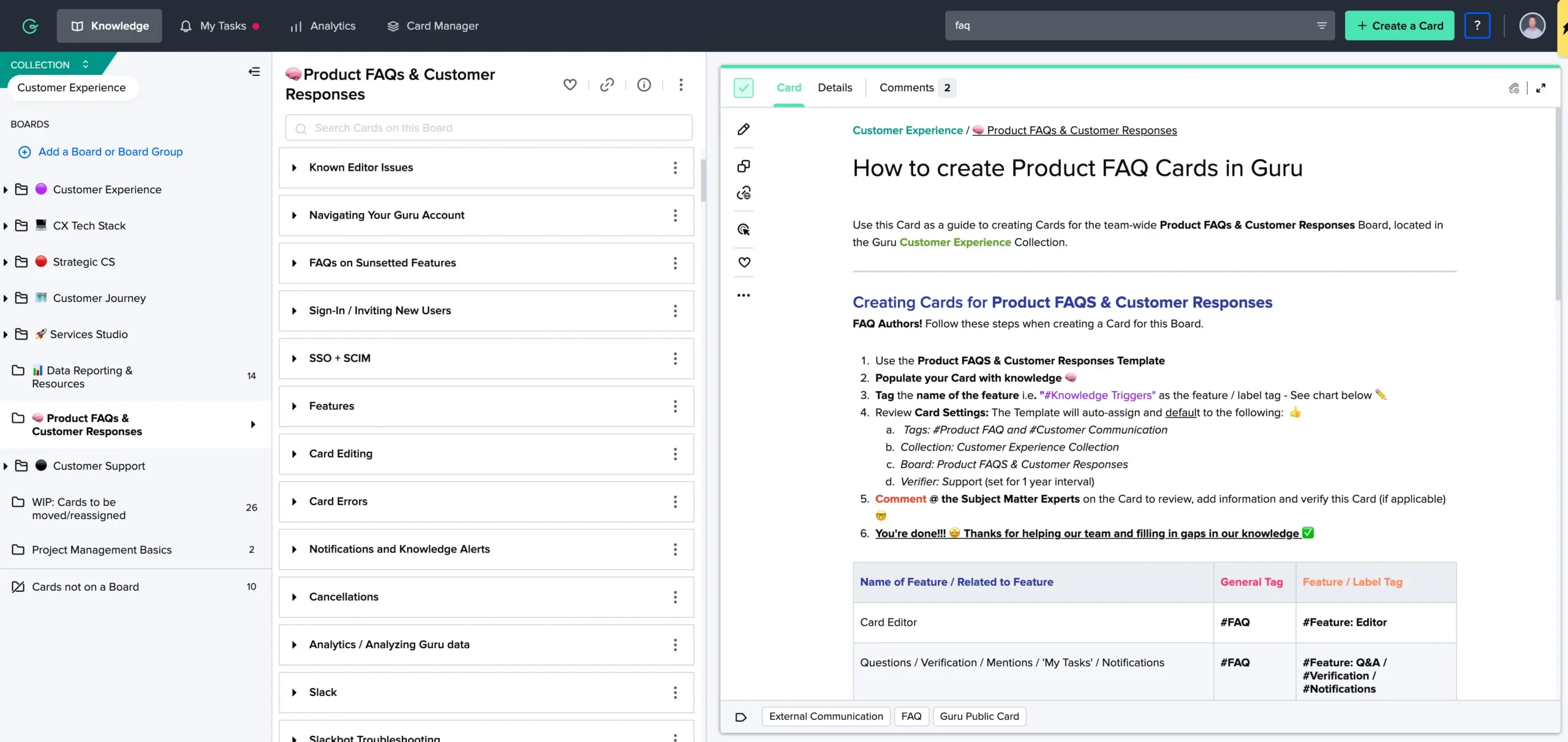
Guru is an AI-driven enterprise knowledge solution that delivers answers within the tools the team already uses, such as Slack, Chrome, or Microsoft Teams. It goes beyond traditional search by offering contextual responses instead of just links. With features like semantic search, personalized knowledge delivery, and AI-assisted documentation, Guru helps teams capture, find, and share information as they work.
Key features include:
- Contextual AI answers in workflow: Guru integrates with collaboration tools like Slack and browser environments to deliver relevant answers where work is happening.
- Semantic and federated search: Goes beyond keyword matching with AI-powered semantic search, surfacing results based on meaning, not just text, across connected apps and knowledge sources.
- Knowledge agents with chat: Offers interactive AI responses that understand context and provide reliable answers, not just documents or files.
- Browser extension and triggers: Allows users to access information without switching tabs, and delivers knowledge proactively when web content is detected.
- Integrated content creation and validation: Supports rich content creation with templates, collaborative editing, version tracking, and automatic validation reminders to keep information accurate.
Guru
5. Coveo

Coveo is an enterprise AI search and relevance platform that delivers the most contextually relevant content, answers, and recommendations across digital touchpoints. It unifies enterprise knowledge and uses AI to support search, generative answering, and predictive discovery. Coveo helps customers and employees find what they need, whether that’s a support article, product recommendation, or internal document.
Key features include:
- AI-powered search across systems: Surfaces relevant results from multiple content sources, tuned by user intent, query context, and behavioral signals.
- Generative answering: Uses retrieval-augmented generation (RAG) to deliver secure, LLM-based answers grounded in enterprise data, improving case deflection.
- Predictive recommendations: Offers next-best-content or product suggestions based on clickstream analysis, session behavior, and real-time intent signals.
- Semantic understanding: Leverages a semantic encoder and vector search to enhance retrieval quality with contextual understanding of queries.
- Agentic experiences: Supports service agents with retrieval-grounded actions and case creation through APIs like passage retrieval and case assist.
Powering enterprise AI search with Instaclustr
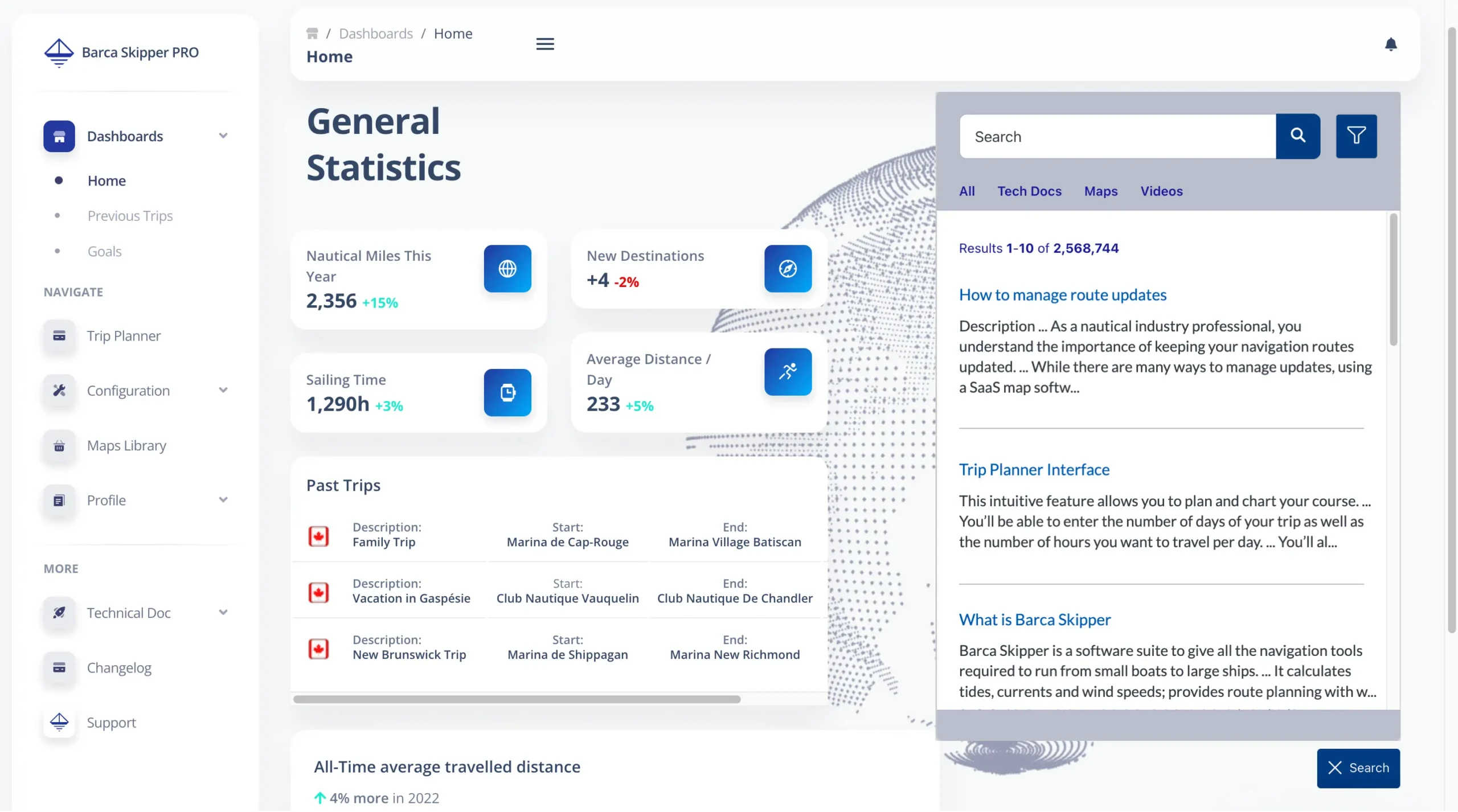
Instaclustr for OpenSearch offers a robust, fully managed platform that simplifies the deployment and operation of OpenSearch clusters, enabling organizations to build scalable, high-performance search and analytics solutions. With the introduction of AI Search capabilities, Instaclustr has elevated OpenSearch to a next-generation search platform, integrating advanced machine learning-powered features for smarter, more relevant search experiences.
AI search capabilities in OpenSearch
AI Search for OpenSearch, available on the NetApp Instaclustr Managed Platform, transforms traditional keyword-based search into a more intelligent, context-aware system. It leverages semantic, hybrid, and multimodal search techniques to deliver results that understand user intent rather than just matching keywords. Key features include:
Semantic Search: Enhances relevance by understanding the meaning behind queries, enabling natural language and conversational search experiences.
- Hybrid search: Combines semantic understanding with traditional keyword search for improved precision and performance.
- Multimodal search: Supports simultaneous text and image data queries, unlocking richer and more diverse search results.
- Neural sparse search: Utilizes lightweight sparse embeddings for cost-effective and faster query processing.
These capabilities are powered by OpenSearch’s AI Search and ML Commons plugins, which enable the generation of vector embeddings, vector indexing, and integration with external large language models (LLMs) like OpenAI or Amazon Bedrock. This allows for advanced use cases such as enterprise data retrieval, intelligent e-commerce search, AI-driven chatbots, and enhanced observability and security analytics.
Managed AI search with Instaclustr
Instaclustr simplifies the adoption of AI Search by managing the operational complexities associated with deploying and scaling AI-powered search solutions. The platform provides:
- Managed operations: Handles provisioning, scaling, patching, and monitoring, ensuring reliability and security.
- Multi-cloud flexibility: Supports deployment on AWS, GCP, Azure, or on-premises with consistent tooling.
- 24/7 expert support: Offers enterprise-grade SLAs and access to OpenSearch specialists.
By integrating AI Search into OpenSearch, Instaclustr enables organizations to move beyond traditional search paradigms, delivering smarter discovery experiences with reduced operational overhead. Whether enhancing product discovery, building AI-assisted applications, or improving enterprise knowledge search, Instaclustr for OpenSearch provides a powerful, open source solution tailored for modern search needs.
For more information: