What Is Managed OpenSearch and What Is Important to Evaluate in Secure Environments?
TL;DR: Managed OpenSearch means the provider runs the cluster while you keep control of identities, data, and access policy. For secure environments, NetApp Instaclustr is best for regulated and hybrid estates, Amazon OpenSearch Service suits AWS-native teams, and OVHcloud suits EU sovereignty.
Managed OpenSearch services provide a hosted OpenSearch deployment where the service provider operates the underlying infrastructure while security controls protect the cluster, data, and network traffic. The provider typically handles tasks such as provisioning, software updates, backups, monitoring, and node replacement. This reduces the operational work required to maintain OpenSearch in production
Choosing a provider for a secure managed OpenSearch environment requires evaluating key factors like compliance certifications, networking isolation, version currency, and multi-cloud flexibility.
Key evaluation criteria for secure environments:
Use the following six dimensions to compare providers on a like for like basis:
- Encryption and key management: How data is protected in transit, at rest, and in backups, and who controls the keys.
- Authentication and access control: How users and applications are identified, and how permissions are scoped to indexes, documents, and fields.
- Network isolation and private connectivity: Whether the cluster can be kept off the public internet and reached over private paths.
- Compliance certifications and data residency: Which audits the provider holds and where the data physically sits.
- Audit logging and security monitoring: What security-relevant activity is recorded, and how it reaches your monitoring stack.
- Patching, upgrades, and backup protection: How quickly security fixes are applied and how well backups are retained and protected.
Solutions compared in this guide:
- Multi-cloud and hybrid managed OpenSearch providers:
- NetApp Instaclustr for OpenSearch: Supports regulated and hybrid deployments with private networking, broad compliance coverage, and hourly backups.
- Logz.io: Delivers a fully managed OpenSearch-based observability platform with the broadest named compliance set here (PCI, SOC 2, HIPAA, GDPR, ISO 27001) and encrypted cold storage.
- Bonsai Managed OpenSearch: Combines managed clusters with encrypted snapshots, private connectivity options, and hands-on engineering support.
- Cloud platform managed OpenSearch services:
- Amazon OpenSearch Service: Integrates VPC isolation, granular access controls, encryption, and security analytics across AWS environments.
- Oracle Cloud Infrastructure Search with OpenSearch: Runs OpenSearch within OCI networking and integrates with its identity, vault, monitoring, and audit services.
- DigitalOcean Managed OpenSearch: Provides core security controls including VPC isolation, encryption, IP allowlisting, and audit logging.
- OVHcloud Managed OpenSearch: Focuses on European data residency with private networking, multi-zone resilience, and compliance certifications.
- Exoscale Managed OpenSearch: Provides dedicated European deployments with TLS, encrypted storage and backups, and zone-level data residency.
Why Security Is Important in OpenSearch Environments
OpenSearch often stores operational logs, application events, customer records, and other sensitive data. A security failure can expose this data or allow attackers to modify indexes, disrupt searches, or consume cluster resources. Key security concerns include:
- Protecting sensitive data: Encryption and access controls help prevent unauthorized users from reading indexed data, snapshots, or credentials.
- Controlling user access: Authentication and role-based permissions ensure users and applications can access only the indexes and operations they need.
- Securing network traffic: TLS and network restrictions protect data moving between clients, OpenSearch nodes, and other services.
- Preventing unauthorized changes: Fine-grained permissions reduce the risk of users deleting indexes, changing mappings, or modifying cluster settings.
- Supporting auditing and compliance: Audit logs provide records of authentication attempts, access requests, and administrative actions that can support investigations and compliance requirements.
- Maintaining availability: Resource controls, monitoring, and restricted administrative access help protect clusters from misuse or attacks that could affect search and indexing workloads.
How to Choose a Managed OpenSearch Provider for Secure Environments: 6 Evaluation Criteria
The criteria below map to the layers where OpenSearch environments are most often exposed. Work through them in order, and treat any gap as something you will have to compensate for in your own architecture.
1. Encryption and Key Management
Encryption covers three separate paths: traffic between clients and the cluster, traffic between nodes, and data written to disk and to snapshots. Most providers enable TLS and at-rest encryption by default, so the differentiator is usually key control. Some services let you supply and rotate your own keys through a managed key service, while others use provider-held keys with no customer-facing rotation workflow. Snapshot encryption is frequently overlooked and often stored in a separate object store.
Evaluation criteria:
- Is TLS applied to client traffic and to inter-node traffic by default?
- Is encryption at rest enabled automatically, or does it need to be selected at provisioning?
- Can you bring or manage your own encryption keys, and can you rotate them?
- Are automated snapshots and backups encrypted, and where are they stored?
- Is key rotation self-service or does it require a support request?
2. Authentication and Access Control
OpenSearch ships with a security plugin that supports role-based access control and permissions down to index, document, and field level, but providers expose different amounts of it. The practical question is how users and services authenticate: basic credentials, cloud IAM, or a corporate identity provider over SAML, OIDC, LDAP, or JWT. Field masking and document-level rules matter when several teams share one cluster.
Evaluation criteria:
- Which authentication methods are supported: basic auth, cloud IAM, SAML, OIDC, LDAP, or JWT?
- Is role-based access control available on all plans or only on higher tiers?
- Can permissions be scoped to individual indexes, documents, and fields?
- Is field masking or multi-tenancy available for OpenSearch Dashboards?
- Are administrative credentials separate from application credentials?
3. Network Isolation and Private Connectivity
A cluster reachable from the public internet is the most common exposure in OpenSearch deployments. Providers address this with private networks, VPC peering, private endpoints, and IP allowlists, but availability varies by plan and by tenancy model. Shared or multi-tenant plans often cannot offer peering at all. Hybrid estates also need a private path from on-premises networks.
Evaluation criteria:
- Can the cluster be deployed into a private network with no public endpoint?
- Is VPC peering or private link available, and on which plans?
- Are IP allowlists supported for any traffic that must traverse the internet?
- Is there a private route from on-premises networks, such as VPN or direct connectivity?
- Does the management console or Dashboards endpoint have its own network controls?
4. Compliance Certifications and Data Residency
Certifications gate procurement in regulated sectors, and residency gates it in jurisdictions with data localisation rules. SOC 2 and ISO 27001 are common baselines; PCI DSS, HIPAA, and FedRAMP narrow the field considerably. Residency depends on the provider’s region footprint and on whether an on-premises or sovereign option exists. Check that the certification covers the specific service, not only the parent platform.
Evaluation criteria:
- Which certifications apply to the managed OpenSearch service itself?
- Does the provider support the regions or countries your data must stay in?
- Is an on-premises or customer-account deployment available for stricter requirements?
- Are subprocessors and data processing terms published?
- Do backups and snapshots stay within the same jurisdiction as the cluster?
5. Audit Logging and Security Monitoring
Audit logs record authentication attempts, access requests, and administrative actions, and are usually the first thing an investigation needs. Managed services differ on whether audit logging is enabled, how long it is retained, and whether it can be exported to an external SIEM. Cluster monitoring is a related but separate capability: without it, resource exhaustion and misconfiguration go unnoticed.
Evaluation criteria:
- Is OpenSearch audit logging available, and is it on by default?
- How long are audit and control-plane logs retained?
- Can logs be forwarded to an external monitoring or SIEM platform?
- Does the provider include cluster health monitoring and alerting at no extra cost?
- Are security detection rules or threat analytics included?
6. Patching, Upgrades, and Backup Protection
In a managed environment the provider applies security patches, but the speed and disruption of that process varies. Version currency matters because unpatched OpenSearch releases accumulate known vulnerabilities, and some providers run several versions behind upstream. Backups are the last line of defence against ransomware and accidental deletion, so retention windows and restore testing belong in the same assessment.
Evaluation criteria:
- How current are the OpenSearch versions offered, and how quickly are patches applied?
- Are upgrades performed in place and without downtime?
- What is the backup frequency and retention period on the plan you are buying?
- Are backups stored off-node and in a separate location from the cluster?
- What happens when a version reaches end of support, and who plans the migration?
Common Managed OpenSearch Providers and How They Meet the Criteria
The table below summarises how each provider measures up against the six criteria. Each is examined in detail in the sections that follow.
| Category | Provider | How It Meets the Criteria |
|---|---|---|
| Multi-cloud and hybrid managed OpenSearch providers | NetApp Instaclustr for OpenSearch | Encryption in transit and at rest, Private Network Clusters, and the broadest certification set here, covering SOC 2, ISO 27001, ISO 27018, PCI DSS, HIPAA, and GDPR. Runs on major clouds, in your own cloud account, or on-premises, with managed patching and hourly backups. |
| Multi-cloud and hybrid managed OpenSearch providers | Logz.io | PCI Level 1, SOC 2 Type 2, HIPAA, GDPR, and ISO 27001 compliance across a fully managed OpenSearch-based platform, with AES-256 encrypted cold storage, role-based access control, and audit-ready log retention. Cloud-agnostic ingestion, but the platform itself runs only in the public cloud. |
| Multi-cloud and hybrid managed OpenSearch providers | Bonsai Managed OpenSearch | Randomized endpoints with basic authentication by default, TLS, at-rest encryption, and offsite encrypted snapshots. VPC peering and IP allowlisting are limited to single-tenant clusters, and the API surface is exposed on an allowlist basis. |
| Cloud platform managed OpenSearch services | Amazon OpenSearch Service | Deep coverage across all six criteria: VPC deployment, IAM and Cognito authentication, index, document, and field-level permissions, KMS-backed encryption, built-in security analytics, and HIPAA, PCI DSS, SOC, ISO, and FedRAMP compliance. Confined to AWS. |
| Cloud platform managed OpenSearch services | Oracle Cloud Infrastructure Search with OpenSearch | Clusters sit inside an OCI virtual cloud network alongside IAM, Vault, monitoring, and auditing services, with site-to-site VPN for on-premises access. Oracle handles patching, updates, and backups. Available only on OCI. |
| Cloud platform managed OpenSearch services | DigitalOcean Managed OpenSearch | Covers the basics well: VPC placement, IP allowlisting, encryption in transit and at rest, access control, and audit logging, with managed patching. Backup retention is capped at three days of dailies and the certification set is narrower. |
| Cloud platform managed OpenSearch services | OVHcloud Managed OpenSearch | vRack private networking, 3-AZ deployments with triple replication, remote automatic backups, and ISO/IEC 27001, ISO/IEC 27701, and SOC 2 Type 2 certification. Suits European residency requirements; single-provider only. |
| Cloud platform managed OpenSearch services | Exoscale Managed OpenSearch | Dedicated instances, TLS in transit, automatic encryption of stored data, encrypted backups, and data held in the chosen European zone. Backup retention scales from one snapshot to 30 days by plan. |
Notable Managed OpenSearch Providers
How we selected these providers: We shortlisted managed OpenSearch providers based on their encryption and key handling, authentication and access control, network isolation options, compliance certifications and data residency, audit logging and monitoring, and how they handle patching, upgrades, and backups.
Multi-Cloud and Hybrid Managed OpenSearch Providers
1. NetApp Instaclustr

Best for: Regulated teams needing cloud, hybrid, or on-premises OpenSearch
Strengths: Broad certification coverage, up to 99.999% SLA, hourly backups
Things to consider: Scaling and plugin changes run through the console or API
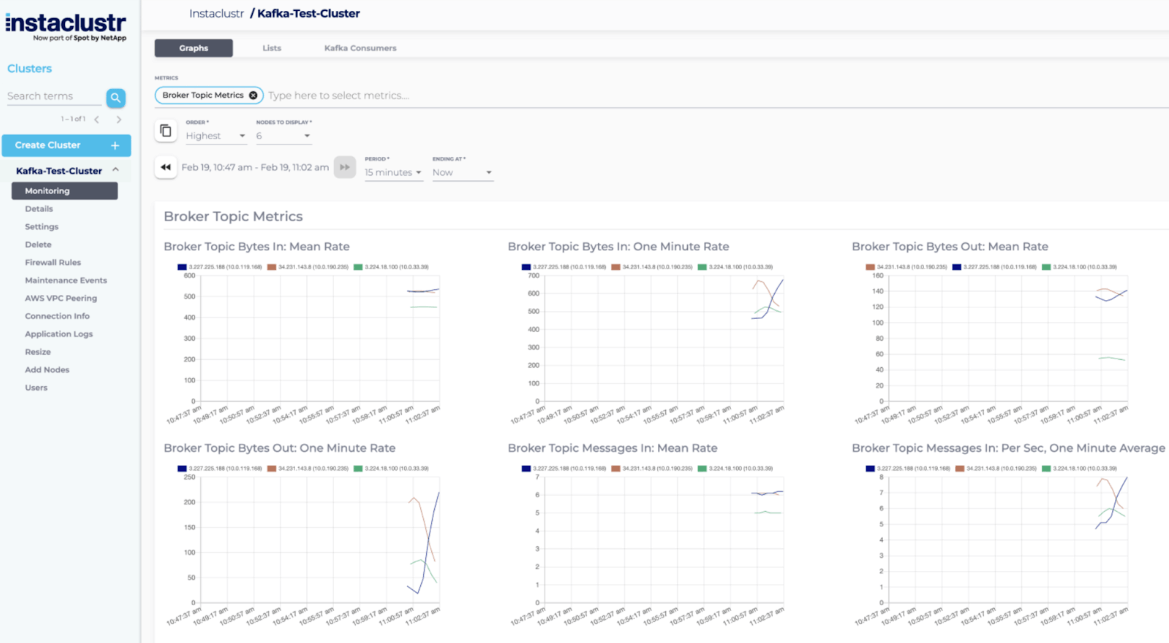
NetApp Instaclustr delivers managed OpenSearch clusters that can run in Instaclustr’s cloud account, in the customer’s own cloud account, or on-premises. The platform currently runs OpenSearch 3.5, and clusters are provisioned through a console, an API, or a Terraform provider.
Configurations are tuned for reliability, performance, and security based on operating experience across each supported cloud, and the service covers monitoring, maintenance, patching, and upgrades. Support is provided around the clock by OpenSearch specialists, and the platform is delivered as 100% open source OpenSearch with no proprietary fork.
Key features include:
- Hosting across cloud and on-premises: Clusters run in Instaclustr’s cloud account or the customer’s own, and on-premises deployments are supported for data that cannot leave a private facility.
- Private Network Clusters: The enterprise security feature set includes Private Network Clusters, keeping cluster traffic off public network paths.
- Encryption and access controls: Data is encrypted at rest and in transit, with access controls and continuous monitoring applied to the managed deployment.
- Hourly backups: All OpenSearch data is backed up on an hourly schedule as part of the managed service.
- Searchable snapshots: Snapshot data held in remote storage can be searched directly from the cluster without performing a full restore first.
- Special purpose node types: Multiple dedicated node types can be configured within a single cluster to separate roles and workloads.
- Plugin framework: OpenSearch plugins can be enabled at any time through the console, the API, or Terraform.
- Availability and latency SLAs: Enterprise clusters carry an availability SLA of up to 99.999% and read and write latency SLAs of up to 99%.
| Criterion | Solution Fit | Key Considerations |
|---|---|---|
| Encryption and key management | Encryption is applied to data at rest and in transit, and hourly backups are part of the managed service. | Customer-managed key options are not described on the product page and should be confirmed during evaluation. |
| Authentication and access control | Access controls are applied as part of the managed configuration, and the OpenSearch security plugin set can be enabled through the console, API, or Terraform. | Specific identity provider integrations are not listed on the product page. |
| Network isolation and private connectivity | Private Network Clusters are offered as part of the enterprise security feature set. | Private networking is a configuration choice, so it needs to be selected when the cluster is provisioned. |
| Compliance certifications and data residency | Certified to SOC 2, ISO 27001, and ISO 27018, compliant with PCI DSS and HIPAA, and meets GDPR requirements. Deployment options span major clouds, customer cloud accounts, and on-premises. | Bring-your-own-cloud and on-premises models return some infrastructure responsibility to the customer. |
| Audit logging and security monitoring | Monitoring is built in, with proactive monitoring tools and continuous monitoring of the managed deployment. | Audit log retention and export paths are not detailed on the product page. |
| Patching, upgrades, and backup protection | Upgrades, patches, and maintenance are managed with minimal disruption, backed by hourly backups and searchable snapshots. | Reviewers note documentation and tutorials could be more extensive, and scaling is user-driven rather than triggered automatically by workload patterns. |
2. Logz.io

Best for: Teams wanting OpenSearch-based observability with a mature compliance record
Strengths: Broadest named compliance set here (PCI, SOC 2, HIPAA, GDPR, ISO 27001), AES-256 cold storage encryption
Things to consider: No raw cluster access; the OpenSearch layer is fully abstracted behind the product
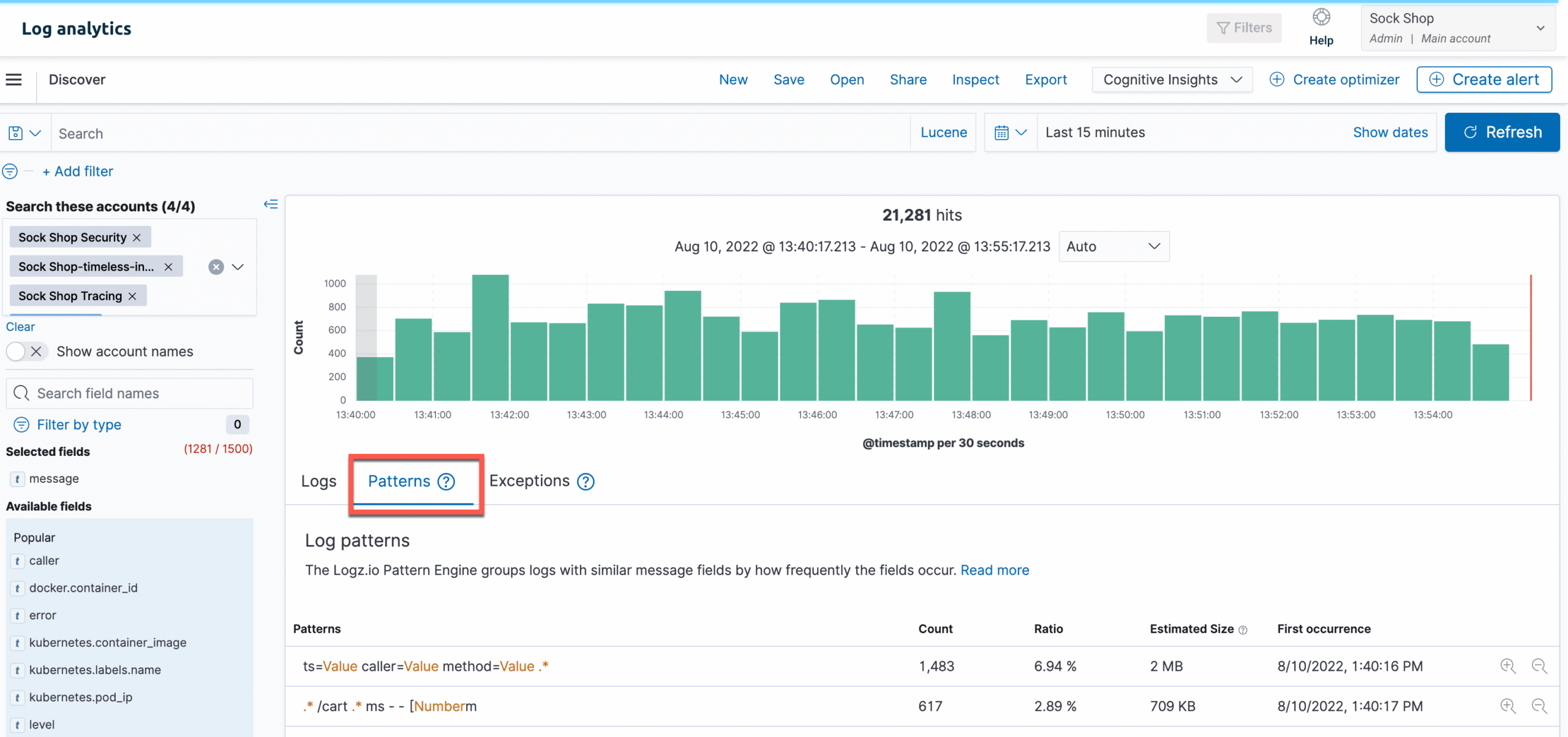
Logz.io is a fully managed observability and security SaaS platform built on top of open source OpenSearch, rather than a raw managed cluster offering. Instead of provisioning and configuring an OpenSearch cluster directly, customers get a curated log management, metrics, tracing, and Cloud SIEM product with OpenSearch running underneath it, managed entirely by Logz.io’s own operations team.
The company has held SOC 2 Type 2 attestation (audited by EY) since 2017 and layers GDPR, HIPAA, PCI Level 1, and ISO 27001 compliance on top, giving it one of the broadest named certification sets among the providers in this guide. Because the platform ingests from any cloud, hybrid, or on-premises source while running only in the public cloud itself, it suits teams wanting compliance-ready log analytics without operating the underlying search infrastructure.
Key features include:
- Managed OpenSearch-based platform: Delivers log analytics, metrics, and tracing on a Logz.io-operated OpenSearch cluster, removing the operational burden of provisioning, patching, and scaling.
- Tiered hot/cold storage with encryption: Cold data is moved into separate Amazon S3 buckets secured with durable AES-256 encryption, while the company continuously tracks the location and state of customer data.
- Role-based access control: The platform interface supports role-based access, letting account administrators define end users as admins or standard users, and suspend or delete access as needed.
- Broad compliance certification set: Compliant with PCI Level 1, SOC 2 Type 2, HIPAA, GDPR, and ISO 27001, independently audited by EY on a recurring basis.
- Cloud-agnostic ingestion: Ingests logs, metrics, traces, and security data from workloads running on AWS, Azure, Google Cloud, or on-premises, regardless of where the platform itself runs.
- Cloud SIEM and AI-powered detection: Extends the observability data into security use cases, with AI-driven threat detection layered over the same OpenSearch-backed data lake.
| Criterion | Solution Fit | Key Considerations |
|---|---|---|
| Encryption and key management | Cold data is encrypted with AES-256 in dedicated S3 buckets, and the company tracks data location and state continuously. | Customer-managed key options are not described on the product page and would need confirmation during evaluation. |
| Authentication and access control | Role-based access control lets administrators define admins and users and manage suspension or deletion of accounts. | Enterprise identity provider integrations such as SAML or OIDC are not detailed on the public product pages. |
| Network isolation and private connectivity | Ingestion is cloud-agnostic, pulling data from AWS, Azure, Google Cloud, or on-premises sources into the platform. | The platform itself is deployed only in the public cloud, so there’s no private, single-tenant, or on-premises hosting option for the underlying OpenSearch layer. |
| Compliance certifications and data residency | PCI Level 1, SOC 2 Type 2 (audited by EY), HIPAA, GDPR, and ISO 27001 — the broadest named certification set among the providers in this guide. | Because customers don’t manage a raw cluster, data residency options are set by Logz.io’s own infrastructure choices rather than customer-selected regions. |
| Audit logging and security monitoring | Audit logs capture “who did what and how the system behaved,” and the Cloud SIEM product extends the same data lake into AI-powered threat detection. | Because the OpenSearch layer is fully abstracted, teams wanting to run their own OpenSearch audit log plugins or custom monitoring have less direct access than with a raw managed cluster. |
| Patching, upgrades, and backup protection | Logz.io operates and patches the underlying OpenSearch clusters entirely, removing that burden from the customer. | Reviewers describe pricing as tied to daily log volume, and note that spikes in ingestion can affect cost and, in some configurations, throttle data if not planned for. |
3. Bonsai Managed OpenSearch

Best for: Search teams wanting managed clusters plus engineering support
Strengths: Deploy in your own AWS, Google Cloud, or Azure account
Things to consider: VPC peering and IP allowlisting need single-tenant plans
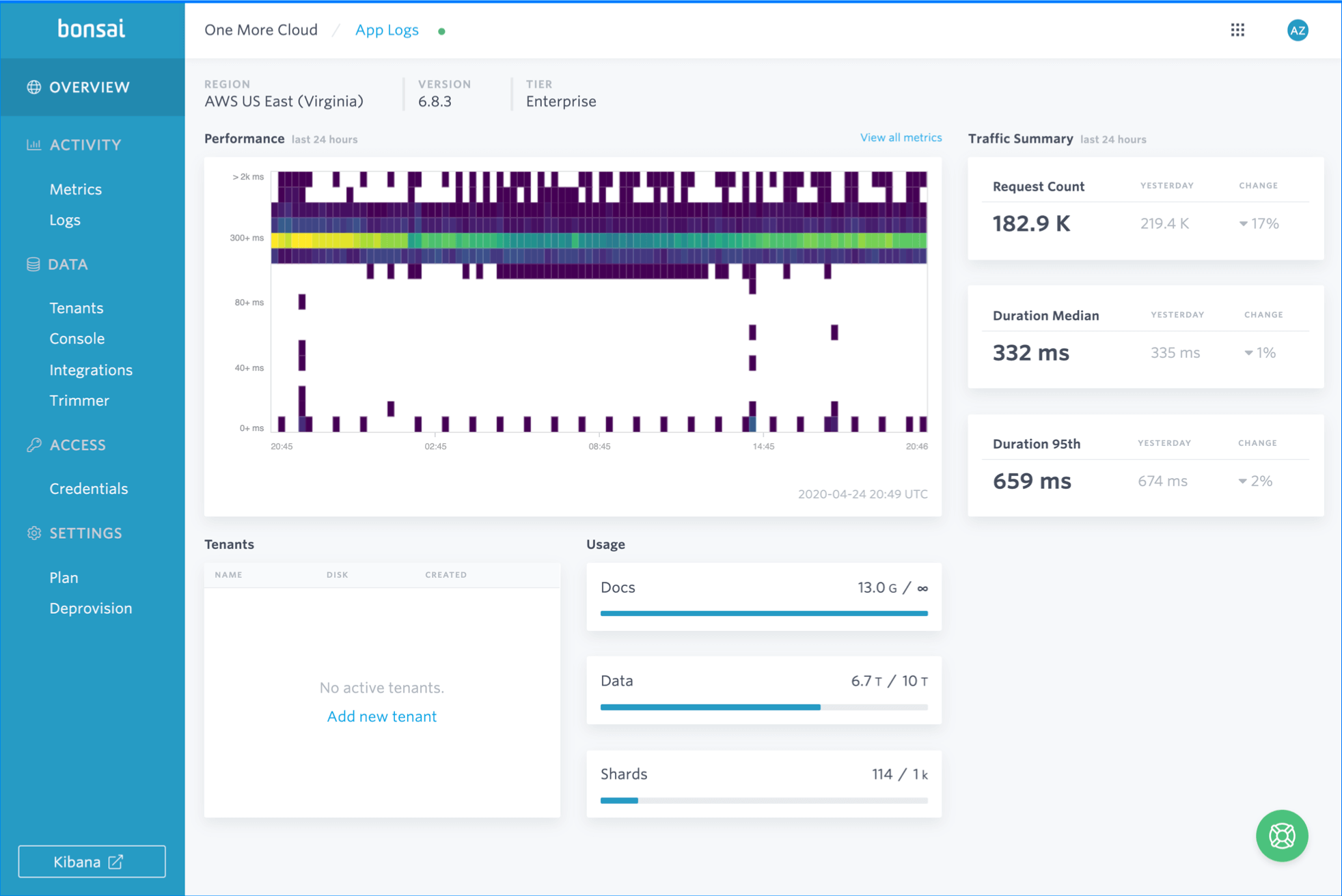
Bonsai has operated hosted search since 2009 and was the first official managed provider to support OpenSearch after the project launched in 2021. Clusters run either on Bonsai’s infrastructure or directly inside the customer’s own AWS, Google Cloud, or Azure account.
Separate production, staging, and development clusters are used to apply version, security, and patch upgrades without downtime. The Bonsai team monitors clusters continuously and intervenes on yellow or red cluster states rather than passing alerts back to the customer.
Support is delivered by search engineers through a dedicated account manager and a monitored Slack channel, with 24/7 response to automated cluster alerts.
Key features include:
- Randomized endpoints with basic authentication: Every cluster is provisioned with a unique randomized URL and HTTP Basic Authentication enabled by default, using randomly generated credentials.
- Encrypted communications: All clusters support SSL/TLS for encryption in transit using industry standard encryption strength.
- Encryption at rest: Clusters are provisioned on hardware encrypted at rest by default, on top of the underlying cloud provider’s physical security controls.
- Offsite encrypted snapshots: All paid clusters receive regular snapshots stored in an offsite, encrypted object storage bucket in the same region as the cluster.
- Firewalled routing layer: Clusters sit behind a custom layer 7 routing proxy and a tightly controlled firewall, protecting them from port scans and unauthorised access.
- Advanced networking: IP allowlisting and VPC peering are available to users on single-tenant clusters.
- Bring your own cloud: Clusters can be deployed into the customer’s own cloud account, keeping data and billing inside their existing environment.
- Search analytics: Analytics measure how successful searches are, with direct integrations into the customer’s existing stack.
| Criterion | Solution Fit | Key Considerations |
|---|---|---|
| Encryption and key management | SSL/TLS covers data in transit, hardware is encrypted at rest by default, and snapshots are stored encrypted offsite. | Snapshots are described as a paid-plan feature, and key management is handled by Bonsai rather than the customer. |
| Authentication and access control | Every cluster ships with basic authentication enabled by default on a randomized endpoint with generated credentials. | Enterprise identity integrations such as SAML or OIDC are not described on the product page. |
| Network isolation and private connectivity | Clusters sit behind a firewall and a layer 7 routing proxy, with IP allowlisting and VPC peering available. | Peering and IP allowlisting apply only to single-tenant clusters, so shared plans stay on public endpoints. |
| Compliance certifications and data residency | Bring your own cloud on AWS, Google Cloud, or Azure keeps data inside the customer’s own account and chosen region. | Specific compliance certifications are not listed on the product page and need to be requested. |
| Audit logging and security monitoring | Bonsai monitors clusters continuously and resolves issues directly, with search analytics available for query-level visibility. | Customer-facing audit logging is not described on the product page. |
| Patching, upgrades, and backup protection | Separate production, staging, and development clusters allow version, security, and patch upgrades without downtime. | The API is exposed on a allowlist basis, so some OpenSearch functionality is unavailable and support for new features can be delayed. Reviewers also describe the platform as not beginner friendly. |
Source: Bonsai
Cloud Platform Managed OpenSearch Services
4. Amazon OpenSearch Service

Best for: AWS-native teams wanting search tied into AWS security services
Strengths: VPC deployment, IAM and Cognito authentication, KMS encryption
Things to consider: AWS only, and serverless mode removes several features
Amazon OpenSearch Service is a fully managed service covering search, observability, and log analytics workloads. AWS handles upgrades and patches, provides 24/7 monitoring and self-healing, and offers a 99.99% SLA for multi-AZ deployments with standby.
The service runs the latest OpenSearch versions alongside nineteen ALv2 Elasticsearch versions up to 7.10. Deployments can be provisioned domains, where instance types and node counts are chosen explicitly, or serverless collections that scale automatically.
Storage is split across hot, UltraWarm, and cold tiers, and attached cold data remains subject to the same index, document, and field-level access control policies that apply to hot data.
Key features include:
- VPC and IP-based network access: Applications connect from an Amazon VPC or over the public internet, with network access configured through VPC security groups or IP-based access policies.
- Multiple authentication paths: Users and applications authenticate through Amazon Cognito, AWS Identity and Access Management, or basic authentication with a username and password.
- Granular permissions: The OpenSearch security plugin defines permissions at index, document, or field level, and Dashboards can be extended with read-only views and multi-tenant support.
- Encryption at rest and in transit: Built-in encryption protects data stored in the domain, data in automated snapshots, and traffic moving between nodes in the domain.
- Security analytics: Over 2,200 open source Sigma rules run against eight log types including AWS CloudTrail, DNS, Windows, NetFlow, Linux system, and S3 access logs, with custom rules and alerting to a chosen destination.
- Event monitoring and alerting: The alerting plugin sends notifications through custom webhooks, Slack, Amazon SNS, and Amazon Chime, while cluster health metrics are available in Amazon CloudWatch at no additional charge.
- In-place upgrades: Clusters are upgraded to newer versions without downtime and without manual snapshot and restore steps.
- Compliance coverage: The service is HIPAA-eligible and compliant with PCI DSS, SOC, ISO, and FedRAMP standards.
| Criterion | Solution Fit | Key Considerations |
|---|---|---|
| Encryption and key management | Built-in encryption covers data at rest, automated snapshots, and inter-node traffic within the domain. | Encryption at rest is a prerequisite for some instance families, so it needs to be planned at domain creation rather than added later. |
| Authentication and access control | Cognito, IAM, and basic authentication are supported, with the security plugin enforcing index, document, and field-level permissions. | Reviewers report that cluster and index configuration requires real expertise, and some settings sit behind AWS Support rather than the console. |
| Network isolation and private connectivity | Domains can be placed inside an Amazon VPC with access controlled by security groups or IP-based policies. | Reviewers note that working with data in a VPC-deployed domain is harder through the console, and index-level visibility is weaker than with third-party tools. |
| Compliance certifications and data residency | HIPAA-eligible and compliant with PCI DSS, SOC, ISO, and FedRAMP, across the full AWS region footprint. | AWS-only deployment means no multi-cloud or on-premises residency option, and reviewers describe migrating away as difficult. |
| Audit logging and security monitoring | Security analytics ships more than 2,200 Sigma rules with alerting, and CloudWatch provides cluster health metrics at no extra charge. | Serverless collections do not support alerting or anomaly detection, so security monitoring differs by deployment mode. |
| Patching, upgrades, and backup protection | In-place upgrades apply new versions without downtime, backed by 24/7 monitoring, self-healing, and automated snapshots. | Reviewers say version upgrades and their documentation could be smoother, and individual nodes cannot be restarted or replaced directly. |

Source: Amazon
5. Oracle Cloud Infrastructure Search with OpenSearch

Best for: OCI workloads needing search under Oracle IAM and audit services
Strengths: Flexible shapes, VCN deployment, integration with OCI Vault
Things to consider: OCI only, with region and shape availability varying
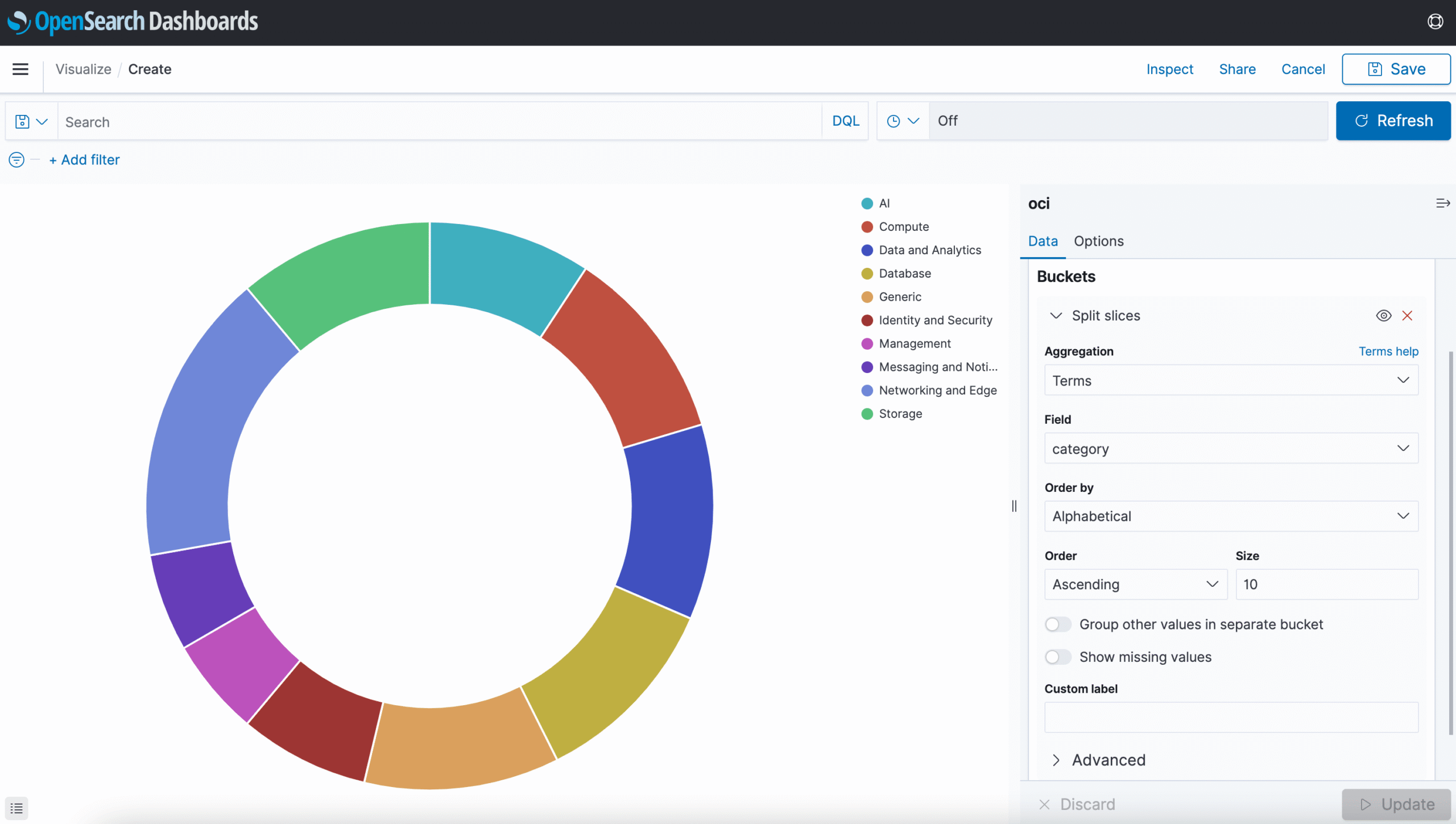
OCI Search with OpenSearch is Oracle’s managed open source service for ingesting, searching, visualising, and analysing data. Oracle maintains the OpenSearch software and handles provisioning, patching, updating, backups, and resizing.
Rather than fixed instance types, the service uses OCI flexible shapes, letting teams build any combination of CPU, memory, and storage. Resizing is performed without downtime.
Oracle’s published reference architectures place clusters inside a virtual cloud network with separate public and private subnets, each insulated by its own routing table and security list, and alongside OCI identity, vault, monitoring, and auditing services in the same region.
Key features include:
- Managed maintenance activities: Patching, updating, backups, and fast resizing are handled by Oracle, with no downtime during resize operations.
- Flexible shapes: Clusters are built from any combination of CPU and RAM rather than preset instance sizes, allowing capacity to be matched to the workload.
- Deployment inside a virtual cloud network: Reference architectures place clusters in a VCN across public and private subnets, with each subnet insulated by a routing table and security list.
- Integration with OCI identity, vault, and audit services: Clusters sit alongside IAM, Vault, monitoring, and auditing services within the same tenancy and compartment.
- Private connectivity to on-premises networks: Traffic between the OCI region and a customer data centre runs over a site-to-site VPN through a dynamic routing gateway, with a web application firewall in front of internet-facing access.
- Security analytics and observability: AI-powered observability and security analytics support the identification and resolution of production issues and automate security operations for threat detection.
- Hybrid search and ML framework: The machine learning framework handles model management and neural search models, including text and image multimodal search, combining keyword and semantic results.
- Migration path: Migration from an existing self-managed or hosted OpenSearch deployment is done by restoring from a working backup configuration or pointing APIs at the new endpoint.
| Criterion | Solution Fit | Key Considerations |
|---|---|---|
| Encryption and key management | OCI Vault sits alongside the cluster in reference architectures for managing keys and secrets. | Details of at-rest encryption and key rotation for the cluster are not spelled out on the product page and need to be confirmed. |
| Authentication and access control | Clusters are deployed within an OCI compartment with IAM and identity services in the same region. | Fine-grained OpenSearch role and index permissions are not described on the product page. |
| Network isolation and private connectivity | Clusters run inside a VCN with private subnets, security lists, a bastion host pattern, and site-to-site VPN for on-premises traffic. | Network design work sits with the customer, as the product page presents this through reference architectures rather than defaults. |
| Compliance certifications and data residency | Data stays within the chosen OCI region and tenancy, with monitoring and auditing services co-located. | Available only on OCI, and the service is not offered in every region, with shape availability varying by region. |
| Audit logging and security monitoring | Auditing and monitoring services are part of the surrounding OCI architecture, and security analytics automates threat detection. | Audit log retention and forwarding to external tools are handled through separate OCI services rather than the search service itself. |
| Patching, upgrades, and backup protection | Oracle manages patching, updates, and backups, and resizing is performed without downtime. | Older cluster versions reach end of support and require major version upgrades; creation of new OpenSearch 1.2.4 clusters ended in May 2026, with existing clusters supported through December 2026. |
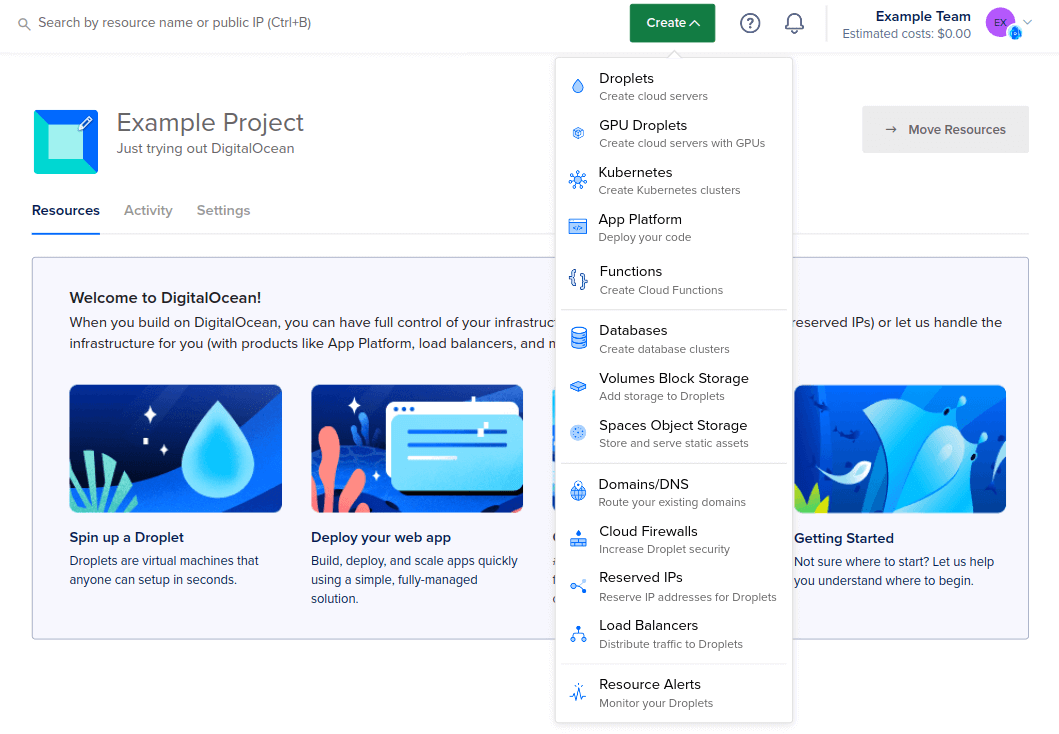
6. DigitalOcean Managed OpenSearch

Best for: Smaller teams centralising logs inside DigitalOcean
Strengths: VPC isolation, IP allowlisting, audit logging, encryption
Things to consider: Backup retention tops out at three days of dailies
DigitalOcean Managed OpenSearch handles cluster provisioning, backups, and updates, leaving customers to work with OpenSearch itself for log management, observability, search, and analytics.
Clusters can be created in minutes with a chosen storage and node configuration, and CPU, RAM, and storage can be increased on existing clusters. Storage autoscaling handles growth without manual intervention. The service focuses on log analytics, with one-click log forwarding from other DigitalOcean services. Pricing is flat across all data centres, with shared and dedicated plan options.
Key features include:
- Private network operation: Clusters can be placed inside a Virtual Private Cloud to isolate them from the public internet, with only allowlisted public requests permitted.
- End-to-end security controls: The service includes encryption in transit and at rest, authentication, access control, audit logging, and IP allowlisting with secure connection strings.
- Automated backups: Clusters receive hourly backups for the first 24 hours, followed by up to three days of daily backups depending on plan.
- Managed cluster operations: DigitalOcean handles provisioning, updates, and maintenance, including regular security updates and patches.
- Log forwarding: Logs can be forwarded from DigitalOcean Managed Databases, App Platform, and Kubernetes in a few clicks, and managed database logs can also be sent to Datadog.
- High availability: Automated backup, monitoring, and failover features reduce downtime and maintain data integrity across clusters.
- Real-time analytics: The service supports interactive log analytics, application analytics, metrics analytics, and security analytics.
- Shared and dedicated plans: Clusters run on shared or dedicated resources, with storage and nodes added as required.
| Criterion | Solution Fit | Key Considerations |
|---|---|---|
| Encryption and key management | Data is encrypted in transit and at rest as part of the managed service. | Customer-managed encryption keys are not offered on the product page. |
| Authentication and access control | Authentication, access control, and secure connection strings are included in the standard security feature set. | Enterprise identity provider integrations such as SAML or OIDC are not described. |
| Network isolation and private connectivity | Clusters can operate inside a VPC, isolated from the public internet, with IP allowlisting for any permitted external requests. | Deployment is confined to DigitalOcean regions, so there is no cross-cloud private connectivity. |
| Compliance certifications and data residency | Data resides in the chosen DigitalOcean data centre, with flat pricing across all regions. | G2 reviewers note the platform is a weaker fit for organisations requiring extensive compliance certifications. |
| Audit logging and security monitoring | Audit logging is listed as part of the end-to-end security set, alongside monitoring and security analytics. | Audit log retention and export options are not detailed on the product page. |
| Patching, upgrades, and backup protection | DigitalOcean applies regular security updates and patches and runs hourly backups for the first 24 hours. | Daily backup retention is capped at three days, which is short for compliance-driven retention. Reviewers also report that managed database costs rise sharply when adding storage or a standby node. |
Source: DigitalOcean
7. OVHcloud Managed OpenSearch

Best for: European workloads with data sovereignty requirements
Strengths: vRack private networks, 3-AZ deployments, ISO and SOC 2
Things to consider: OVHcloud only, and support responsiveness varies
OVHcloud Managed OpenSearch is delivered as part of the OVHcloud Public Cloud analytics range. OVHcloud deploys, manages, maintains, and scales the official open source OpenSearch suite, with IOPS, backups, and traffic included in the per-use price.
Three plan tiers are offered. Discovery is a single-node option without an SLA, Production runs three nodes across multiple availability zones with one failover and a 99.95% SLA, and Advanced runs six nodes with two failovers and a 99.99% SLA.
Multi-AZ regions provide fault isolation across three independent availability zones with isolated power, cooling, and network, and workloads can be migrated from single-AZ to multi-AZ regions.
Key features include:
- Private networks via vRack: Private networking is included, keeping OpenSearch traffic on OVHcloud’s private network rather than the public internet.
- Multi-AZ resilience: 3-AZ deployments use triple replication as failover, with services remaining available if an entire zone fails.
- Compliance certifications: The service complies with ISO/IEC 27001, ISO/IEC 27701, and SOC 2 Type 2.
- Automatic remote backups: Backups are written automatically to a remote location, with 14-day retention on the Production plan.
- Managed patching and scaling: OVHcloud manages patches, backups, and scalability, and plans can be changed in one click.
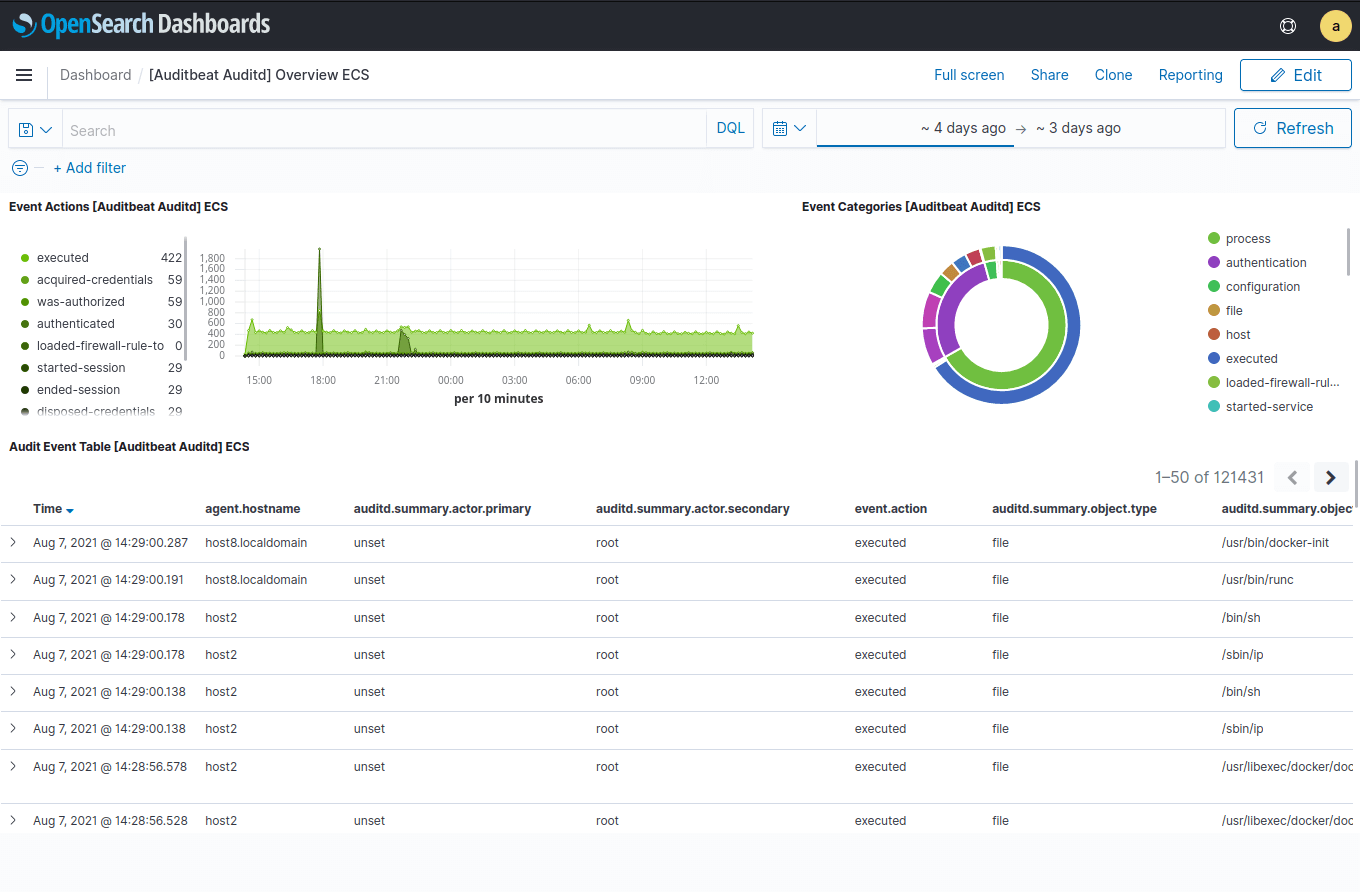
- Observability tooling: Metrics can be collected with Prometheus, OpenSearch Dashboard is included, and the REST OpenSearch API is available.
- Infrastructure as code support: Terraform support is included for provisioning and managing clusters.
- Data ownership: Data is not shared with third parties, and each service runs on Public Cloud instances with its own storage space.
| Criterion | Solution Fit | Key Considerations |
|---|---|---|
| Encryption and key management | OVHcloud describes encrypted data transmission across its network, and the wider Public Cloud platform includes a Key Management Service and Secret Manager. | Encryption specifics for the OpenSearch service itself are not detailed on the product page. |
| Authentication and access control | Identity and Access Management is available across the OVHcloud Public Cloud platform for controlling who can manage the service. | OpenSearch-level role and index permissions are not described on the product page. |
| Network isolation and private connectivity | Private networks through vRack are included with the service, and clusters can be reached over public or private networks. | Private connectivity is confined to the OVHcloud estate, so hybrid architectures need OVHcloud Connect or a VPN. |
| Compliance certifications and data residency | ISO/IEC 27001, ISO/IEC 27701, and SOC 2 Type 2, with a European data centre footprint and sovereignty-focused offerings. | PCI DSS and HIPAA are not listed among the certifications for this service. |
| Audit logging and security monitoring | Metrics can be collected with Prometheus, and the wider platform offers Logs Data Platform for log ingestion, search, and long-term compliance archiving. | Audit logging for the OpenSearch service is not described on the product page and relies on separate platform services. |
| Patching, upgrades, and backup protection | OVHcloud handles patches, backups, and scalability, with automatic backups to a remote location and 14-day retention on the Production plan. | The Discovery plan carries no SLA. Reviewers also report inconsistent support responsiveness and a control panel that can be complex to navigate. |
8. Exoscale Managed OpenSearch

Best for: European teams keeping search data in a chosen EU zone
Strengths: Dedicated instances, TLS, encrypted backups, GDPR hosting
Things to consider: Customer-managed encryption keys are not supported
Exoscale Managed OpenSearch is a European managed search and analytics service, delivered through Exoscale’s DBaaS range and powered by Aiven. Clusters are launched through the Web Portal, CLI, API, or Terraform.
The service takes care of provisioning, rolling upgrades, daily backups, monitoring, and scaling, and major version upgrades are applied with one click. Scaling is vertical through CPU and RAM or horizontal by adding nodes, with no service interruption.
Four plan tiers are offered. Hobbyist runs a single node with one retained backup, Startup and Business add longer retention and multi-node replication, and Premium scales to 30 nodes with 30 days of daily backups.
Key features include:
- Dedicated instances: Managed OpenSearch runs on dedicated instances rather than shared infrastructure, providing data isolation for critical workloads.
- End-to-end encryption: Transport Layer Security protects data in transit, stored data is encrypted automatically, and backups are encrypted.
- European data residency: All data is stored in the country of the chosen zone and never leaves the selected region, with availability in every Exoscale European zone.
- Tiered backup retention: Plans provide hourly backups for the last 24 hours plus daily backups retained for 3, 14, or 30 days depending on tier.
- Automated lifecycle management: Provisioning, rolling upgrades, daily backups, monitoring, and scaling are handled by the service without downtime.
- Database forking: Clusters can be forked so that changes can be tested without affecting the production service.
- Automated failover: Multi-node plans include automated failover with replication factors scaling up to 29 on the largest configurations, backed by a 99.99% uptime SLA.
- Included OpenSearch Dashboards: OpenSearch Dashboards is bundled with every plan for visualisation, log exploration, and real-time monitoring.
| Criterion | Solution Fit | Key Considerations |
|---|---|---|
| Encryption and key management | TLS protects data in transit, stored data is encrypted automatically, and backups are encrypted. | Server-side encryption with customer-managed keys is not supported, and key workflows are described as manual. |
| Authentication and access control | Access is managed through the Exoscale platform, which includes integrated IAM across its services. | OpenSearch role, index, and field-level permissions are not described on the product page. |
| Network isolation and private connectivity | Services run on dedicated instances with data isolation, and clusters can be restricted to specific Kubernetes clusters through IP restrictions. | Broader network isolation features such as VPC and CIDR restrictions are still maturing across the platform. |
| Compliance certifications and data residency | Data stays in the country of the selected zone and is GDPR compliant, hosted exclusively in European data centres. | Residency options are limited to Exoscale’s European footprint, so global deployments need another provider. |
| Audit logging and security monitoring | Monitoring is part of the managed lifecycle, and OpenSearch Dashboards is included for log exploration and real-time monitoring. | Audit logging is not described on the product page and would need to be confirmed with the underlying platform. |
| Patching, upgrades, and backup protection | Rolling upgrades and daily backups are automated, with one-click major version upgrades and retention up to 30 days on Premium plans. | The DBaaS layer is delivered in partnership with Aiven, which adds a third party to the support and roadmap path, and the Hobbyist tier retains only a single backup. |

Conclusion
Choosing a secure managed OpenSearch provider requires matching the service’s security model to your organization’s architecture, regulatory obligations, and operational requirements. Compare encryption and key ownership, identity controls, private connectivity, data residency, audit capabilities, patching, and backup retention rather than assuming that a managed service is secure by default. The right environment should reduce cluster administration while still giving your team enough control to enforce access policies, protect sensitive data, investigate security events, and recover reliably from failures.