What are managed PostgreSQL solutions?
Managed PostgreSQL solutions offer developers a way to use PostgreSQL without the overhead of database administration. These cloud-based services handle tasks like installation, configuration, updates, backups, scaling, and security, allowing developers to focus on application development.
A typical managed PostgreSQL offering includes automated backups, patch management, monitoring, scaling, and security hardening. These services often provide a user interface or API for provisioning databases with required resources and configurations. The underlying hardware, software updates, network setup, and disaster recovery are handled by the provider, reducing the need for specialized in-house database expertise.
Why developers choose managed PostgreSQL
Managed PostgreSQL appeals to developers because it offers the following advantages:
- Offloads complex and time-consuming operational tasks: Instead of spending time on system setup, tuning, and ongoing maintenance, teams can focus on building application logic and shipping features. This shift leads to faster development cycles, fewer production issues, and reduced reliance on specialized database administrators.
- Enables scalability: Managed services allow databases to grow with the application, vertically or horizontally, often with minimal changes to the codebase. Resources can be adjusted dynamically, and high availability setups can be enabled without custom infrastructure work, helping developers meet PostgreSQL performance demands during peak usage or product growth.
- Improves security: Managed PostgreSQL platforms typically include out-of-the-box encryption, access controls, audit logs, and compliance certifications. This makes it easier for teams to meet internal or regulatory security requirements without deep infrastructure expertise.
- Increases operational transparency: Built-in monitoring tools offered by these platforms help developers diagnose issues faster. With built-in metrics, alerting, and logging, troubleshooting becomes more efficient, reducing time-to-resolution for incidents and improving system reliability.
Related content: Read our guide to Postgres management
Key features of managed PostgreSQL solutions for developers
Automated backups and point-in-time recovery
Automated backup features ensure that a database’s state is preserved at routine intervals without manual intervention. Managed PostgreSQL solutions typically implement daily or even more frequent backups, storing them securely in redundant locations. If data loss or corruption occurs, developers can quickly revert to a backup from a specific point in time. This mechanism is critical for disaster recovery and when rolling back from accidental operations.
Point-in-time recovery takes backup convenience further by allowing restoration to an exact timestamp. This minimizes downtime and data loss after unintentional changes, bad migrations, or other incidents. Such tools would require considerable scripting and monitoring for self-hosted databases but come out-of-the-box with managed solutions. Developers can trust that their data is both recoverable and consistent.
High availability and automated failover
High availability is a standard in managed PostgreSQL platforms, using techniques like streaming replication, redundant hardware, and geographic distribution of nodes. If a primary node fails due to hardware, network, or software issues, the system automatically promotes a standby replica to primary with minimal disruption. This process is monitored and managed by the provider, reducing the risk of prolonged outages and ensuring that applications remain accessible.
Automated failover complements high availability by making recovery seamless and predictable, without reliance on manual intervention during critical incidents. These systems are regularly tested by providers, ensuring they function correctly under real-world failure scenarios. Developers benefit from improved uptime SLAs and peace of mind, knowing that infrastructure will self-heal without their active involvement during emergencies.
Support for popular PostgreSQL extensions
PostgreSQL’s extensibility is a significant strength, and managed solutions reflect this by supporting a variety of popular extensions. Common needs like full text search (with pg_trgm), time-series data handling (timescaledb), and advanced indexing (btree_gin, btree_gist) are often just a few clicks or commands away. This simplifies the process of enabling advanced database features, lowering barriers for experimentation and adoption of best-in-class tooling.
Managed offerings also keep extensions up to date, mitigating compatibility or security issues that can arise from outdated packages. Since extension support and upgrading are incorporated into the service layer, developers can leverage new features or bug fixes promptly.
Easy provisioning
Managed PostgreSQL platforms are valued for simplified provisioning workflows. Developers can spin up new database instances or clusters in minutes, specifying compute, storage, and region with simple configuration steps. This agility supports modern development practices, such as spinning up short-lived environments for feature development, experimentation, or testing without going through prolonged infrastructure procurement cycles.
Additionally, APIs or command line tools are often available for automated provisioning in CI/CD pipelines, enabling repeatable and versioned environment setups. Provisioning also typically encompasses best practices by default, such as secure network access, encryption, and logging, minimizing the risk of misconfiguration during manual setup.
Environments for staging / dev with similar configuration to production
Managed PostgreSQL solutions enable developers to create staging and development environments that closely replicate the production setup. They can easily clone configurations including extensions, instance size, network rules, and security policies. This minimizes the risk of environment-specific bugs and ensures more reliable testing and QA processes, as developers interact with realistic data models, permissions, and performance characteristics.
Having matched environments across development, staging, and production also makes debugging easier, as issues are more likely to surface before deployment. Additionally, managed services often provide cost controls and safe defaults for non-production environments, reducing resource consumption while maintaining fidelity.
Automation of routine maintenance
Routine maintenance, including software patches, minor upgrades, security enhancements, and performance tuning, is automatically handled by managed PostgreSQL services. Providers schedule and deploy updates with minimal disruption, ensuring that databases remain secure and efficient without developer oversight. This automation eliminates human error associated with manual patch management and protects against emerging threats.
Beyond security patches, maintenance automation encompasses health checks, log management, and performance monitoring. Some platforms even proactively resolve issues before they cause service degradation. By delegating these essential but repetitive tasks, development teams can minimize operational overhead.
Related content: Read our PostgreSQL tutorial
Notable managed PostgreSQL solutions for developers
1. NetApp Instaclustr

Instaclustr offers a fully managed PostgreSQL service, enabling businesses to focus on their applications rather than database administration. With Instaclustr for PostgreSQL, organizations gain access to enterprise-grade capabilities, robust security, and unparalleled support freeing teams from the complexities of managing database infrastructure.
Key capabilities of Instaclustr for PostgreSQL
- Fully managed service: End-to-end management of PostgreSQL clusters, including provisioning, monitoring, maintenance, and scaling.
- Automated backups and updates: Automated backups and seamless updates, ensuring data integrity and up-to-date PostgreSQL software.
- High availability: Minimize downtime, thanks to redundant architecture and failover support that keeps databases running 24/7.
- Performance optimization: Leverage integrated performance tuning and monitoring tools to achieve consistently efficient and reliable database operations.
- Security built-in: Benefit from robust encryption and secure architecture, ensuring data is protected at every layer.
- Integration and support: Seamlessly integrate PostgreSQL with other tools in the tech stack and rely on expert support available 24/7.
- Achieve optimal outcomes for GenAI projects: Enhance AI outcomes with
pg_searchcapabilities and move GenAI projects from pilot to production.

Source: NetApp Instaclustr
2. Supabase

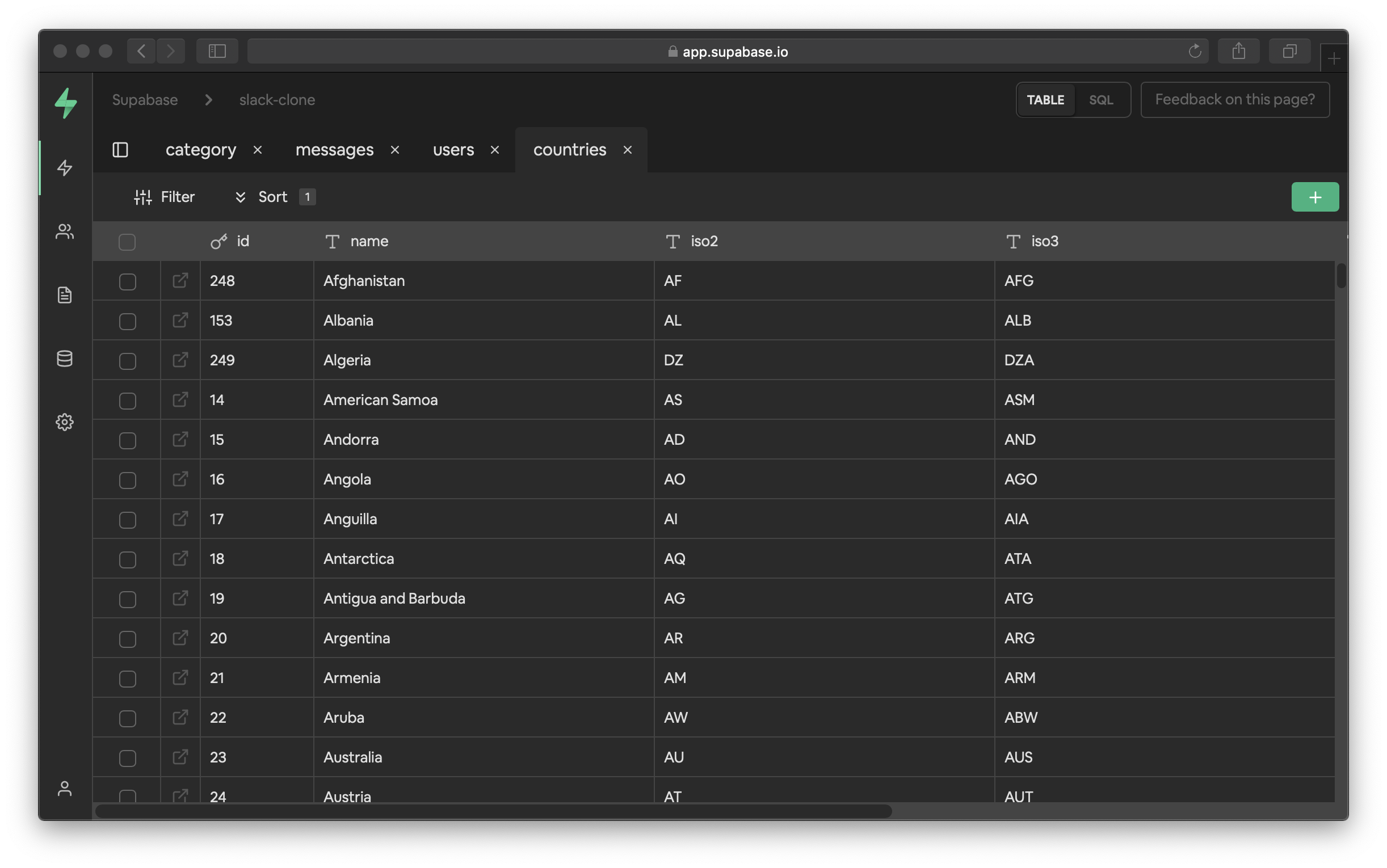
Supabase is a managed PostgreSQL platform that offers an integrated development environment for building applications with real-time capabilities, authentication, storage, and serverless functions supported by a dedicated PostgreSQL database.
General features include:
- Fully managed, dedicated PostgreSQL database per project
- Built-in authentication with support for Row Level Security (RLS)
- Instant RESTful APIs auto-generated from the database schema
- Realtime data synchronization for collaborative, multiplayer apps
- File storage with support for large media files
Developer-oriented features include:
- One-click provisioning of Postgres instances with extensions like
pg_trgmandpostgis - SQL and table editors directly in the dashboard for rapid schema management
- Built-in support for advanced Postgres features like materialized views, foreign tables, and partitioned tables
- Automated backups, project-level isolation, and production-ready defaults
- Template projects for quick starts with Next.js, Flutter, and LangChain

Source: Supabase
3. Amazon RDS for PostgreSQL

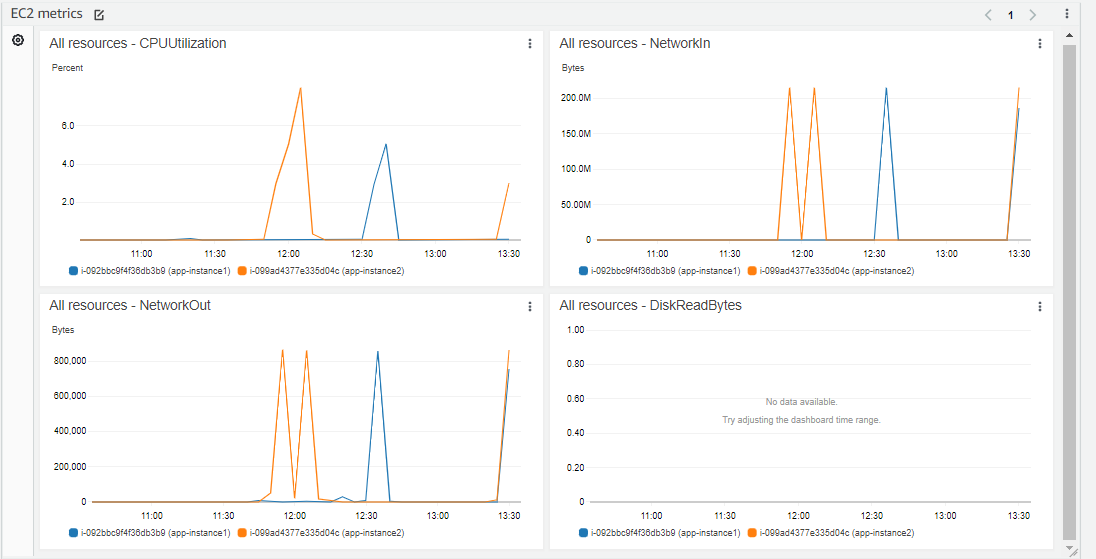
Amazon RDS for PostgreSQL is a fully managed database service that simplifies deploying, operating, and scaling PostgreSQL in the cloud. It provides a familiar PostgreSQL environment while offloading infrastructure management tasks like provisioning, backups, patching, and high availability.
General features include:
- Fully managed PostgreSQL instances with support for versions 11 through 17
- Quick deployment through AWS Console with preconfigured settings
- Automated backups with point-in-time recovery for up to 35 days
- Two storage types: General Purpose (SSD) and Provisioned IOPS (up to 40,000 IOPS)
- Blue/Green Deployments for safer and faster version upgrades
Developer-oriented features include:
- Compatibility with existing PostgreSQL tools, code, and extensions
- Trusted Language Extensions (TLE) support for building and running custom extensions securely
- Fine-grained control via parameter groups for tuning performance and behavior
- Support for programmatic provisioning and management through AWS SDKs, CLI, and CloudFormation
- Easy environment scaling with instance resizing and dynamic storage allocation
Source: Amazon RDS
4. Google Cloud SQL for PostgreSQL

Google Cloud SQL for PostgreSQL is a fully managed relational database service that offers PostgreSQL instances with automation, high availability, and security integrated into the Google Cloud ecosystem. It provides standard PostgreSQL functionality while eliminating routine database administration tasks such as provisioning, patching, backups, and failover handling.
General features include:
- Fully managed PostgreSQL with automated backups, updates, and maintenance
- High availability through multi-zone data replication with automatic failover
- Data encryption at rest and in transit, including within Google’s internal network
- Support for PostgreSQL versions 11 and above
- Logical replication and instance cloning for data portability and dev/test workflows
Developer-oriented features include:
- Full PostgreSQL protocol compatibility for standard tools and libraries
- Broad support for PostgreSQL extensions (via
CREATE EXTENSION) and PL/pgSQL - Accessible from a wide range of environments: App Engine, Compute Engine, Cloud Run, GKE, and external apps
- Secure external access via Cloud SQL Auth Proxy or SSL/TLS connections
- Compatible with applications written in C#, Go, Java, Node.js, PHP, Python, and Ruby
Source: Google Cloud
5. Microsoft Azure Database for PostgreSQL

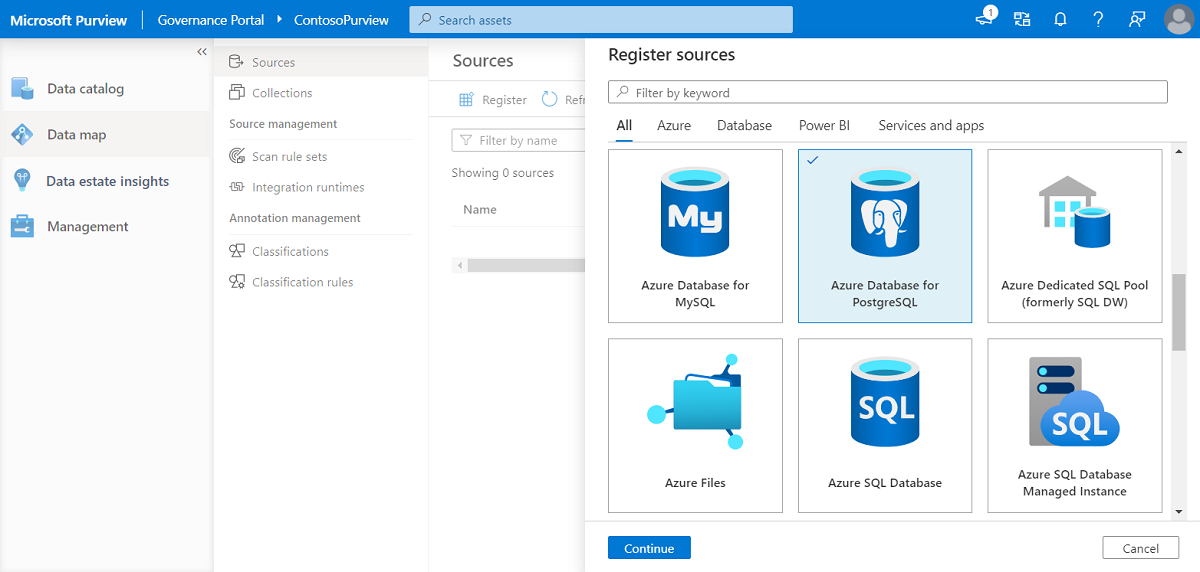
Azure Database for PostgreSQL is a fully managed PostgreSQL service for performance, scalability, and integration with AI workloads. It offers support for vector search, AI-driven performance tuning, and PostgreSQL extensions, enabling teams to build cloud-native applications.
General features include:
- Fully managed PostgreSQL with automated patching, backups, and maintenance
- High availability and near-zero downtime scaling for compute and storage
- Native support for PostgreSQL extensions like PostGIS, PLV8, and Cron
- Distributed PostgreSQL option for elastically scaling across multiple nodes
- Built-in migration tools for online and offline PostgreSQL database migration
Developer-oriented features include:
- Native vector search and in-database embeddings for building AI-enabled apps
- Azure AI extension to run language models and generative AI workloads directly in PostgreSQL
- Autonomous performance tuning powered by machine learning algorithms
- Support for common development stacks including Python (Django), Java, Node.js, and Ruby on Rails
- JSONB, geospatial data types, and advanced indexing for complex data modeling

Source: Microsoft
Conclusion
Managed PostgreSQL solutions give developers the ability to focus on building applications rather than maintaining infrastructure. By automating backups, scaling, failover, and security tasks, these platforms reduce operational complexity and increase reliability. They also provide easy access to PostgreSQL’s extensibility and advanced features, while ensuring consistent performance across development, staging, and production environments. For teams building modern, cloud-native applications, managed PostgreSQL services provide a balance of flexibility, scalability, and reduced administrative overhead.