What Are Managed PostgreSQL Solutions?
Managed PostgreSQL solutions are cloud-based Database-as-a-Service (DBaaS) offerings that automate complex administrative tasks like setup, backups, scaling, security, and patching, letting developers focus on applications instead of infrastructure management. Key providers include Instaclustr, Amazon RDS for PostgreSQL, and Azure Database for PostgreSQL.
In a managed PostgreSQL solution, customers interact with the database through standard PostgreSQL interfaces and APIs while the provider ensures reliable underlying infrastructure, handles failover, and manages scaling. This minimizes downtime, reduces operational risk, and accelerates development cycles for applications dependent on PostgreSQL.
Key features and benefits include:
- Automated management: Handles provisioning, patching, backups, and recovery.
- High availability (HA): Built-in failover, replication, and disaster recovery for reliability.
- Scalability: Easily scale CPU, RAM, and storage resources up or down as needed.
- Security: Data encryption (at rest & in transit) and compliance features.
- Performance: Monitoring, tuning, and optimized infrastructure for critical workloads.
- Developer-friendly: Simplifies operations with APIs, UIs, and support for extensions like
pgvector(AI) andPostGIS(Geospatial).
Key features and benefits of managed PostgreSQL solutions
Automated management
Providers handle repetitive yet critical administration tasks, such as database provisioning, patching, and automated backups. This reduces the risk of human error, saves time, and ensures consistency across environments. Teams do not need to manually script or schedule these tasks, which simplifies workflows and enables staff to focus on application development and higher-level data management concerns.
In addition to daily operations, managed solutions also automate complex processes like failover, point-in-time recovery, and upgrades. These automated mechanisms help maintain service continuity and reduce the likelihood of configuration drift or missed security updates.
High availability (HA)
Providers often architect their services with built-in redundancy, replication, and failover capabilities. This means if the primary database instance fails, the service automatically promotes a replica to primary with minimum disruption. High availability configurations protect against both scheduled maintenance and unexpected outages, ensuring data stays accessible to applications and users.
Many providers offer multi-zone or even multi-region options, allowing further resilience against infrastructure failures. Such HA features reduce the administrative burden and complexity for organizations, who can rely on service-level agreements (SLAs) for uptime and recovery objectives.
Scalability
Managed PostgreSQL solutions offer straightforward vertical and horizontal scaling options to match evolving application demands. Vertical scaling involves increasing resources such as CPU and memory, while horizontal scaling typically refers to partitioning data or distributing workloads across multiple instances.
Elastic scaling is particularly important for applications with unpredictable workloads or rapid growth. Providers frequently include features like read replicas or auto-scaling triggers based on performance metrics, which allow sustained throughput without manual intervention. This ensures that databases can efficiently handle traffic spikes and large volumes of transactions.
Security
Most providers implement multilayered security controls by default, such as network isolation, encryption at rest and in transit, and role-based access control. These security settings are maintained and updated as part of the service, reducing the chance of misconfiguration that could expose sensitive data to attacks or unauthorized users.
Regular patching and vulnerability management are also included, protecting databases from newly discovered threats. In addition, compliance features like audit logging, data masking, and integration with identity providers help organizations meet regulatory requirements.
Performance
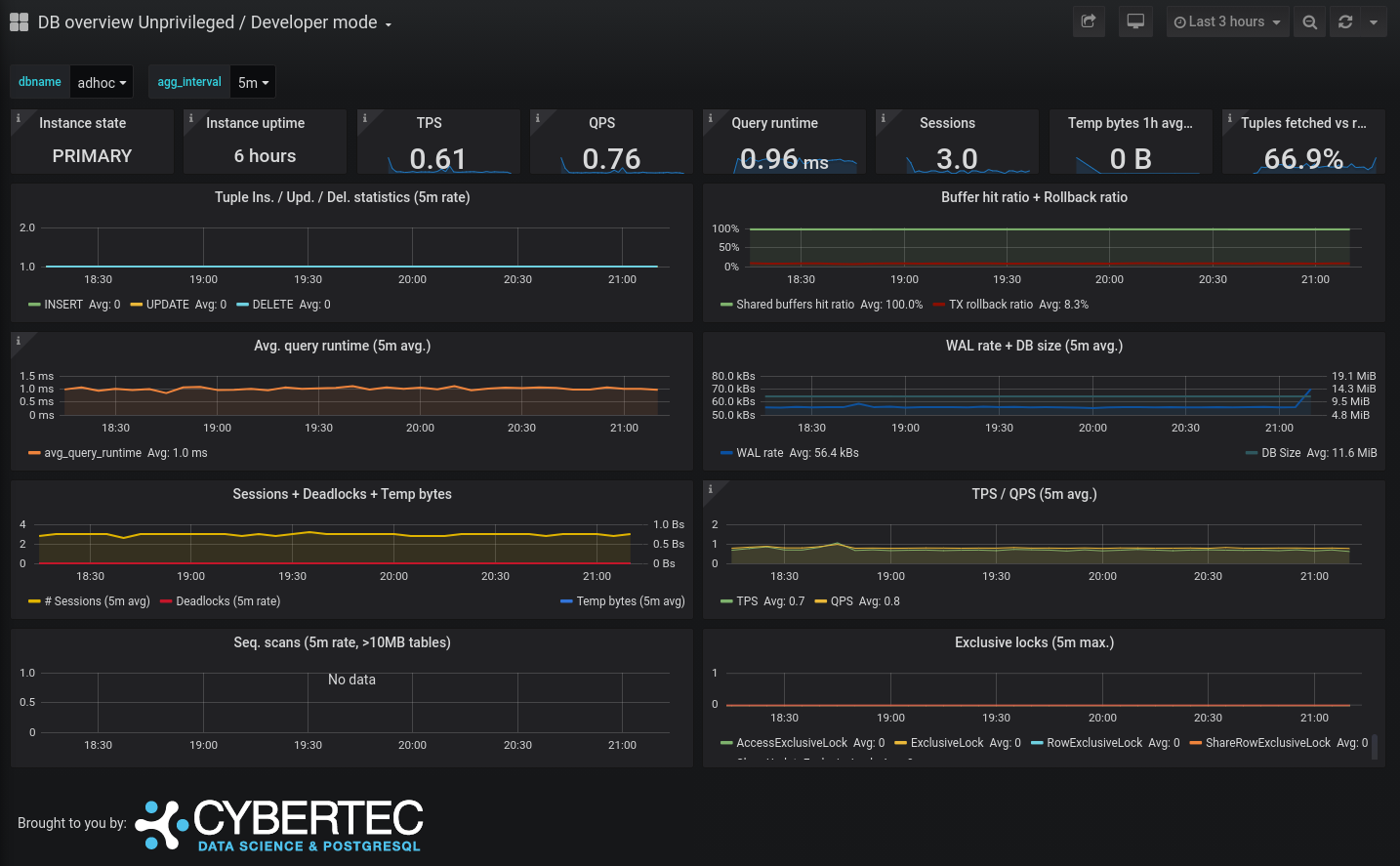
Performance management in managed PostgreSQL includes a range of automated features to maximize efficiency and minimize latency. Providers monitor resource usage and database health, dynamically tuning parameters and alerting customers to issues like slow queries or locked tables.
Some platforms offer query analysis tools, recommendations, and real-time dashboards to help users identify and resolve bottlenecks quickly. Infrastructure optimizations like using fast storage, automatic failover, and intelligent load balancing ensure that databases are responsive under varied workloads. Performance isolation features, such as dedicated compute resources or workload partitioning, can further guarantee consistent response times.
Developer-friendly
Most services support standard PostgreSQL protocols and drivers, requiring no application code changes. Available APIs and command-line tools streamline database management as part of infrastructure-as-code workflows, making it simple for developers to orchestrate test, staging, and production environments.
Developers also benefit from one-click cloning and restore features, which speed up activities such as testing schema changes or troubleshooting production issues in isolated environments. High-level abstractions like database templates, parameter groups, and built-in metrics simplify advanced configuration.
Related content: Read our guide to Postgres best practices
Notable managed PostgreSQL solutions
1. NetApp Instaclustr

Instaclustr for PostgreSQL: Your trusted database solution
Instaclustr for PostgreSQL provides a fully managed, scalable, and highly reliable database solution, designed to simplify data management. With automated maintenance, easy scaling, and robust monitoring, Instaclustr ensures high performance for PostgreSQL, enabling organizations to focus on building exceptional applications without the stress of infrastructure management.
Managing PostgreSQL can often be complex and time-consuming. Instaclustr is here to simplify your database management while delivering enterprise-grade stability and performance.
Key features include:
- Open source freedom: Break free from vendor lock-in with NetApp Instaclustr’s commitment to open source technology. Retain full control of your infrastructure and innovate with agility, without being tied to proprietary extensions.
- Fully managed service: Includes everything from setup and maintenance to scaling and upgrades, so organizations can focus on business goals.
- High availability: Performs automatic backups and disaster recovery processes that includes multi-region deployments to ensure data is always accessible and secure.
- Advanced security features: Includes data encryption in transit and at rest, alongside fine-grained access control options, so information is always protected.
- Effortless scaling: Handles workload spikes and growing datasets effortlessly.
- Flexibility: Provides choice for on-prem, public and private cloud, or a hybrid mix based on application requirements and business objectives.
- AI use cases: Enables the use of
pgvectorto enhance similarity search experience improving speed and accuracy for AI queries.
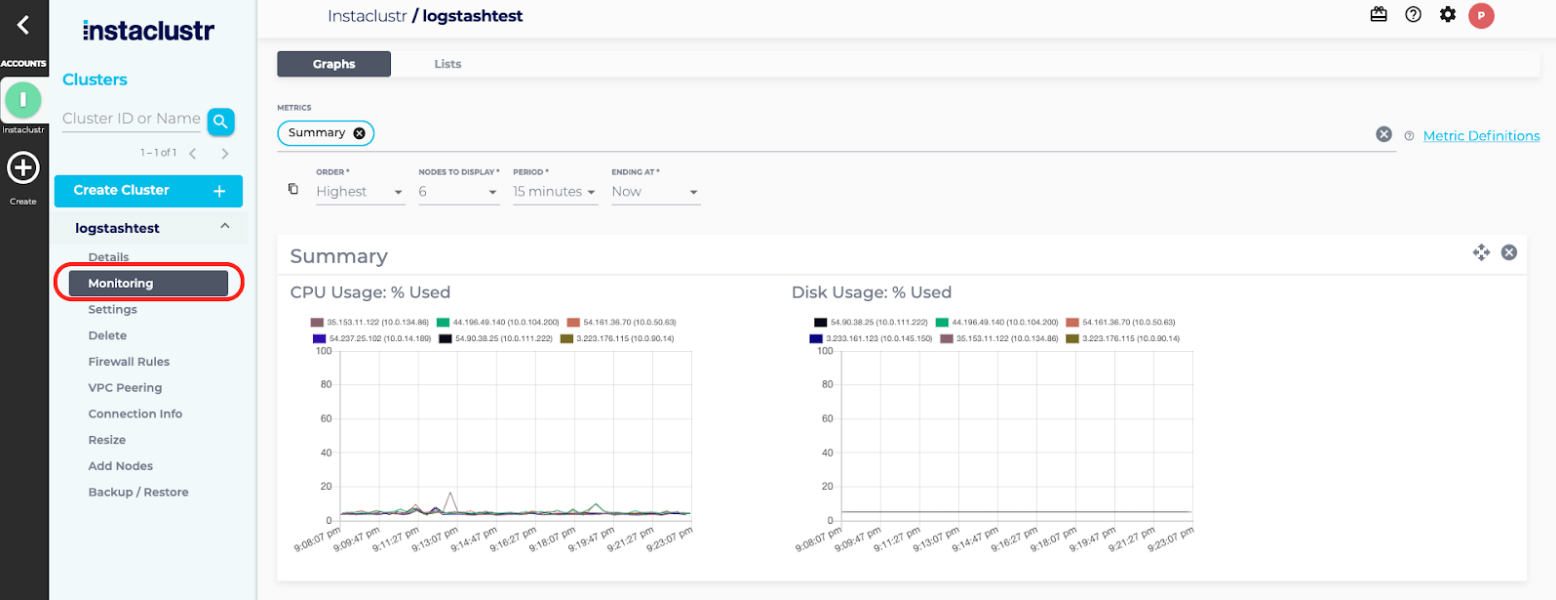
Source: NetApp Instaclustr
2. Azure Database for PostgreSQL
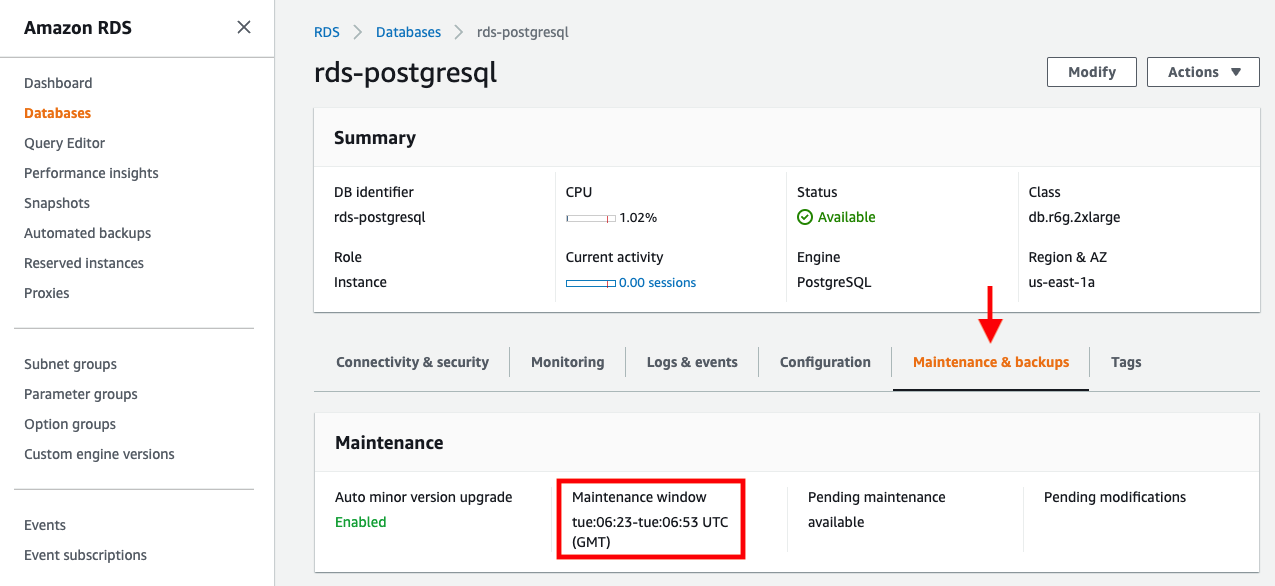
Amazon RDS for PostgreSQL is a managed service that simplifies deploying, operating, and scaling PostgreSQL databases in the cloud. It handles administrative tasks such as software installation, patching, backup management, and high availability configurations. With a few steps in the AWS Management Console, users can launch production-ready PostgreSQL instances with preconfigured settings and support for multiple PostgreSQL versions.
Key features include:
- Simplified provisioning: Launch PostgreSQL databases in minutes with pre-tuned configurations and minimal setup via the AWS Management Console
- Version support: Supports major PostgreSQL versions (11 through 17) with compatibility for existing tools and applications
- Trusted language extensions (TLE): Safely build and run custom PostgreSQL extensions in trusted languages without AWS code certification
- Blue/green deployments: Safely test and promote updates with minimal downtime using controlled deployment strategies
- High availability: Multi-AZ deployments and automated failover provide resilient production workloads
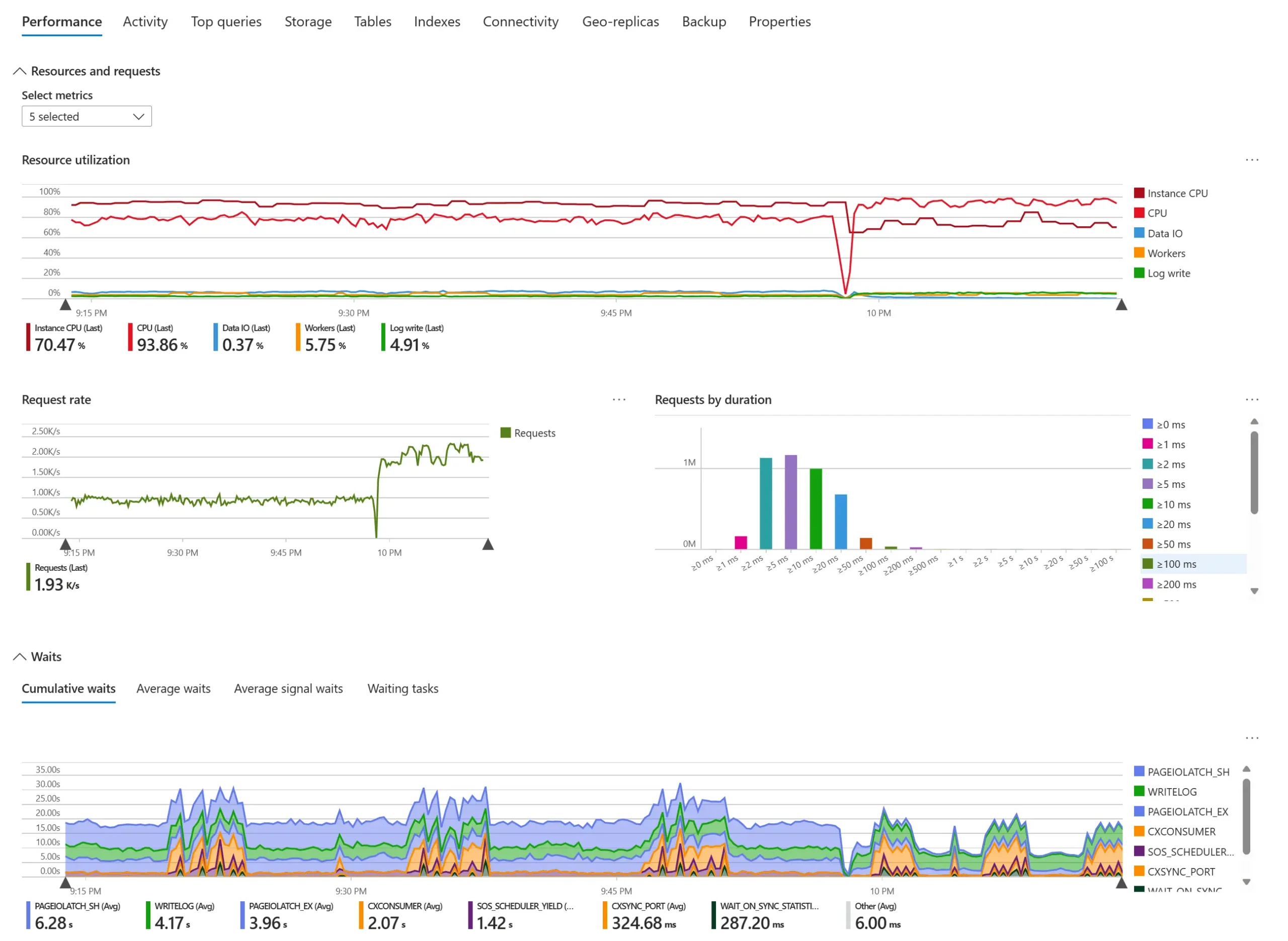
Source: Microsoft Azure Database for PostgreSQL
3. Amazon RDS for PostgreSQL

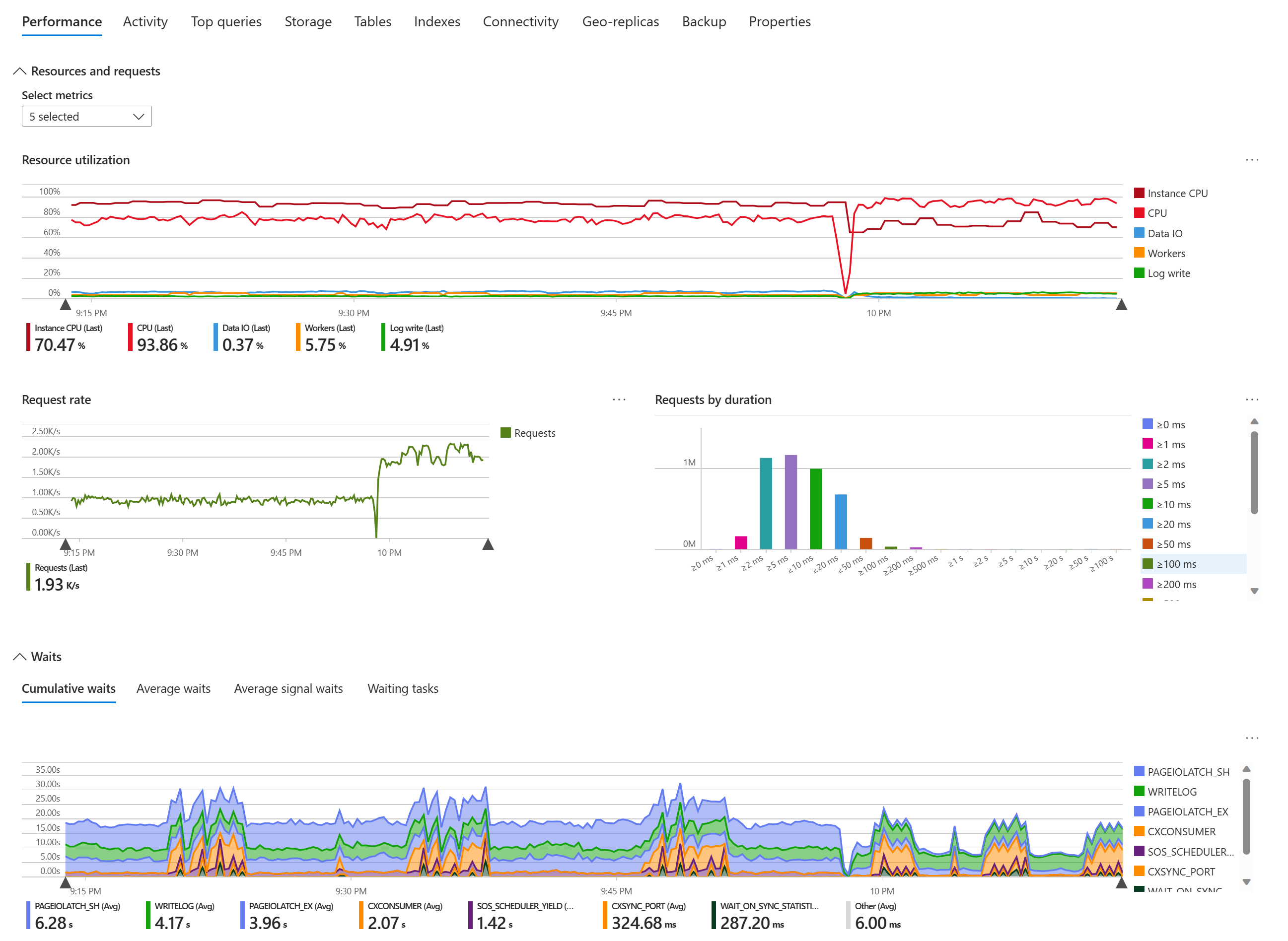
Azure Database for PostgreSQL is a managed database service that offers control over configuration, high availability, and performance tuning. The flexible server deployment model separates compute and storage for improved resilience and performance. It supports custom server configurations, managed maintenance windows, and both single-zone and zone-redundant high availability setups.
Key features include:
- Custom configuration: Fine-grained server control and parameter tuning support advanced use cases and application-specific needs
- Flexible compute tiers: Choose from Burstable, General Purpose, or Memory Optimized tiers depending on workload demands
- Zone-redundant high availability: Optional synchronous replication across zones enables high availability with zero data loss during failover
- Automated maintenance: Managed patching for OS, infrastructure, and PostgreSQL engine with configurable maintenance windows
- Stop/start capabilities: Reduce costs by stopping compute billing during idle periods, suitable for non-continuous workloads
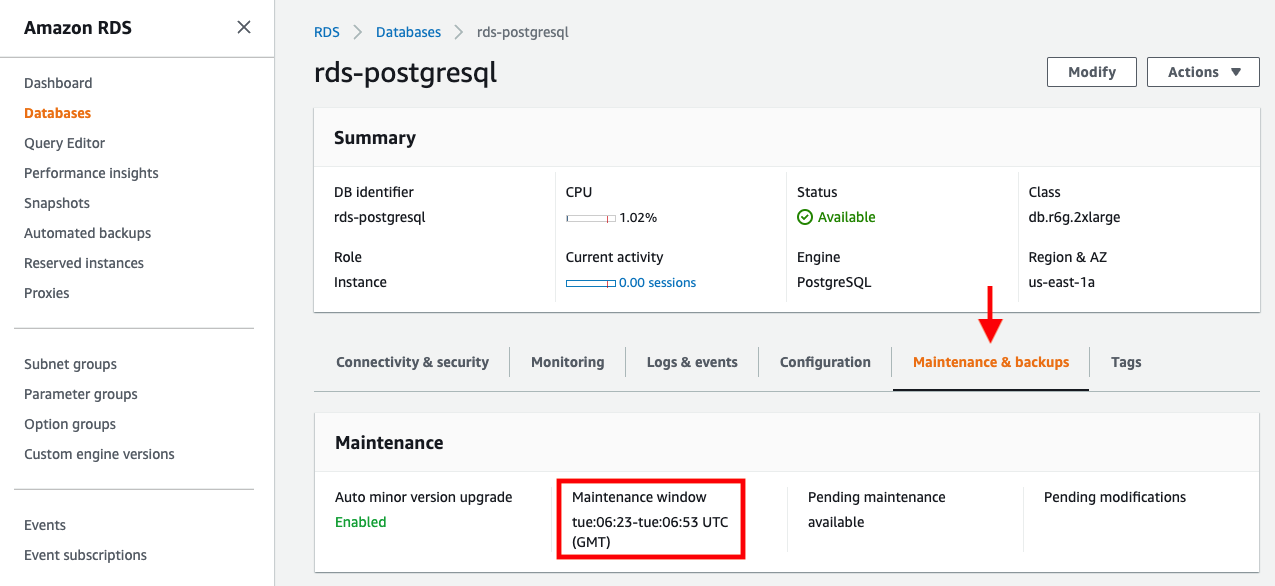
Source: Amazon RDS
4. Google Cloud SQL for PostgreSQL

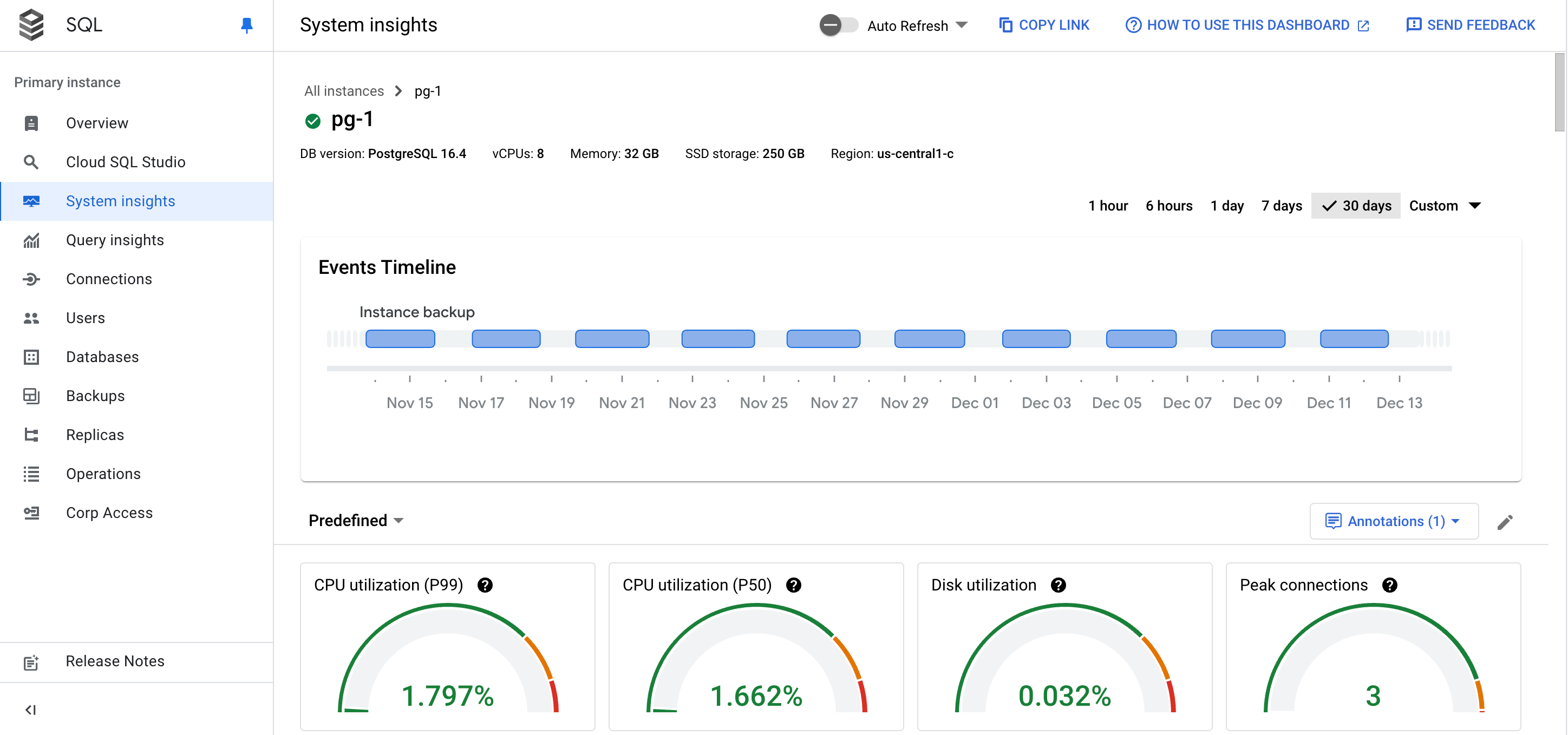
Cloud SQL for PostgreSQL is a fully managed relational database service built on the open source PostgreSQL engine, offering enterprise-grade reliability, performance, and deep integration with the Google Cloud ecosystem. It supports major PostgreSQL versions, popular extensions, and more than 100 configuration flags for tuning. Designed to reduce operational overhead, it provides built-in maintenance, monitoring, and security features, while also enabling AI integration through Google’s Vertex AI and Gemini tooling. Cloud SQL simplifies migrations, scales with demand, and integrates tightly with GKE, BigQuery, Firebase, and other Google services—making it a strong choice for both legacy modernization and modern cloud-native applications.
Key features include:
- PostgreSQL compatibility: Supports all major versions, key extensions, and custom tuning via 100+ database flags
- AI integration: Built-in support for
pgvector, LangChain, and model serving via Vertex AI for building AI-powered applications - Observability tools: Cloud SQL Insights offers visual query plans, trace integration with OpenTelemetry, and query tagging for deeper monitoring
- Flexible maintenance: Automated patching with near-zero downtime (<10 seconds) and configurable scheduling controls like postponement and deny periods
- High availability: SLAs up to 99.99% cover planned maintenance; optimized C4 instances are intended to provide price-performance and high throughput
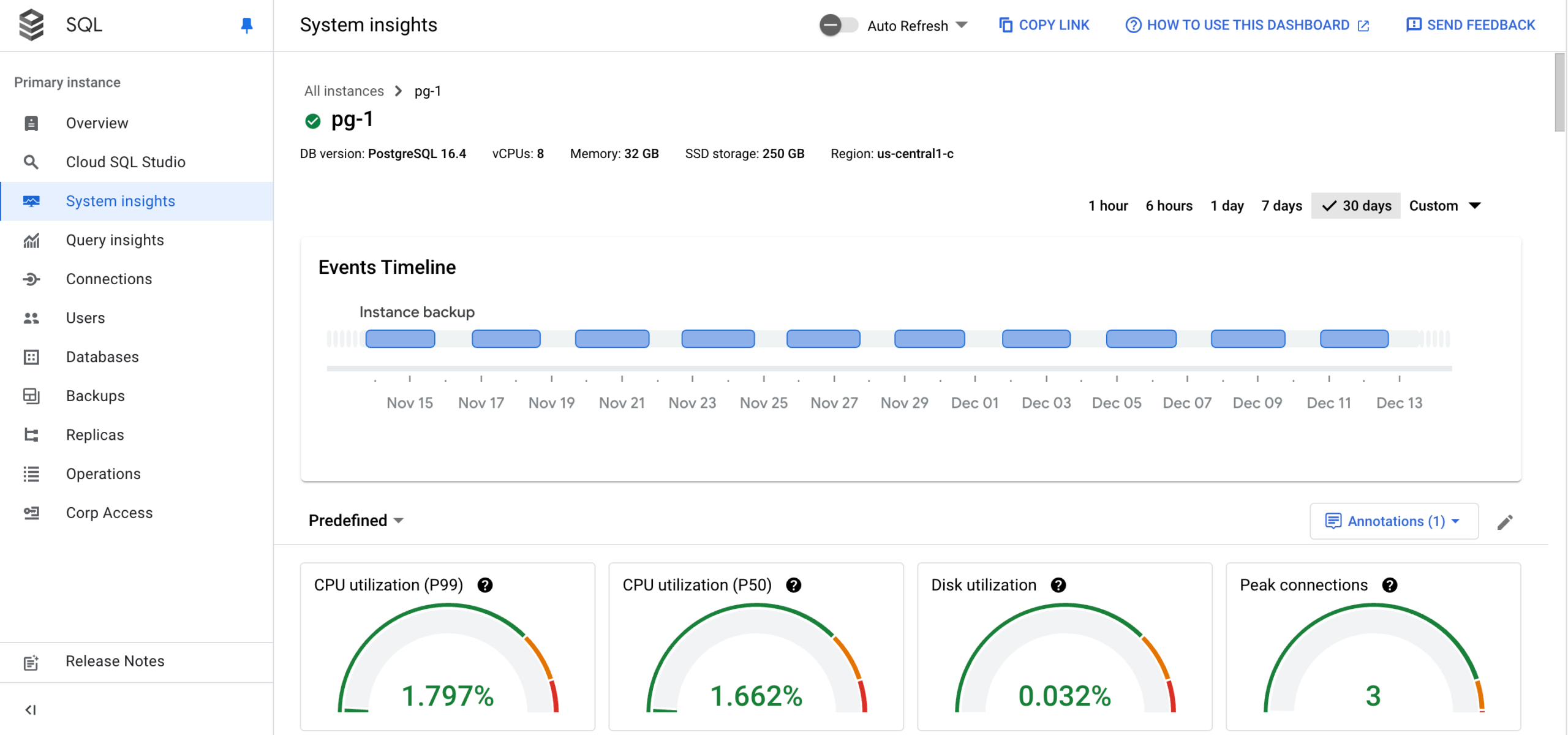
Source: CloudSQL
5. Aiven

Aiven for PostgreSQL is a managed, production-ready PostgreSQL service that goes beyond traditional database hosting. It transforms PostgreSQL into a flexible data platform for real-time analytics, streaming, caching, and AI workloads while maintaining compatibility with the PostgreSQL ecosystem.
Key features include:
- Instant provisioning: Deploy a fully managed PostgreSQL cluster and start querying in minutes
- High availability & uptime: Built-in automatic failover and 99.99% SLA ensure maximum service continuity
- Point-in-time recovery: Restore to a specified moment within the last 30 days for fast recovery from issues
- Distributed read replicas: Scale read performance globally with replicas across regions and clouds
- Connection management: Use connection pooling to handle high concurrency and optimize response times
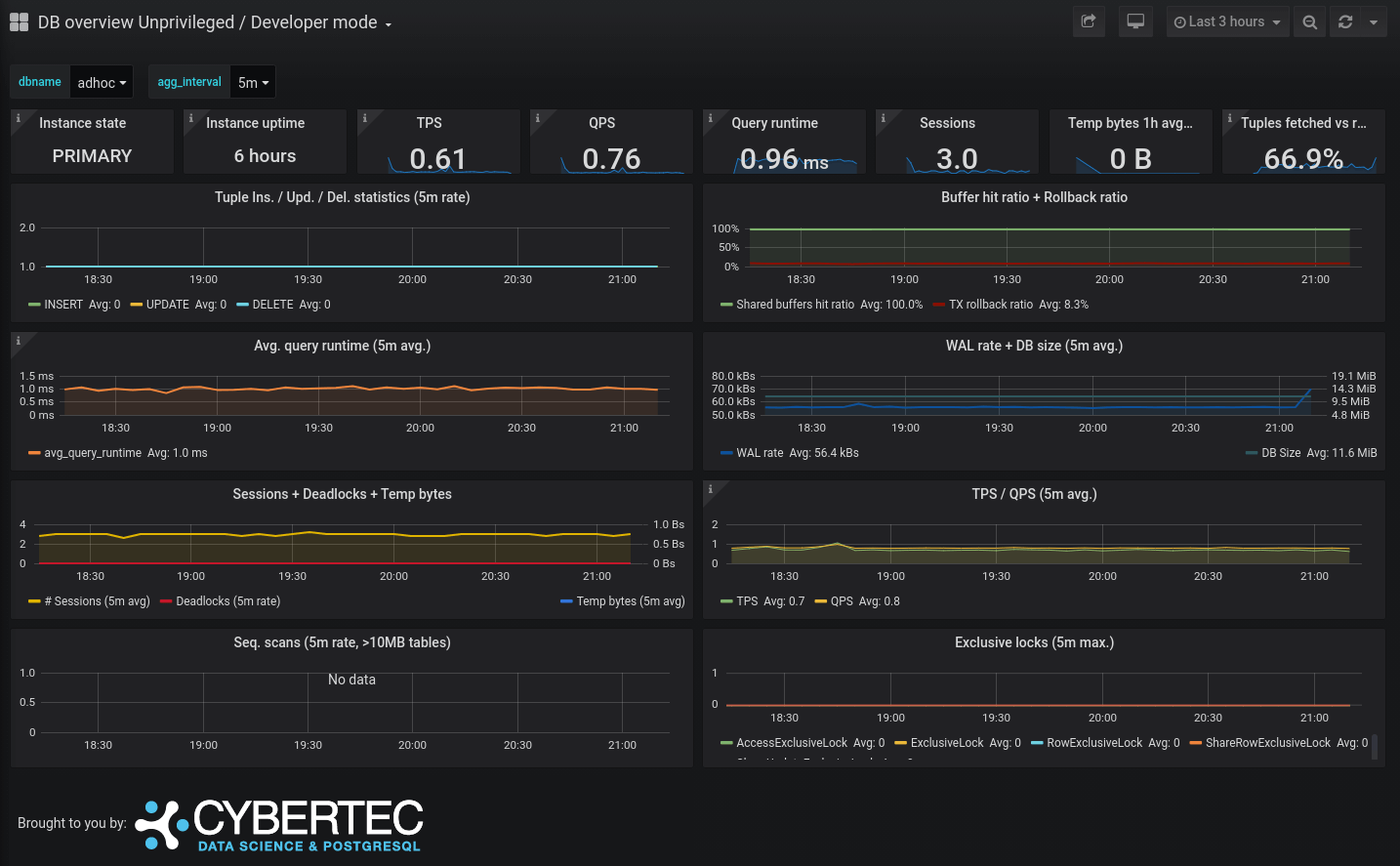
Source: Aiven
Conclusion
Managed PostgreSQL solutions offer a powerful blend of automation, resilience, and scalability, making them ideal for organizations seeking to reduce operational complexity without sacrificing performance or control. These services enable teams to deploy production-ready databases quickly, ensure high availability through built-in redundancy, and meet security and compliance goals with minimal manual effort. By offloading routine maintenance and infrastructure management to trusted providers, businesses can accelerate development, improve reliability, and scale efficiently to meet evolving application demands.